
Best Nitrile Gloves For Mechanics: What To Look For
Choosing the Right Nitrile Glove for Automotive Work
If you’re a professional technician or a serious DIYer, you already know that automotive fluids are messy. However, what you may not know is the potential harm of long-term exposure to these fluids. Used motor oil, for example, is classified as a Class 2 possible carcinogen. Most modern brake fluids are glycol-ether based (DOT 3, DOT 4, DOT 5.1), and they often contain solvents that are irritating and easily absorbed by the skin, such as corrosive additives and anti-corrosion agents, Boron compounds or other stabilizers that can disrupt skin function.
New engine coolant (typically containing ethylene glycol or propylene glycol) is already toxic and can cause irritation with prolonged contact. But once it’s been used in an engine, it picks up additional hazardous substances such as heavy metals (lead, copper, cadmium), combustion byproducts, oil and fuel residues, and corrosion inhibitors that degrade into acidic compounds.
Long-term exposure to these chemicals — even in small amounts — can lead to dermatitis, allergic reactions, and more serious conditions involving the liver, kidneys, or nervous system. That’s why I always wear nitrile gloves when I work on cars. In other words, nitrile gloves for auto mechanics aren’t just a convenience — they’re essential protection. Whether you’re changing oil, flushing coolant, or servicing a transmission, nitrile gloves keep your skin safe from toxic substances that can lead to serious health problems.
Nitrile Gloves vs. Latex vs. Vinyl: Why Nitrile Wins
Nitrile is a synthetic rubber compound that resists punctures, abrasions, and harsh chemicals far better than latex or vinyl. Unlike latex, nitrile doesn’t cause allergic reactions, and it won’t break down in the presence of petroleum-based fluids, such as oil or fuel.
Among the most important nitrile gloves features is their resistance to chemical penetration. Nitrile gloves act as a true barrier against solvents, oils, and cleaning chemicals, making them the first line of defense in your shop.
Choosing the Right Nitrile Glove Thickness
Nitrile glove cost is directly related to the glove’s mil thickness (1 mil = 0.001 inch), with the thicker gloves costing more but offering more tear protection.
Here’s what you need to know:
• 3–4 mil gloves offer excellent touch sensitivity but are prone to tearing in rough automotive work.
• 5–6 mil is the ideal nitrile glove thickness for general mechanic work — tough enough to resist tears, yet thin enough for good feel.
• 7–8 mil gloves provide extra protection for tougher jobs like brake service, exhaust work, and undercar repairs.
When choosing nitrile gloves for auto mechanics, I recommend buying at least 6 mil gloves for most jobs and stepping up to 8 mil for heavy-duty work.
Other Critical Nitrile Gloves Features to Look For
Grip, Fit, and Cuff Design Matter More Than You Think
Besides nitrile glove thickness, don’t overlook these essential nitrile gloves features that improve performance and safety:
• Textured fingertips: Provide a better grip on oily tools and parts. Some brands even offer fully textured gloves for maximum traction.
• Rolled cuffs: Prevent the glove from tearing when you pull it on and keep drips from running up your arm.
• Ambidextrous fit: Makes them easy to grab from the box and throw on fast.
• Extended cuffs (12″): Offer added forearm protection when working in tight engine bays or underneath vehicles.
I’ve tested dozens of glove brands, and textured fingertips combined with rolled cuffs are now non-negotiables in my shop. They make a real difference in both control and comfort.
My Favoriate Nitrile Glove Brand
While there are countless brands out there, the following are known for producing reliable nitrile gloves for auto mechanics with solid nitrile gloves features:
TopGrip HD 7 Mil Powder Free Black Nitrile Exam Gloves from UniSafe
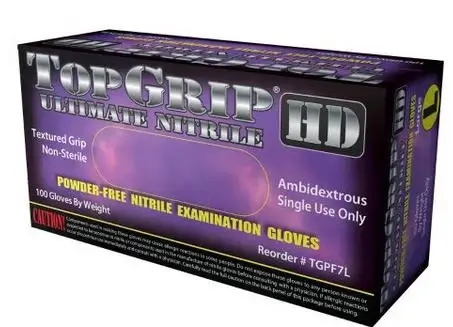
TopGrip nitrile gloves from UniSafe.com
I’ve used these gloves for years and find that 7-mil is thick enough to prevent tearing for most job, while still providing enough tactile feel.
Nitrile glove prices fluctuate based on current tariffs, since most are manufactured off-shore. In July 2025, these gloves cost $10/box of 100 if you purchase in full case quantities of 10 boxes. Each box holds 100 gloves, so that .20/pair.
SureCare from GloveAmerica is another good brand with high reviews
They’re a bit more at $120 for a case of 10 boxes, with a pair cost of .24.
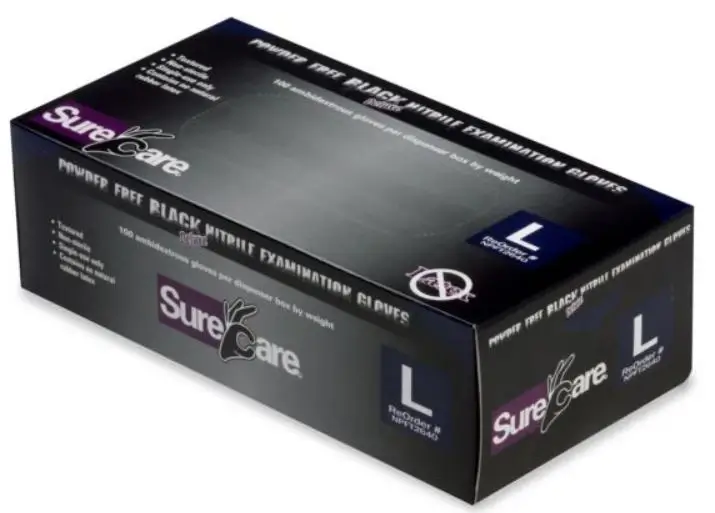
SureCare 7 mil nitrile gloves
Don’t Let Cheap Gloves Cost You Long-Term Health
In this industry, your hands are your livelihood. Yet many techs still skip gloves or go for the cheapest option — and they pay for it in the long run with skin damage and chemical exposure.
5-mil gloves are cheap, and they’re cheap for a reason. They’re too thin for mechanical work. They’re designed for the medical profession, where they’re used for injections and an on-hand use of just a few minutes. They’re simply not designed for long term wear or rubbing up against automotive parts.
By investing in high-quality nitrile gloves for auto mechanics, choosing the right nitrile glove thickness, and insisting on smart nitrile gloves features like rolled cuffs and textured grips, you’re doing more than keeping your hands clean. You’re protecting your health, your skillset, and your career.
©, 2025 rick Muscoplat
Posted on by Rick Muscoplat