
Abnormal AC Pressures: What They Mean and How to Fix Them
How to Read Car AC Pressure Gauges Like a Pro
Quick Summary
Abnormal AC pressures are the fastest way to accurately diagnose car AC problems.
• Low low-side and low high-side pressure → usually means low refrigerant or a restriction.
• High low-side and high high-side pressure → points to overcharge, airflow issues, or compressor control problems.
• High low-side and low/normal high-side pressure → almost always indicates a stuck expansion valve.
I never guess—I diagnose AC problems using pressure patterns, airflow checks, and system design knowledge.
When Both Low and High Side Pressures Are Too Low
This is one of the most common abnormal AC pressure patterns I see. Here’s what it means. If both sides are low, the system isn’t moving enough refrigerant—or it doesn’t have enough refrigerant to begin with.
Most common causes
• Low refrigerant charge (most common)
• Leak somewhere in the system (that’s why the refrigerant charge is low to begin with)
• Restriction at the orifice tube or expansion valve
• Internal compressor wear or failure
How I diagnose it — I don’t just add refrigerant—I verify:
• Static pressure vs ambient temperature
• UV dye or electronic leak detection to locate and fix the leak
• Compressor efficiency test (not just whether the clutch engages)
My fix
• Find and repair the leak
• Evacuate the system
• Recharge by weight, not pressure
If there’s contamination, I flush the system and install a filter.
When Low Side and High Side Pressures Are Too High
This is another classic abnormal AC pressure pattern—and one that gets misdiagnosed all the time. What it means: The system is under stress. Heat isn’t being removed, or refrigerant volume is excessive.
Most common causes
• Overcharged AC system
• Poor condenser airflow (VERY common)
• Cooling fan failure or low speed operation
• Compressor control valve failure (variable displacement systems)
• High-side restriction
How I diagnose it. I always check:
• Condenser airflow (fans, debris, bent fins)
• Ambient temperature vs pressure relationship
• Whether pressures spike at idle vs driving
My fix
• Recover and recharge refrigerant to spec
• Clean or replace clogged condenser
• Repair fan circuits or replace failed fans
• Replace faulty compressor control valve
When Low Side Is High but High Side Is Low or Normal
This is one of those patterns that, once you recognize it, becomes easy to diagnose.
What it means. Too much refrigerant is flooding the
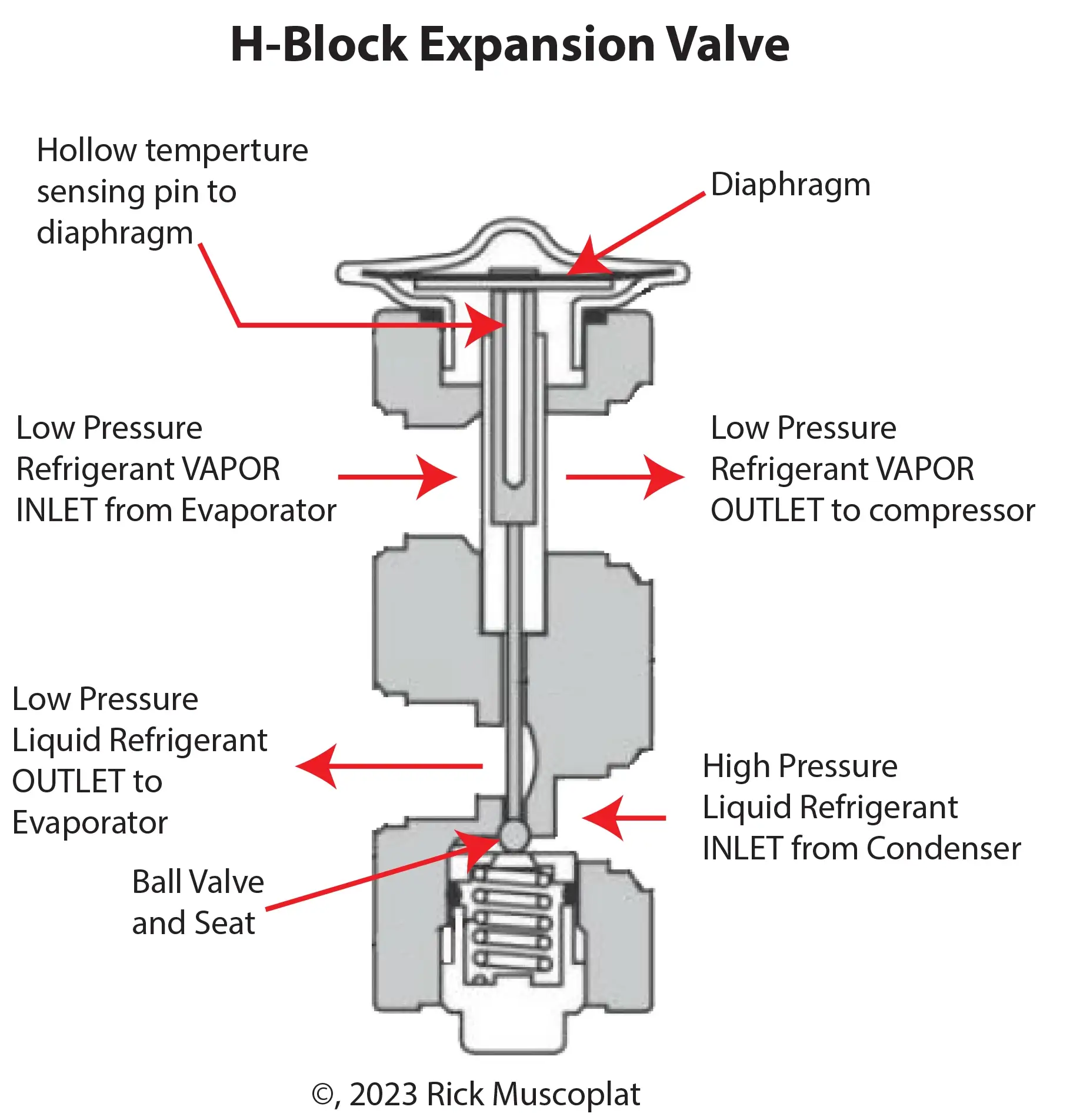
Flow characteristics of an H-block expansion valve
evaporator, and the system can’t build high-side pressure.
Primary cause
• Expansion valve stuck open
What’s happening inside
The valve isn’t metering refrigerant properly. Instead of a controlled drop in pressure, refrigerant floods the evaporator.
How I confirm it
• High low-side pressure
• Poor cooling performance
• Frosting patterns inconsistent with normal operation
My fix
• Replace the expansion valve
• Inspect for contamination
• Flush system if debris is present
• Install inline filter if needed
Advanced Insight: What Most People Miss About AC Pressure Problems
Here’s where experience really matters.
1. Airflow matters as much as refrigerant — I’ve seen perfectly charged systems perform poorly because of:
• Dirty condensers
• Weak fans
• Blocked airflow
2. Overcharging is an extremely common DIYer mistake— More refrigerant does NOT mean better cooling. It actually reduces efficiency and raises pressures.
3. The compressor type changes how you diagnose the problem — A clutch type compressor operates differently than a variable displacement clutchless compressor.
You must know:
• Clutch vs clutchless compressors
• Fixed vs variable displacement
Why? Because a variable compressor with a bad control valve can mimic multiple failure patterns.
4. Oil matters more than most people think — Any time you lose refrigerant, you also lose oil. Many DIYers simply add more refrigerant thinking that their AC system is like their engine where all the oil lies in the oil pan. That’s not how it works in an AC system.
Low oil can:
• Destroy a compressor
• Cause erratic pressures
Too much oil
• Reduces cooling
When I diagnose abnormal AC pressures, I follow the same process every time:
• Verify ambient temperature
• Compare pressures to known-good charts
• Check airflow across condenser
• Evaluate compressor operation
• Look for restrictions or contamination
• Confirm refrigerant charge (by weight)
This prevents guessing—and prevents comebacks.
©, 2020 Rick Muscoplat
Posted on by Rick Muscoplat