
Blend Door vs Blend Door Actuator: What’s Really Failing
How the Blend Door Controls Cabin Temperature
Quick Summary
The blend door is a flap in the HVAC system that controls whether the air flows through the heater core or the AC evaporator. The blend door actuator moves the door to the commanded position. When either one fails—or when calibration is lost—you lose temperature control. Proper diagnosis means testing the door itself before replacing the actuator, because a stuck or broken blend door can quickly destroy a new actuator.
Article
Why I Always Suspect the Blend Door When You Don’t Have Heat
After decades of diagnosing automotive HVAC complaints, I can tell you this with confidence: when a vehicle has heat but no cooling, cooling but no heat, or wildly inconsistent temperatures, the blend door and the actuator are always near the top of my suspect list. These parts live deep under the dash, out of sight and out of mind, yet they work every time you touch the temperature control. When they fail, the symptoms can feel mysterious—until you understand how the system really works.
Modern climate control systems are precise. The HVAC module expects the actuator to move the door to an exact position and report that position back through an internal encoder. When that feedback is missing or incorrect, the system loses its mind—and so does the driver.
What the Door Actually Does
The door is a temperature-controlled air valve, not a coolant valve. That distinction matters. Coolant flow through the heater core is usually constant; temperature control happens by directing airflow. Inside the HVAC case, the door swings back and forth, routing incoming air across the heater core for heat, across the AC evaporator for cooling, or partially across both to create warm air.
When it’s positioned fully toward the heater core, all airflow picks up heat. When it’s positioned toward the evaporator, the air is cooled and dehumidified. Every temperature setting in between is simply a calculated blend of those two air paths. If it can’t reach the commanded position, you won’t get the temperature you asked for—no matter how healthy the engine or AC system is.
 Notice the door position when the driver sets the temperature to full hot[/caption]

This image shows the position of the blender when the driver sets the temperature to warm

This image shows the position of the blender when the driver sets the air conditioning to full cold
How the Actuator Controls Everything
The actuator is the muscle and the brain behind that movement. In older vehicles, I dealt with mechanical cables and vacuum motors. Those systems had their own issues, but modern electric actuators are far more common—and far more sensitive.
Today’s actuators use a small electric motor paired with a reduction gear set. Inside the housing is an encoder that reports the HVAC control module’s exact blend door position. When you turn the temperature knob or press a button, the module commands the actuator to rotate to a specific angle. The actuator moves, the encoder confirms the position, and the system stops the motor at precisely the right point.
This precision is also why calibration matters. From the factory, the HVAC module learns the “home” position of every door. Whenever you replace an actuator, the learned position is lost. On many vehicles, the system must be recalibrated with a scan tool, or the actuator will hunt, click, or stop short of full travel.
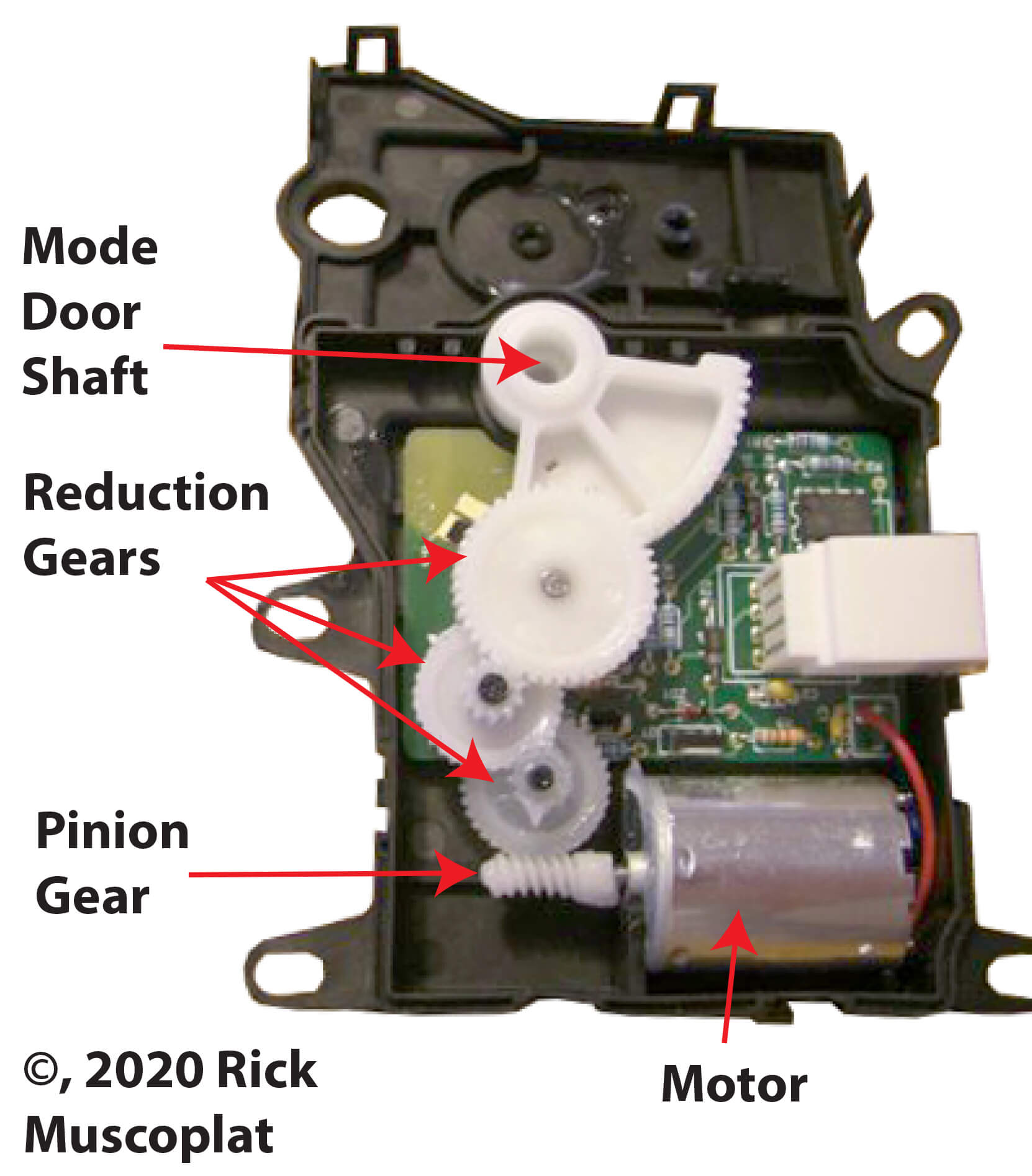
Notice the highly engineered gear set in a blend door actuator.
How Blend Doors and Blend Door Actuators Fail
The door itself is usually plastic, and plastic doesn’t age gracefully inside a hot HVAC box. I’ve seen blend doors crack, warp, or break their pivot shafts entirely. When that happens, the door can bind or jam, often sticking in the full-hot or full-cold position. If you install a new actuator without first checking the door, the actuator may burn out trying to move a door that cannot physically move.
Foam seals on the are another hidden failure point. Those seals are critical for preventing air leakage. When they deteriorate, air bypasses the door, and the temperature from the vents never matches the set temperature. The AC feels weak, or the heat feels lukewarm, even though the door is technically moving.
Actuator failures are just as common. The plastic gears inside the actuator wear or strip, causing the classic clicking sound behind the dash, especially on startup. Sometimes the motor itself burns out. Other times, the encoder fails, leaving the HVAC module blind to the door’s position. In systems with linkages between the actuator and the door, a seized door can snap the linkage, causing noise and a complete loss of control.
Symptoms That Point Directly to a Blend Door or Actuator Problem
When a customer tells me their temperature is stuck on hot or cold, I immediately think blend door. When they say the temperature changes on its own or doesn’t match the display, I think it’s the actuator feedback. When I hear rhythmic clicking behind the dash after startup, it’s almost always due to stripped actuator gears.
Another big clue is an uneven temperature across the vents. If one side of the dash blows hot while the other blows cold, dual-zone systems may have multiple blend doors—and one failed actuator can affect only part of the cabin.
• Inconsistent Cabin Temperature: If you’re getting hot air when you want cool air (or vice versa), the door or actuator could be to blame.
• Clicking Noises: A failing actuator often produces a repetitive clicking sound as the motor struggles to move the door.
• Stuck Temperature: If the cabin temperature is stuck at one extreme, it’s a clear sign that the door isn’t moving.
• Unresponsive Climate Controls: When adjusting the temperature settings has no effect, the actuator may not be receiving or executing commands properly.
How I Diagnose Blend Door and Blend Door Actuator Failures
My diagnostic process always starts with access. Once I remove the actuator, I manually rotate the door’s shaft. If the door moves smoothly through its full range, I know the door itself is good. At that point, the problem is almost always the blend door actuator or its electrical supply.
If the door binds, sticks, or won’t move at all, replacing the actuator is a waste of time and money. The door must be repaired first, or the new actuator will fail again. I also inspect the wiring connector for corrosion and the harness for chafing—especially near sharp dash brackets.
On vehicles with scan tool access, I command the actuator to its full range and monitor the feedback data. If the commanded position and actual position don’t agree, the actuator or encoder is lying.
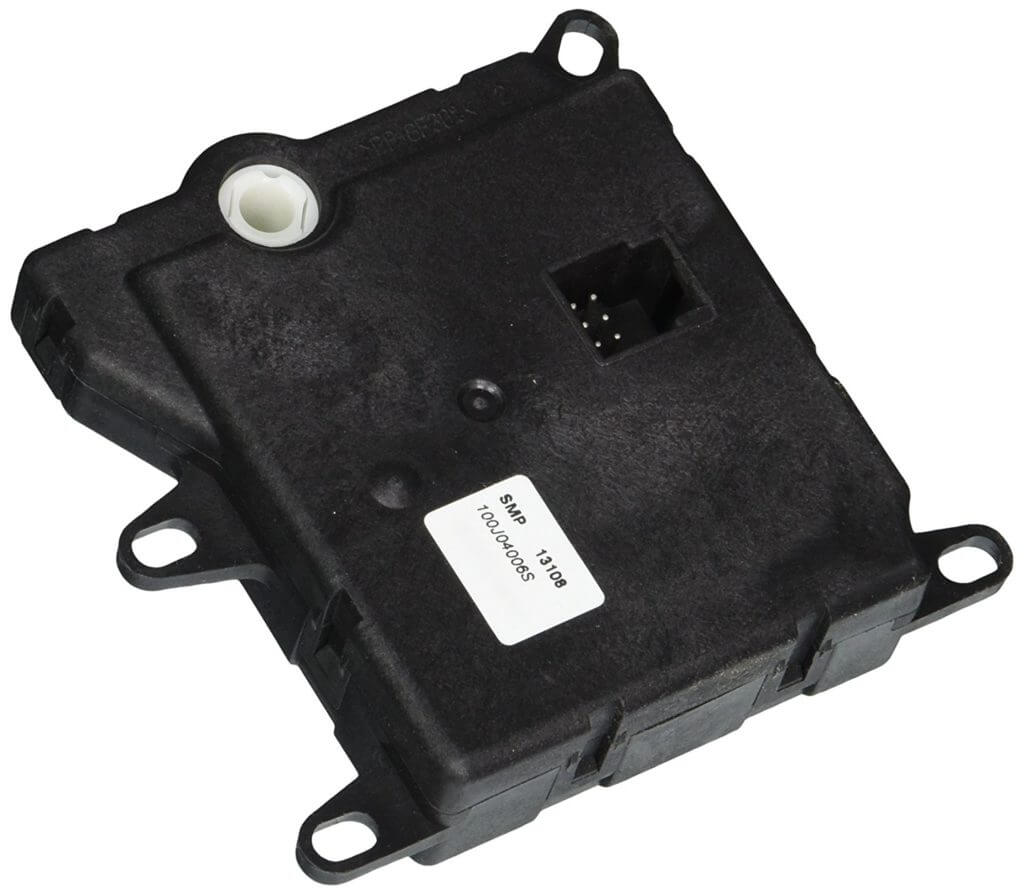
Repair Reality: What It Takes to Fix These Problems
Replacing an actuator is usually straightforward but physically awkward. Tight spaces, hidden screws, and limited visibility are the norm. Stubby tools are often mandatory. After installation, recalibration is critical. Skipping that step is one of the most common reasons a new actuator “doesn’t fix the problem.”
Replacing the blend door is another story entirely. In many vehicles, it requires full dash removal—a job that can consume an entire day or more. That’s why aftermarket repair kits exist. I’ve used repair solutions from companies like Dorman and AirSept that reinforce broken blend door shafts without removing the dash. When used correctly, they can save thousands in labor.
For example, AirSept offers a quick solution for a cracked blend door shaft. See this kit for a GM Equinox. Dorman Products also makes repair kits. I did a quick search for Dorman blend door repair kits and found many results.
Blend Door Actuator Replacement— Replacing an actuator isn’t hard— remove the fasteners, swap the actuator, and reinstall the screws. However, be warned that the space is tight, and you may have to purchase stubby screwdrivers or nut drivers to work in such small spaces. Then, calibrate the new actuator.
Final Thoughts From the Shop Floor
The blend door and blend door actuator may be hidden, but they’re absolutely central to your comfort. When diagnosing HVAC temperature problems, don’t throw parts at the system. Verify door movement first, test the actuator second, and always recalibrate. Do it right once, and the fix will last.
©, 2025 Rick Muscoplat
Posted on by Rick Muscoplat