
Brake Inspection Checklist: What Mechanics Look For
How to Perform a Complete Brake Inspection Like a Pro
Quick Summary
A professional brake inspection checks for wear, damage, leaks, and proper operation. That means measuring rotor thickness, confirming caliper movement, inspecting hoses and lines, and verifying the parking brake system works correctly. A thorough brake inspection should always include visual checks, mechanical testing, and measurements to ensure the entire system operates safely and efficiently.
Article
Start Every Brake Inspection With the Brake Pads
The first thing I do during a brake inspection 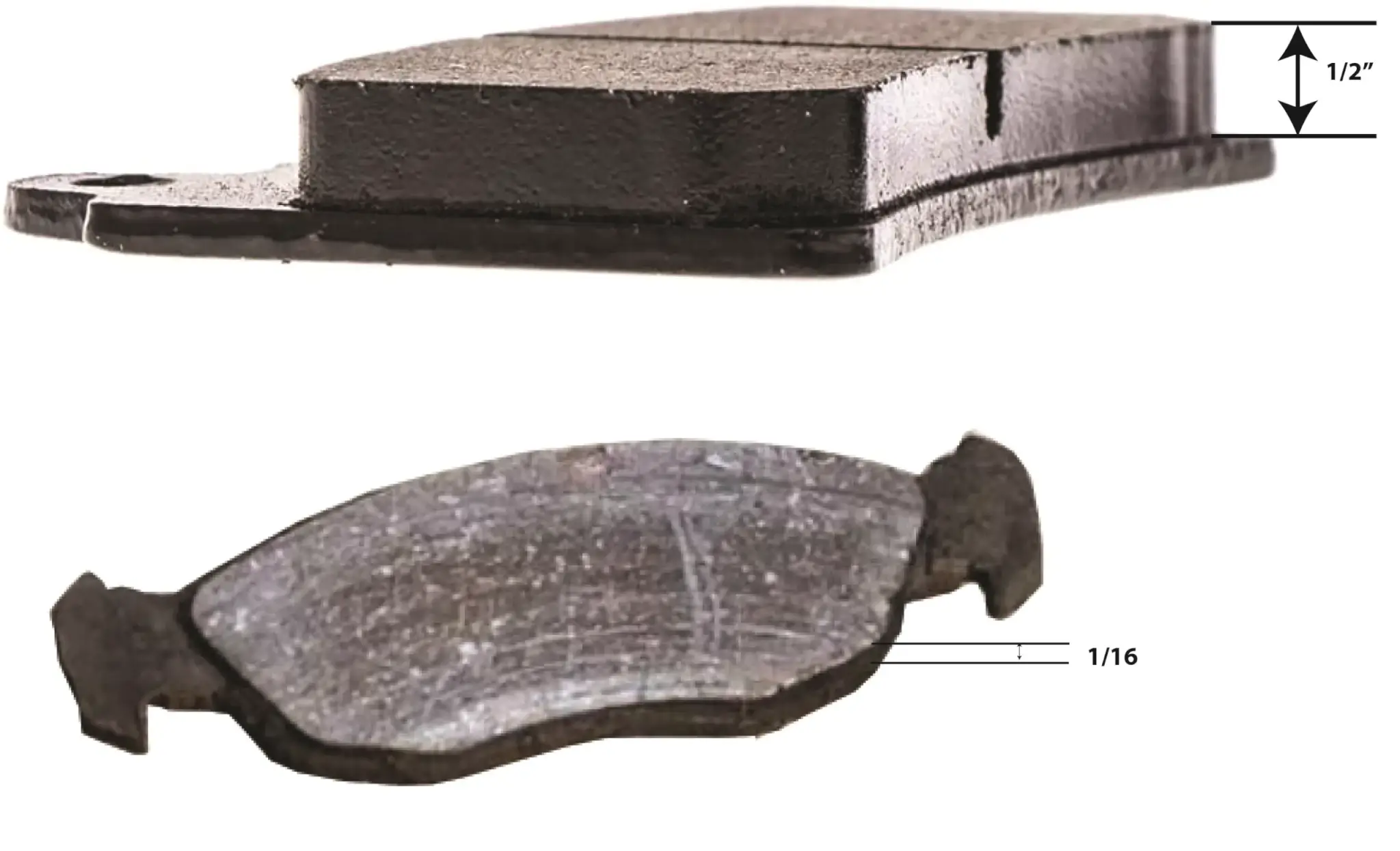
is inspect the brake pads. This is the most common wear component in the system, and it’s usually the first place where problems show up.
Whenever you inspect your brake pads, you’re looking for three main things:
• Pad thickness
• Uneven wear
• Contamination or damage
Brake pads typically start around 10–12 mm thick. When I inspect your brake pads, anything below about 3 mm means replacement is due soon.
But brake pad thickness isn’t the only thing that matters
Uneven wear can tell you a lot about the
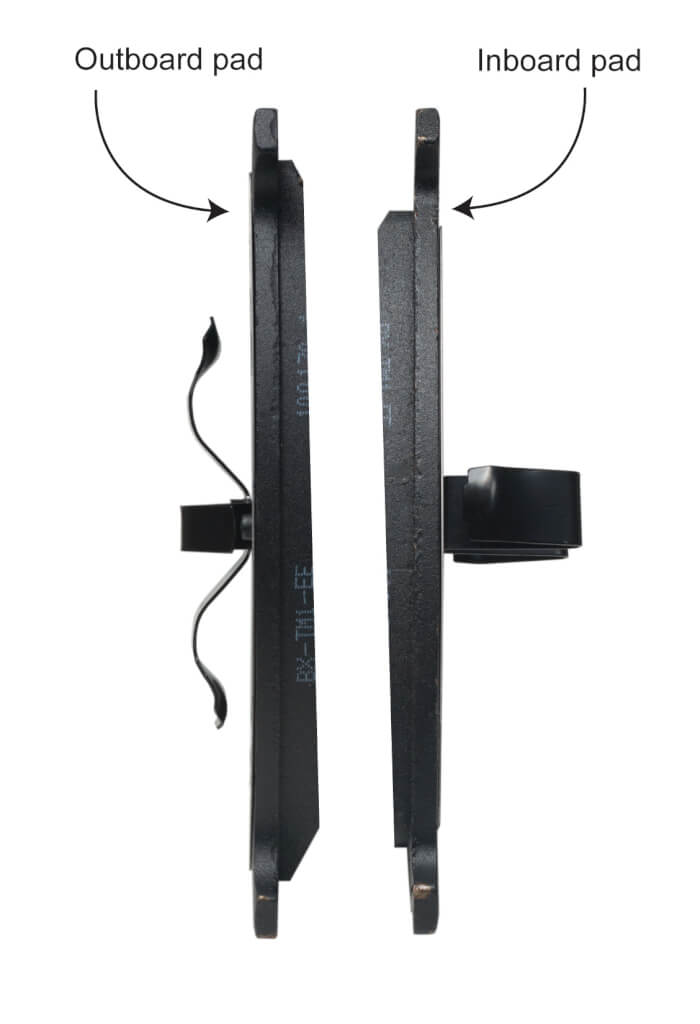
The brake pads are worn in a tapered fashion
health of the braking system. If one pad is thinner than the other, it could indicate a sticking caliper or frozen slide pins. I always stress to technicians that when inspecting their brake pads, they should compare the inner and outer pads carefully.
If one pad is wearing faster than the other, something in the caliper assembly may not be moving correctly.
Check Rotor Condition and Thickness
Once I finish checking the pads during a brake inspection, I move on to the brake rotors.
Rotors are easy to overlook, but they are just as critical as the pads. During a proper brake inspection, I always check the rotor surface for:
• Deep grooves
• Heat spots
• Cracks
• Rust ridges
I also measure rotor thickness with a micrometer.
For example, during one brake inspection, I measured a rotor at about 3.49 mm at multiple points around the rotor. The minimum specification was about 3.17 mm, indicating the rotor was still serviceable and could potentially be machined rather than replaced.
I always take rotor measurements at four or five points around the rotor because uneven wear can occur. Skipping this step is one of the biggest mistakes people make when performing a brake inspection.
Test the Brake Caliper Operation
A brake caliper that doesn’t move properly will quickly destroy new brake pads. During a professional brake inspection, I always verify that the caliper piston moves and retracts correctly. The test is simple.
Have someone sit in the vehicle and press the brake pedal while you observe the caliper. When they press the pedal, the piston should move outward slightly. When they release the pedal, it should retract slightly.
If the piston fails to retract, the brake pads may drag on the rotor, causing overheating and premature wear.
When I inspect brake pads, I also look closely at the caliper piston boot. If the rubber boot is torn, moisture can enter and corrode the piston. That’s often the beginning of a sticking caliper.
Inspect Brake Hoses and Brake Lines
A thorough brake inspection doesn’t stop at the wheel assembly. Once I’ve checked the pads and rotors, I raise the vehicle and inspect the hydraulic system underneath.
This step includes examining:
• Brake hoses
• Steel brake lines
• Calipers
• Junction fittings
I look for fluid leaks, cracked hoses, corrosion, or rubbing damage.
Even if you inspect your brake pads regularly, a brake hose failure can cause sudden brake loss. That’s why a full brake inspection should always include a look at the hydraulic system from front to rear.
Checking Vehicles With Electronic Parking Brakes
Modern vehicles add another step to the brake inspection process. Many cars now use electric parking brakes integrated into the rear calipers. Before removing the caliper, the system must be placed into brake service mode using a scan tool.
When activated, the electronic parking brake motor retracts the actuator, allowing the caliper piston to move back safely. Failing to do this can damage the caliper motor.
Look for Uneven Brake Pad Wear
One of the most valuable diagnostic clues during a brake inspection is uneven pad wear. If you inspect your brake pads and notice that the outer pad is worn more than the inner pad—or vice versa—that often points to a caliper problem.
Common causes include:
• Frozen slide pins
• Sticking caliper piston
• Collapsed brake hose
Whenever I inspect your brake pads, I treat uneven wear as a red flag that something else in the system needs attention.
Replacing pads alone won’t fix the root cause.
Inspect the Parking Brake System
The final step in a complete brake inspection is checking the parking brake. On older vehicles with mechanical parking brakes, I inspect:
• Parking brake cables
• Cable guides
• Equalizer hardware
• Rear brake actuators
On vehicles with electronic parking brakes, I verify that the system engages and releases correctly. If the parking brake doesn’t release fully, it can cause premature brake pad wear and overheating.
Why a Complete Brake Inspection Matters
A lot of people assume a brake inspection is just a quick look at the pads. In reality, that’s only part of the story.
When I perform a professional brake inspection, I’m evaluating the entire braking system:
• Brake pads
• Brake rotors
• Calipers
• Hydraulic lines
• Parking brake system
If you regularly inspect your brake pads and perform a full brake inspection at least once a year, you’ll dramatically reduce the chances of brake failure.
And just as important, you’ll catch small problems before they turn into expensive repairs.
©, 2026 Rick Muscoplat
Posted on by Rick Muscoplat