
Engine Overheating: The Most Common Causes
Understanding Engine Overheating: Causes and Solutions
Engine overheating is a common issue faced by vehicle owners, often resulting from cooling system issues like a low coolant level, an inoperative radiator fan, a faulty thermostat, or a bad water pump. When an engine exceeds its optimal operating temperature, it can lead to serious damage if not promptly addressed. This article explores the most prevalent causes of engine overheating and offers insights into preventive measures and solutions.
A low coolant level due to a leak is the #1 cause of engine overheating
A low coolant level prevents the cooling system from removing the heat of combustion. The remaining coolant can’t circulate properly and the engine overheats. Here are the most common causes of low coolant levels
• Leaking radiator— Radiators can from deterioration in the core tubes, the tank seals, or a failure in the plastic tanks. The deterioration can be external, caused by road salt and water oxidizing the core fin tube, causing a leak. Or, they can corrode from the inside due to worn-out coolant.
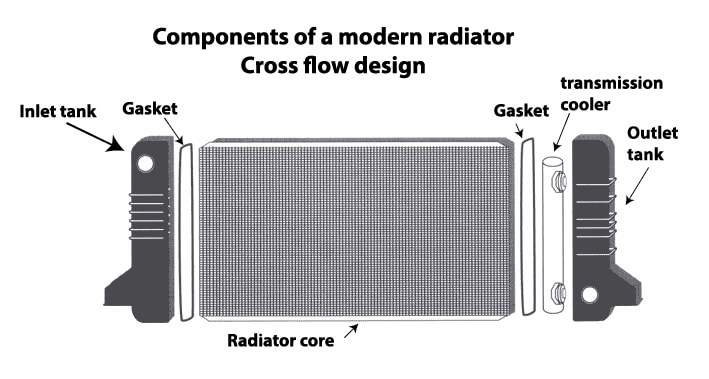
This image shows the components of a modern cross-flow radiator with an aluminum core and plastic side tanks
How to fix a leaking radiator
The older copper-style radiators could be repaired by removing
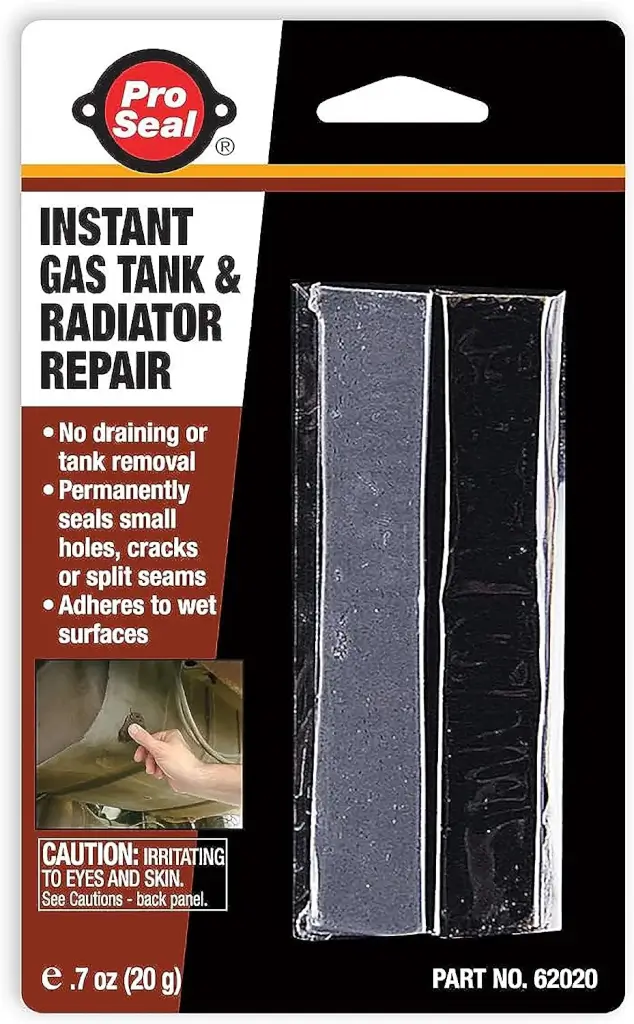
This 2-part epoxy radiator repair kit can get you going again, but it’s not a permanent repair.
the top and bottom or side tanks and soldering in a new core. However, nobody repairs modern aluminum radiators. they must be replaced.
Some companies sell radiator patch kits to repair plastic cracks. Those kits are good for temporary repairs to get you going, but the repairs are not permanent. Plan on replacing your radiator if the plastic is cracked.
• Burst, cracked or leaking radiator or heater hoses— The upper and lower radiator hoses and the heater hoses can deteriorate over time and develop cracks that leak or burst, losing coolant in the process.
Temporarily fix a leaking radiator hose or heater hose
Silicone self-sealing tape can get you through a sudden hose break. Keep it in your vehicle. Wrap it tightly around the cracked hose multiple times so it seals to itself.
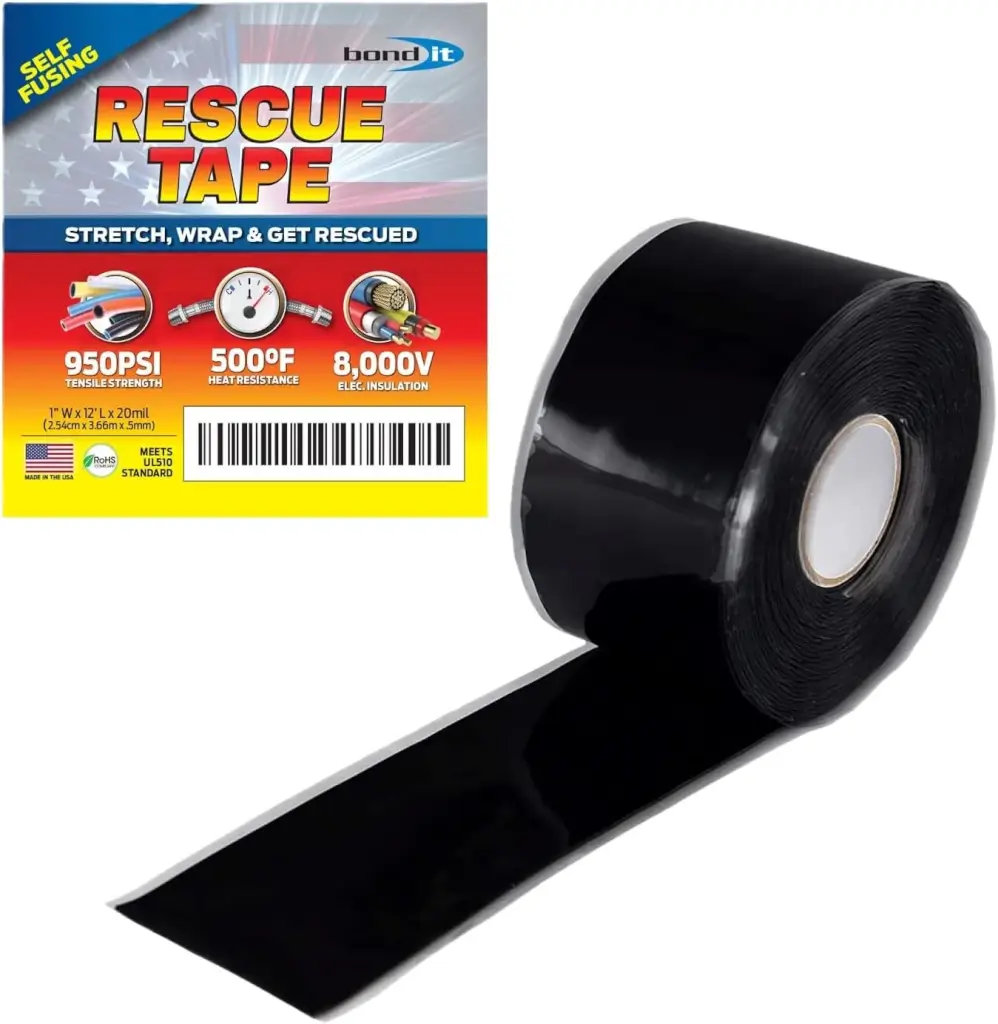
Self-sealing silicone tape can stop a radiator hose leak long enough to get you to a safe place
Emergency hack for a leaking radiator hose— This one rarely works for a long drive, but it can get you some help. Pantyhose. Wrap it tightly around the leaking hose and tie the ends.
• Leaking water pump— In well well-maintained vehicle, a water pump can last the life of the engine. However, most water pumps start leaking coolant due to worn-out coolant and internal corrosion. See this post on water pumps and see this post on coolants.
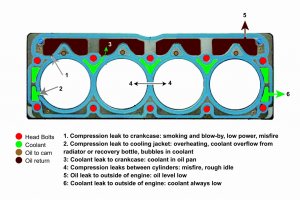
Typical head gasket
• Failed head gasket— A head gasket failure that occurs between the cooling passage and the cylinder can cause the engine to burn coolant, resulting in a low coolant level and engine overheating.
2) An inoperative or wrong-speed radiator fan can cause engine overheating
Most late-model vehicles have several electric radiator 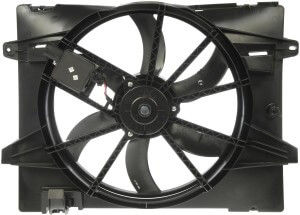 fans that run at different speeds depending on the cooling needs of the engine. GM, for example, uses two fans that can run at two speeds. If you’re driving with your AC on, the fans run at high speed at all times. With the AC off, the engine computer determines whether to run the fans at low or high speeds depending on how well the low speed is removing heat. The most common cause of GM radiator fan failure is a bad relay. There are three relays, so check all three. Here’s a link to how to check them.
Chrysler uses a different method. Their electric radiator fan relays run the fan at variable speeds depending on how much cooling is required. A failed radiator fan relay is the most common cause of engine overheating. See this post on how to diagnose and fix a Chrysler radiator fan relay.
Other carmakers use variations on those two approaches, where relays control the fan speed or a variable type relay is used to provide varying fan speeds based on cooling needs.
How to fix an inoperative radiator fan
Check for blown fuses and replace if you find one
Swap in a similar relay to see if that fixes the problem
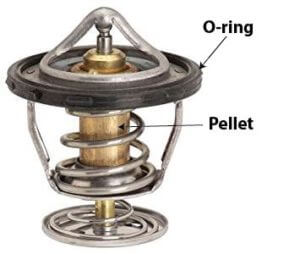
Engine Thermostat
3) A faulty thermostat can cause engine overheating
Engine thermostats operate with a pellet filled with a mixture of wax and copper particles. The wax mixture melts at higher engine temperatures and expands. The expansion is a pin outward which opens a valve, allowing coolant to flow. Over time, the rubber sealing gasket wears out and the molten wax seeps into the coolant. At that point, the thermostat stops working, leaving it in a permanently closed position, preventing coolant flow, and resulting in your engine overheating.
There is no quick fix for a stuck closed thermostat. It must be replaced. Call a tow truck.
4) Lack of circulation caused by a worn-out water pump
The water pump is responsible for circulating
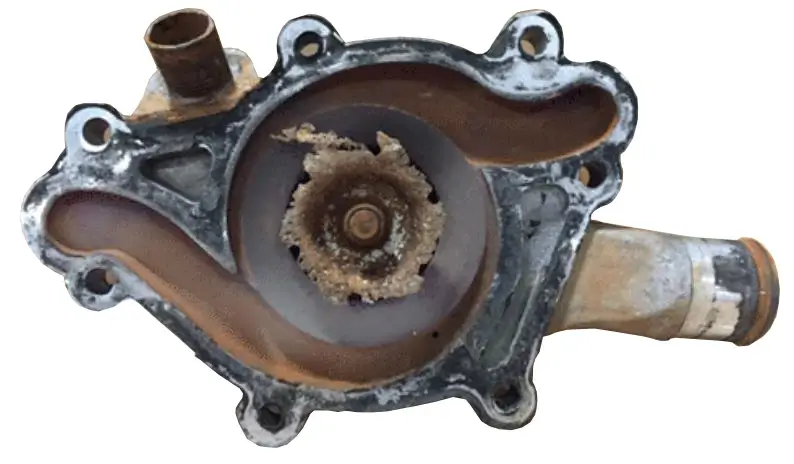
Notice the fully eroded impeller in this water pump
coolant through the engine and radiator. If it fails, coolant circulation diminishes, resulting in overheating:
• Broken or worn out impeller— The water pump’s impeller can break or become detached from its shaft, hindering coolant flow.
• Worn Out Bearings— Over time, water pump bearings can wear out, causing the pump to function ineffectively or seize altogether.
There’s no quick fix for a leaking or worn-out water pump. It must be replaced.
©, 2017 Rick Muscoplat
Posted on by Rick Muscoplat