
Catalytic converter problems and symptoms
Learn the most common catalytic converter problems and symptoms
If your vehicle displays any of the following trouble codes: P0420, P0421, P0422, P0423, P0424, P0430, P0431, P0432, P0433, P0434, you’re looking at the most common catalytic converter problems and symptoms. Unfortunately, too many people try fixing catalytic converter problems by replacing it without performing any further diagnostics. Bad move. Here’s why: catalytic converter problems are NEVER the cause—they’re the effect. There’s a saying that converters never die; they’re murdered, and it’s absolutely true.
Every day I see people going to automotive forums asking about catalytic converter cost. But when I ask them what caused their catalytic converter problems, they act as if these things just wear out. They don’t. Catalytic converter problems can be caused by
A plugged catalytic converter is a common symptom caused by overheating due to misfires or internal leaks
People think catalytic converters plug up on their own. They don’t. They overheat, and the ceramic honeycomb melts, and THAT’s what causes the exhaust restrictions.
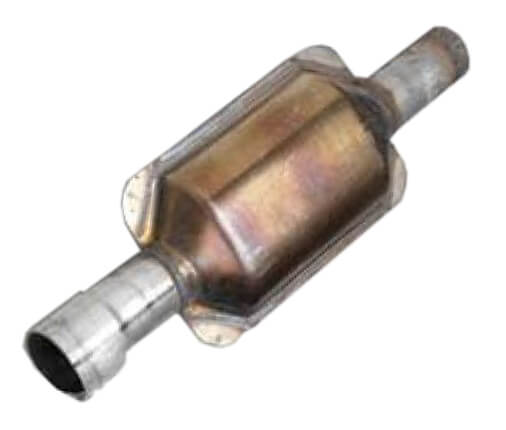
Overheated catalytic converter
Overheating can be caused by any of the following:
Intake manifold air leaks–Air leaks create a lean condition and the computer responds by adding more gas. That extra gas winds up in the converter and causes it to overheat.
Leaking fuel injectors–Leaking injectors dump fuel into the cylinders and then into the catalytic converter, causing overheating.
Incorrect or worn out spark plugs–Worn spark plugs, the wrong spark plugs, or improperly gapped spark plugs cause misfires, and the extra gas goes into the catalytic converter
Incorrect ignition timing— You guessed it. That causes misfires
Faulty O2 sensor—A bad O2 sensor reading equals a bad air/fuel mixture
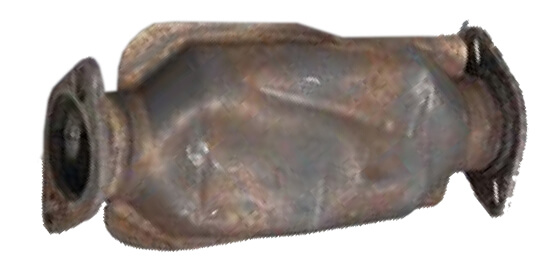
Impact damage that shatters the ceramic honeycomb and causes the converter to clog
Faulty EGR valve—again, a bad mixture equals misfire
Oil or antifreeze entering exhaust—Remember that coolant leak you never fixed? Well, where did you think all that extra coolant was going? Coolant and oil are just extra fuel for a catalytic converter, and that causes overheating.
Silicone contamination—So you fixed the exhaust manifold gasket yourself and used high-temperature RTV silicone, huh? Well, guess what? RTV can’t withstand exhaust manifold temps. As it degrades, it goes into the catalytic converter and destroys it.
Teflon tape—I replaced an oxygen sensor and thought it would be a good idea to wrap it with Teflon tape. Bad boy. It degrades and destroys the catalytic converter.
Aside from overheating caused by improper air/fuel mixtures, there are only two other things that can result in these trouble codes:
Catalytic converter problems and failures caused by impacts
Remember the parking lot curb you ran over? Nice going. It’s going to cost you a new converter.
Defective converter—yes, it does happen. But it’s rare.
So FIX the underlying problem before you even THINK about replacing the catalytic converter or you’ll be replacing the new one.
Want to learn more about catalytic converters? Click here and here.
Diagnose a catalytic converter problem
©, 2013 Rick Muscoplat
Posted on by Rick Muscoplat