
Learn how a catalytic converter works
How a catalytic converter works
A catalytic converter converts the various exhaust compounds of hydrocarbons (HC), Oxygen (O2), and Nitrogen oxides (N2) into more environmentally friendly gases. The converter is made using a porous ceramic structure coated with various precious metals. The metals are designed to react with the exhaust gases to cling to oxygen molecules and release them when fuel or oil enters the converter. This article explains how a catalytic converter works.
In a perfect world, all engines would burn the perfect combination of air and fuel in this ratio: 14.7:1 (air to fuel). After combustion, you would wind up with CO2, H2O and N2. Unfortunately, that never happens in the real world.
How your car computes the air-fuel mixture
You’re constantly adjusting the gas pedal, and the car is always encountering differing load conditions. Even if you keep the pedal in the same place, simply going up a small incline changes the load on the engine, which changes its combustion efficiency and emissions.
An oxygen sensor provides feedback to the computer
The oxygen sensor is simply a feedback mechanism to let the computer know how well it calculated the proper air/fuel mixture. If the computer provides too
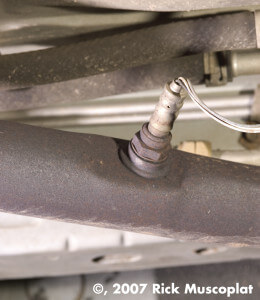
much fuel, the combustion will use up all the oxygen in the cylinder and the excess fuel goes right into the exhaust stream. The oxygen sensor reports a “rich” condition to the computer, and it immediately responds by lowering the amount of fuel going into the cylinders. If the computer cuts back fuel too much, the air/fuel charge will be lean and will burn up all the fuel. The unburned oxygen flows into the exhaust, which is sensed by the oxygen sensor.
The oxygen sensor alternates between rich and lean
So, the computer is constantly overshooting and undershooting the exact amount of fuel needed at any given second. The result is a constant stream of unburned fuel and unburned oxygen going into the exhaust.
How a catalytic convert works to reduce emissions
Catalytic converter construction varies by engine, but most use a three-way catalytic converter with a reduction and oxidation stage.
To expose the exhaust gases to a maximum surface area, each stage is made from a ceramic or stainless steel honeycomb substrate covered with a rough silica and alumina wash coat. Then, the surfaces are coated with platinum, rhodium, and cerium.
In the reduction stage, Cerium stores excess oxygen during periods of “lean” operation. (too little gas in the mixture, so the combustion ends early, leaving excess oxygen). The Cerium stores the oxygen to use later to oxidize excess HC and CO during periods of “rich” operation.
The oxidation stage uses platinum palladium and rhodium. Here’s how the reduction stage works:
• Breaks nitrogen oxide molecules (2NOx) into their component parts of O2 and N2.
• Uses some of the oxygen to change toxic Carbon MONOXIDE (CO) into non-toxic CARBON DIOXIDE (CO2) by adding an atom of oxygen.
• Changes excess hydrocarbons (HC) into two atoms of H to one atom of O, which produces water vapor (H2O).
What is secondary air?
The catalytic converter must first heat up in order to start the burn-off process. It uses the heat of exhaust to warm up. But on cold starts, the computer provides a very rich mixture. So the catalytic converter sees a lot of excess fuel but very little 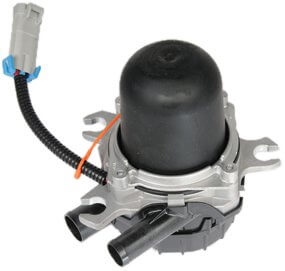 oxygen. To compensate for this temporary problem, many car makers add secondary air. That’s a mechanical or electrically operated air pump that shoves outside air into the catalytic converter during cold start-ups to provide the oxygen needed to “light off” a cold catalytic converter.
Secondary air pumps are regulated by solenoids and valves. Those solenoids and valves can burn out and corrode. That’ll set a trouble code. Most drivers ignore the check engine light when that happens. That’s a HUGE mistake because it results in loading the catalytic converter with fuel. When it finally reaches “light off” temperature, it has to burn off all that excess fuel. In some cases, a converter can accumulate so much excess fuel that the catalytic reaction reaches meltdown temperatures in excess of 2,000 degrees. That’s high enough to melt the ceramic honeycomb structure and destroy the catalytic converter.
Misfires kill catalytic converters
When an engine misfires, it dumps unburned fuel into the catalytic converter. If you read the preceding paragraph, you already know what’s coming up. Yes, if the misfiring continues, it destroys the catalytic converter.
Here’s where the diagnostic trouble codes come into play
The upstream oxygen sensor is the sensor that sees the fluctuating rich/lean conditions. But, if the catalytic converter is doing its job by storing oxygen and then using it to burn off excess fuel, the downstream oxygen sensor shouldn’t see any fluctuation. In other words, a properly operating catalytic converter uses the excess oxygen to incinerate the excess fuel. The computer is expecting to see little to no variation in the downstream sensor.
The most common catalytic converter code P0420
Here’s the actual definition of a P0420 code: Catalyst System Efficiency Below Threshold. It means the computer has detected too much activity in the downstream oxygen sensor. That indicates that the catalytic converter isn’t storing enough oxygen and isn’t properly incinerating the excess fuel.
A P0420 code can be caused by a bad UPSTREAM sensor that’s not doing a good enough job reporting to the computer, a vacuum leak that’s so large the computer can’t compensate for it by adding more fuel, an oil leak or worn piston rings/valve stems that’s dumping oil into the exhaust, or an internal coolant leak that’s dumping coolant into the exhaust. If the underlying problem continues long enough, it’ll destroy the catalytic converter.
This article is one in a series. If you want to know more about the topic, click on the links below
How to replace an oxygen sensor
Understanding oxygen sensor locations
More about code P0420 and P0430
More about the other converter codes
Avoid this big mistake
When people see a catalytic converter code, they automatically assume it is bad and replace it. But if they don’t fix the underlying problem that caused the converter to go bad, they’ll just kill the replacement.
©, 2016 Rick Muscoplat
Posted on by Rick Muscoplat