
American Standard Champion 4 Toilet Problems:
American Standard Champion 4 Toilet Problems: What Went Wrong With the Original Flush Valve Design?
Quick Summary
The most common American Standard Champion toilet problems involved the original Champion 4 flush tower introduced in the early 2000s. While the toilet earned an excellent reputation for powerful flushing, the first-generation flush valve developed a reputation for leaking, ghost flushing, and requiring frequent seal replacements. These issues eventually led to consumer lawsuits and multiple redesigns of the flush valve assembly. American Standard responded by changing the gasket material, increasing its hardness, reducing water absorption, eliminating problematic design features, and ultimately replacing the original flush tower with a completely redesigned flush valve that has proven far more reliable.
American Standard Champion Toilet Problems: Why the Original Flush Valve Failed
When American Standard introduced the Champion 4 toilet, it quickly became known as one of the industry’s best-performing gravity-flush toilets. Its oversized 4-inch flush valve allowed water to leave the tank much faster than conventional 2-inch flapper valves, producing an exceptionally powerful flush that could handle large waste loads with fewer clogs.
Unfortunately, many homeowners soon discovered that excellent flushing performance didn’t always translate into long-term reliability.
The original Champion flush valve developed recurring sealing problems that caused constant water leaks into the bowl. While these leaks rarely resulted in catastrophic failures, they wasted thousands of gallons of water over time and forced many homeowners to repeatedly replace seals or entire flush valve assemblies.
How the Original Champion Flush Valve Worked
Unlike a conventional toilet that uses a rubber flapper attached to a chain, the original Champion used a large vertical flush tower.
Instead of lifting a flapper, pressing the
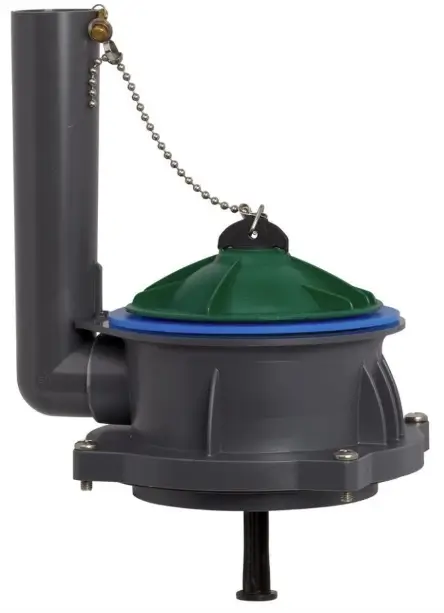
Original version of the American Standard Champion 4 flush valve
handle raised the entire tower off a large circular silicone seal located at the bottom of the valve. Once the tank emptied, gravity allowed the tower to drop back into place and compress the seal against the valve seat.
In theory, the design offered several advantages:
• Larger 4-inch opening for faster flushing
• Better resistance to clogging
• Fewer moving parts
• Improved flushing performance
The flushing performance generally lived up to expectations.
The sealing system did not.
The Most Common American Standard Champion Toilet Problems
Although several minor issues were reported over the years, most complaints centered on one component: the flush valve seal.
Common symptoms included:
• Ghost flushing every few minutes
• The fill valve turning on by itself
• Water constantly running into the bowl
• Higher water bills
• Repeated seal replacements
• Flush valve leaking even after installing a new seal
These symptoms all pointed to the same underlying issue—a flush valve that could no longer make a watertight seal.
Why the Original Flush Valve Failed
Several engineering issues contributed to the Champion’s reputation for leaking.
1) The Seal Absorbed Water — One of the biggest design weaknesses involved the silicone sealing gasket. After sitting underwater for months or years, the original gasket absorbed moisture and gradually changed shape.
As the seal swelled, it could:
• Lose its perfectly flat profile
• Develop waves or blisters
• Distort enough to allow water to pass underneath. Even tiny imperfections were enough to create a slow but continuous leak.
2) The Seal Could Roll Out of Position — The gasket fit into a groove around the bottom of the flush tower. Many plumbers discovered that during flushing or installation, the seal could partially roll out of its groove. Once displaced, the tower no longer contacted the valve seat evenly, allowing water to leak continuously into the bowl.
3) The Seal Was Too Soft — The original seal material was relatively soft, measuring roughly 40 durometer in hardness.
While a softer gasket compresses easily, it also:
• Deforms more readily
• Is more susceptible to swelling
• Can lose its shape after years of use
• Is easier to pinch during installation
The result was a seal that often required replacement much sooner than homeowners expected.
A Noise-Reduction Feature Created New Problems
Early versions of the Champion flush tower included a molded plastic flange intended to reduce the loud popping sound that occurred during flushing.
Although the modification reduced noise, internal engineering documents later indicated that the flange negatively affected sealing performance. The feature was eventually removed during later redesigns.
The Class Action Lawsuit Against American Standard
As complaints increased, consumers filed lawsuits alleging that the original Champion flush valve contained a defective design.
The lawsuits claimed that:
• Flush valves leaked prematurely.
• Homeowners experienced repeated repairs.
• American Standard knew about ongoing engineering concerns before the product reached the market.
• Replacement seals often failed again after a relatively short period.
Court records included internal engineering discussions regarding leaking flush valves, gasket revisions, manufacturing changes, and ongoing efforts to improve reliability.
Although the litigation generated significant attention, the proposed nationwide class was not ultimately certified because numerous versions of the flush valve had been produced over the years, making it difficult to treat all owners as a single class.
A later lawsuit filed in California similarly alleged persistent flush valve defects but was resolved without creating a nationwide class settlement or product recall.
How American Standard Fixed the Problems
To its credit, American Standard did not simply continue manufacturing the original design.
• Instead, engineers made a series of improvements over several years.
• Improved Gasket Material
One of the most important changes involved reformulating the sealing material. The updated gasket absorbed significantly less water, making it much less likely to swell or lose its shape during years of continuous immersion.
Increased Seal Hardness — The newer seals were manufactured with a higher durometer rating.
The firmer material:
• Better resisted deformation
• Stayed seated in its groove
• Maintained sealing pressure longer
• Improved long-term durability
• Manufacturing Improvements
American Standard also experimented with different manufacturing methods for producing the gasket, seeking greater consistency from one seal to the next.
These manufacturing improvements reduced variations that could contribute to leaks.
Elimination of the Dampening Flange
The plastic noise-reduction flange found on early production units was removed after engineers determined it contributed to sealing issues. Removing the flange simplified the flush tower while improving reliability.
A Completely Redesigned Flush Valve
Eventually, American Standard introduced an entirely new flush valve assembly.
The redesigned unit differs noticeably from the original:
• Mostly black housing instead of gray
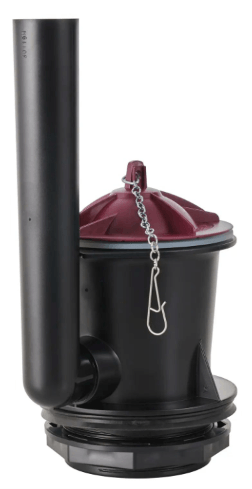
This image shows an updated design of the American Standard flush valve for the Champion 4 toilet
• Redesigned red sealing cup
• Simplified internal components
• Improved sealing geometry
• Elimination of several known failure points
Most plumbing professionals consider the updated assembly significantly more reliable than the original flush tower.
Should You Replace Only the Seal?
If your Champion toilet still has the original first-generation flush tower, replacing only the gasket may provide a temporary fix.
However, if the tower itself is worn or the valve seat has developed imperfections, leaks often return.
For that reason, many plumbers recommend replacing the entire flush valve assembly with the updated design rather than continuing to install replacement seals on the original mechanism.
Although the replacement costs slightly more, it generally provides a much longer-lasting repair while incorporating all of American Standard’s engineering improvements.
How to buy the updated flush valve for your American Standard Champion 4 Toilet
The current OEM replacement is: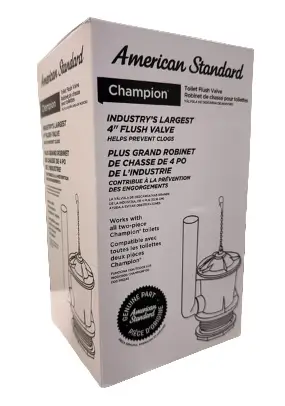
7382106-100.0070A (also sold as 7382106-100.0070AP)
Fits all 2-piece Champion toilets
Includes the updated flush valve, seal, locknut, installation wrench, and an extra seal on many kits. This is the replacement American Standard now recommends for the older Champion flush towers.
You can find the replacement on Amazon for about $45.
You’ll have to empty the tanks, disconnect the supply line, and remove the tank from the bowl. I recommend replacing the tank-to-bowl bolts and washers at the same time.
Is the Champion 4 Still a Good Toilet?
Despite the early American Standard Champion toilet problems, the Champion 4 remains a respected toilet because of its exceptional flushing performance.
The redesigned flush valve has largely eliminated the reliability issues that plagued the earliest models. Modern Champion toilets continue to use the oversized 4-inch flush valve concept while benefiting from years of engineering improvements.
If you own an older Champion that still contains the original flush tower, upgrading to the latest replacement flush valve is often the most dependable long-term solution. It restores reliable sealing performance while preserving the powerful flushing action that made the Champion series popular in the first place.
©, 2026 Rick Muscoplat
Posted on by Rick Muscoplat