
Check Engine Light Is Flashing? Here’s What to Do
What To Do Immediately When Your Check Engine Light Is Flashing
Quick Summary
A flashing check engine light indicates a serious engine misfire; one that’s serious enough to cause significant damage to your catalytic converter, costing thousands to replace. When you see a flashing check engine light, you should back off the accelerator until the light stops flashing. If you can’t get to a shop without further flashing, you should call for a tow truck. That will be far less expensive than a new catalytic converter.
Article
Why I Take a Flashing Check Engine Light Seriously Every Time
Over the years, I’ve diagnosed hundreds of drivability issues, and one thing I’ve learned is this: when a check engine light is flashing, the vehicle is telling you something urgent is happening right now—not later, not eventually, but immediately.
Most drivers are used to a solid check engine light, which typically indicates a failed sensor, an EVAP leak, or an emissions issue. But a flashing check engine co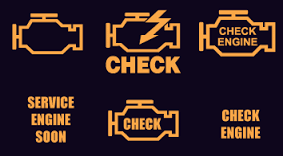 ndition is completely different. It’s the engine control module waving a red flag that says, “We have an active misfire that can destroy expensive components.”
And I’ve seen it happen. A simple ignition coil failure, ignored for 10 minutes, turns into a melted catalytic converter. That’s the difference between a quick fix and a major repair bill.
What Causes a Flashing Check Engine Light
A misfire means one or more cylinders aren’t burning the air-fuel mixture properly. The root problem can be caused by a faulty or worn spark plug, spark plug wire, ignition coil, faulty fuel injector, or a serious mechanical problem. Whatever is causing the misfire is preventing the air/fuel mixture from burning properly and instead is dumping raw fuel into the catalytic converter.
How a Misfire Destroys Your Catalytic Converter
Here’s where things get expensive—and fast.
The catalytic converter is designed to store excess oxygen and then provide it to small amounts of unburned fuel that reach the exhaust. Under normal conditions, the converter operates around 400°F to 800°F. But when the engine dumps more fuel into the exhaust, the converter can overheat to as high as 2,000°F. At that temperature, the converter self-destructs. I’ve seen converters literally glow red underneath a vehicle.
The high heat melts the ceramic structure, causing blockage and preventing the engine from breathing properly. Once that happens, the converter is done—no cleaning, no repair, just replacement.
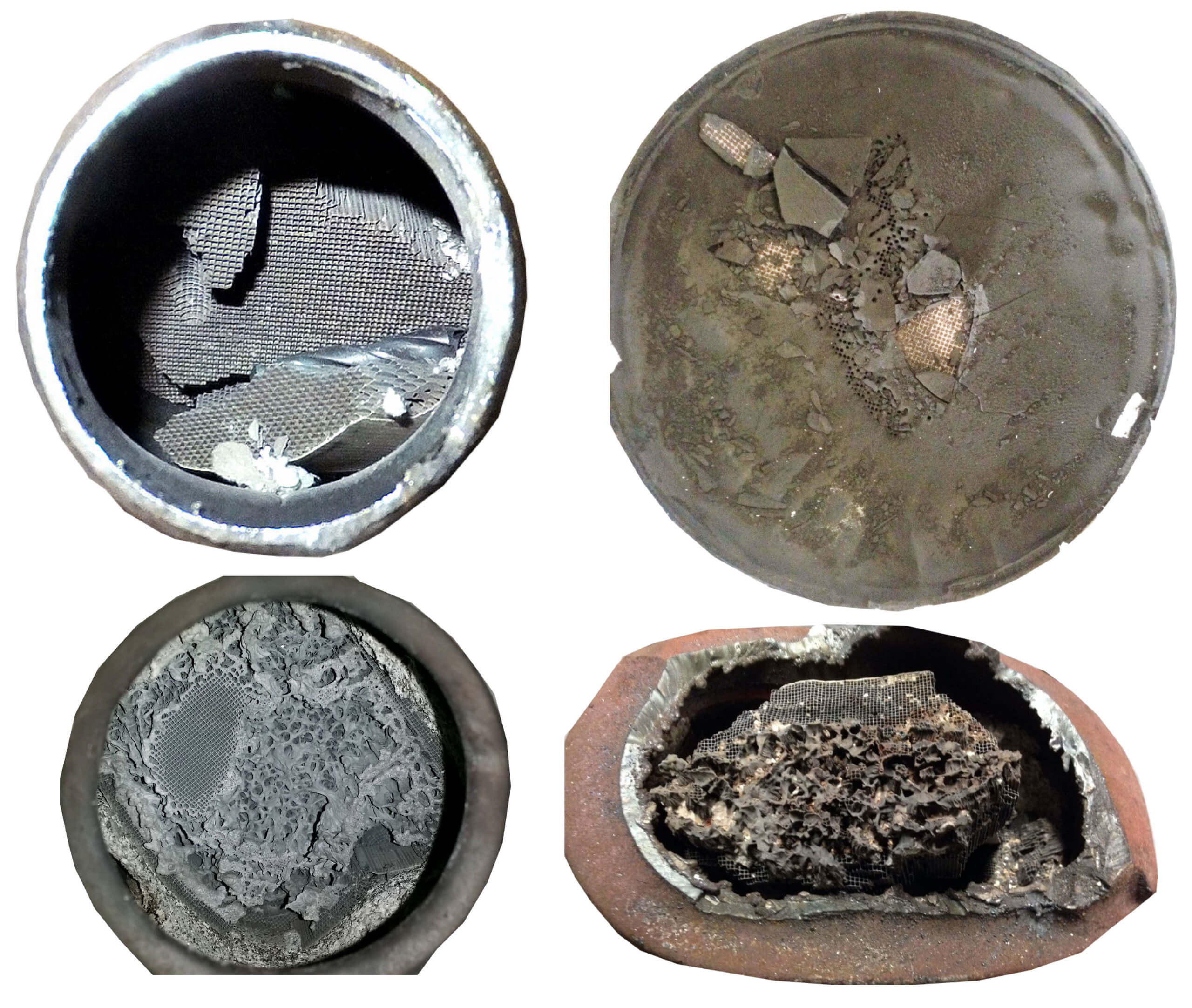
Inside view of a catalytic converter with a melted ceramic structure
And on many modern vehicles, you’re not replacing just one converter. Some systems have two or even three, which is why ignoring a flashing check engine light can quickly multiply your repair costs.
How I Diagnose a Flashing Check Engine Light
When I get a vehicle in with a flashing check engine, I go straight to the scan tool. The first thing I’m looking for is a misfire code—typically something like P0300 (random misfire) or P0301–P0308 (specific cylinder misfire).
Once I know which cylinder is affected, I start narrowing it down.
If it’s a single-cylinder misfire, I’ll swap ignition coils between cylinders to see if the misfire follows. That’s one of the fastest ways I can confirm a bad coil. I’ll also inspect the spark plug for fouling, oil contamination, or excessive wear.
If the ignition system checks out, I move on to fuel delivery—checking injector operation and fuel pressure. In more advanced cases, I’ll run a compression test or use a scope to verify valve timing and cylinder sealing.
The key is to isolate the cause and fix it. But here’s the part a lot of people overlook: after the repair, I always verify that the catalytic converter hasn’t already been damaged.
If the vehicle still shows signs of restricted exhaust flow, loss of power, or overheating,
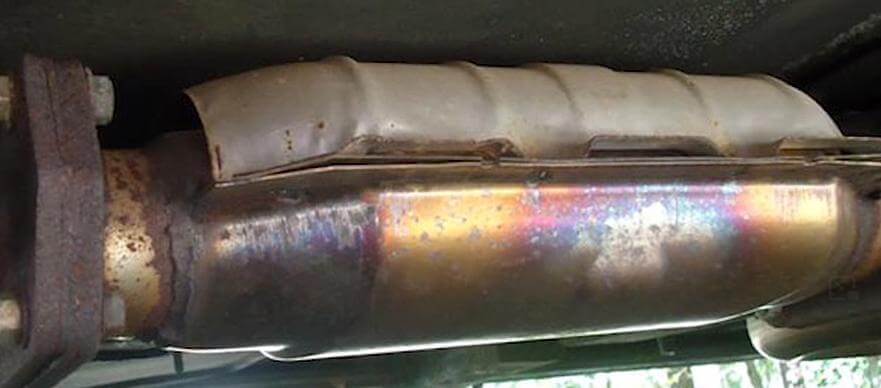
Overheated catalytic converter viewed from the outside
I’ll check backpressure or run a thermal scan to confirm the converter’s health. Catching that early can prevent future problems.
For more information on how catalytic converters work, read this article
©, 2013 Rick Muscoplat
Posted on by Rick Muscoplat