
How to Replace a Rusted Brake Line
The Safest 3 Ways to Replace Rusted Brake Line at Home
Quick Summary
There are three legitimate DIY paths to replace rusted brake line sections: installing pre-bent replacement lines, abandoning the original line and running a new one, or splicing in a properly flared repair section. Each method has tradeoffs in cost, labor, and long-term durability. If you understand those differences and follow brake-system rules, replacing a rusted-out brake line safely is well within reach for a careful DIYer.
Article
Replacing a Rusted Brake Line: What Actually Fails and Why
Steel brake lines rust from the inside out, as well as the outside in. Brake fluid is hygroscopic, so it attracts water, which attacks the brazing that was done when the steel tubing was manufactured. At some point, that brazed seam can fail, leading to a brake line leak. The outside of the tubing corrodes due to road salt, moisture, and dirt packed against the tubing, especially where retaining clips trap debris. When steel tubing ruptures, you don’t have the luxury of experimentation—you need a repair that restores full hydraulic integrity.
1) Buy a set of pre-bend brake lines (if they’re available for your vehicle) and install them in place of the rusted line, or
2) Buy a coil of copper/nickel brake line or long lengths of steel line and run new lines from the master cylinder to the brake, or
3) Splice in a new section using an automotive-grade flare coupler
Option One: Installing Pre-Bent Brake Lines
Pre-bent brake line kits look like the cleanest solution on paper, and sometimes they are. These lines are typically stainless steel, pre-flared, and fitted with the correct nuts. If your vehicle’s brake lines run externally along the frame rails, replacing a rusted brake line with pre-bent sections can be a straightforward unbolt-and-replace job.
The reality is more complicated. Many vehicles route brake lines through the body, across the firewall, inside rocker panels, or over the fuel tank. In those cases, a single pre-bent line simply won’t snake through the factory path. You may still be dropping a fuel tank or pulling interior trim. Pre-bent kits also require patience—they’re often special-order items—and they aren’t cheap. Still, when access is good, this is one of the most durable ways to replace rusted brake line assemblies.
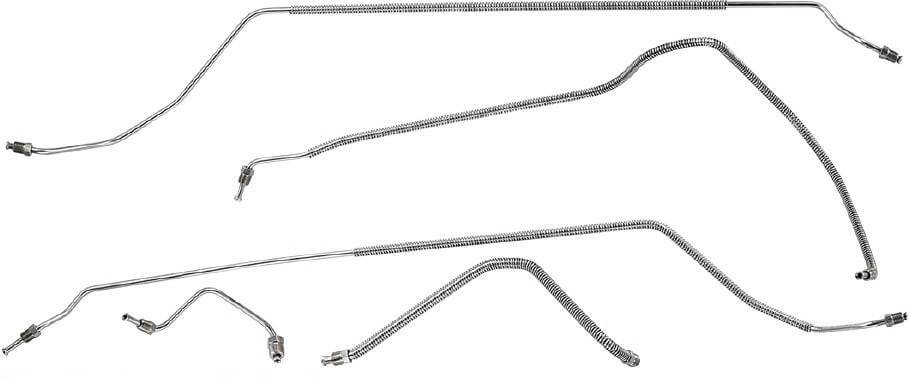
Pre-bent brake line kit
The advantage of buying a set of pre-bent brake lines
The pre-bent brake lines sold in kits are often made from stainless steel, so they won’t rust like your factory brake lines. They’re pre-flared and come with new brake fittings at each end of the line, so you don’t have to search for the right fitting. If your brake lines run under the vehicle, you can likely replace your rusted brake lines yourself by unscrewing the old lines and installing the new pre-bent ones.
The disadvantages of pre-bent brake lines
In addition to the wait times, they’re also pricey. Expect to pay $200 to $350 for a set of pre-bent stainless steel brake lines. That may seem like a bargain compared to the typical shop charge of $1,000 or more to make new brake lines from scratch, but there’s a catch. They’re not always as easy to install as you think. For example, many rear factory brake lines run from the master cylinder, into the firewall, along the rocker panels inside the vehicle and then exit the interior near the back seat. There is no way you can replace one of those lines with a single pre-bent section. Plus, many car makers run the rear brake lines over the gas tank, so you still have to deal with lowering the tank to use a pre-bent line. In other words, that set of pre-bent brake lines may wind up costing you more than you think in labor if you don’t do the job yourself.
Option Two: Abandon the Old Line and Run a New One
This is the method I use most often in the real world. Instead of removing every inch of the original tubing, I leave it in place and route a new line from the master cylinder or ABS module directly to the flex hose connection.
From a parts standpoint, this is the fastest way to learn how to replace a rusted-out brake line. You can buy tubing, fittings, and fluid the same day. The labor, however, is all on you. You must duplicate factory routing, avoid exhaust heat, secure the line properly, and create perfect flares on both ends.
The material choice matters here. The factory used a steel line, but it’s miserable to bend and flare under a car. Copper-nickel line bends cleanly, resists corrosion, and flares beautifully. For DIY work, it dramatically increases your odds of success when you replace rusted brake line runs from end to end.
Option Three: Splicing in a Replacement Section
Despite what internet folklore claims, splicing a brake line is not illegal when done correctly. Automakers do it themselves using junction blocks and short line segments. The key is that everything must be automotive-grade and properly flared.
When I splice, I only do it where there’s clean, solid tubing on both sides
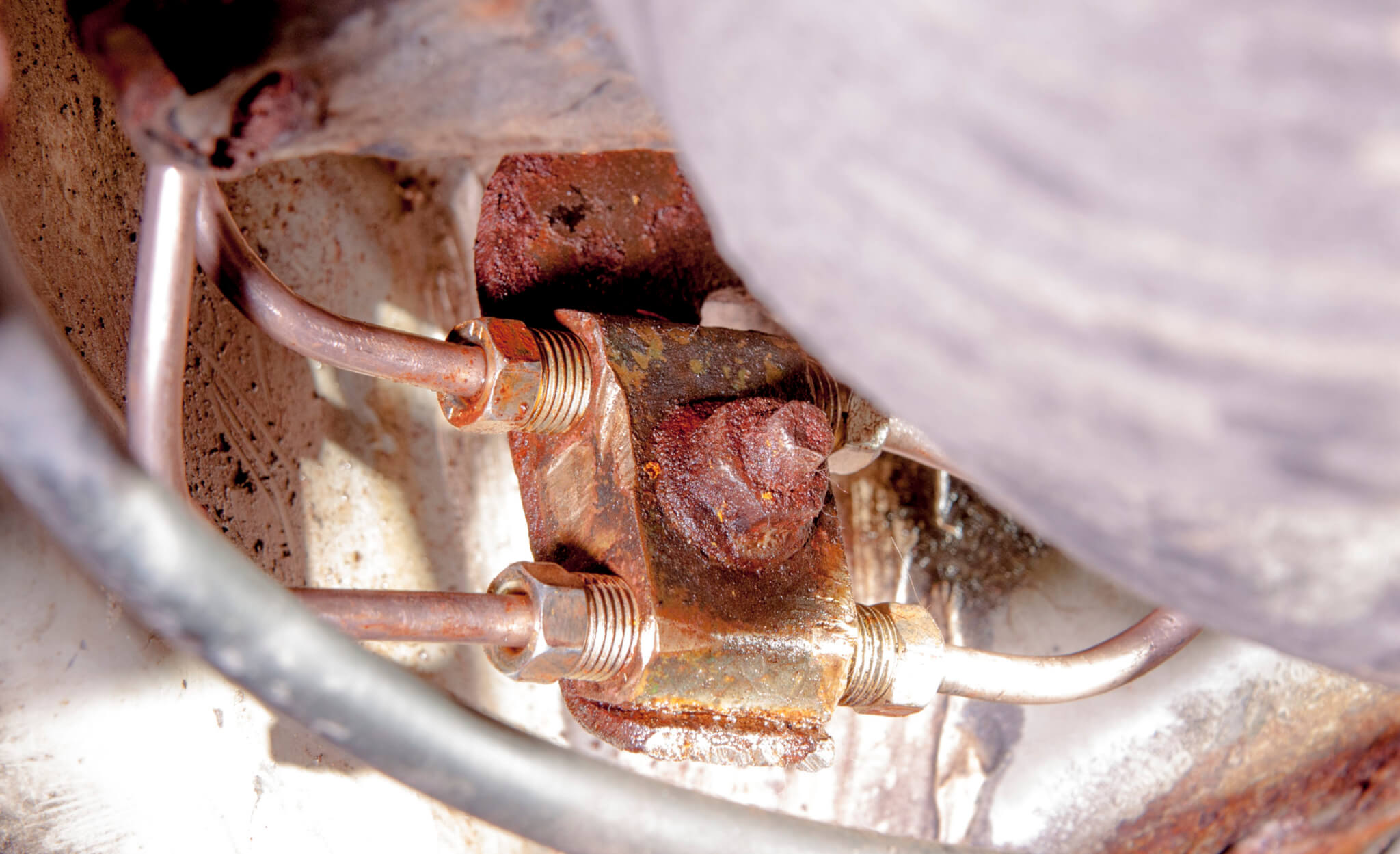
Here’s an example showing of a Subaru splice block. Subaru ran a brake line from the master cylinder to the splice block at the rear of the vehicle. They then ran a smaller length of line from the block to the flex hose connector for the rear brakes.
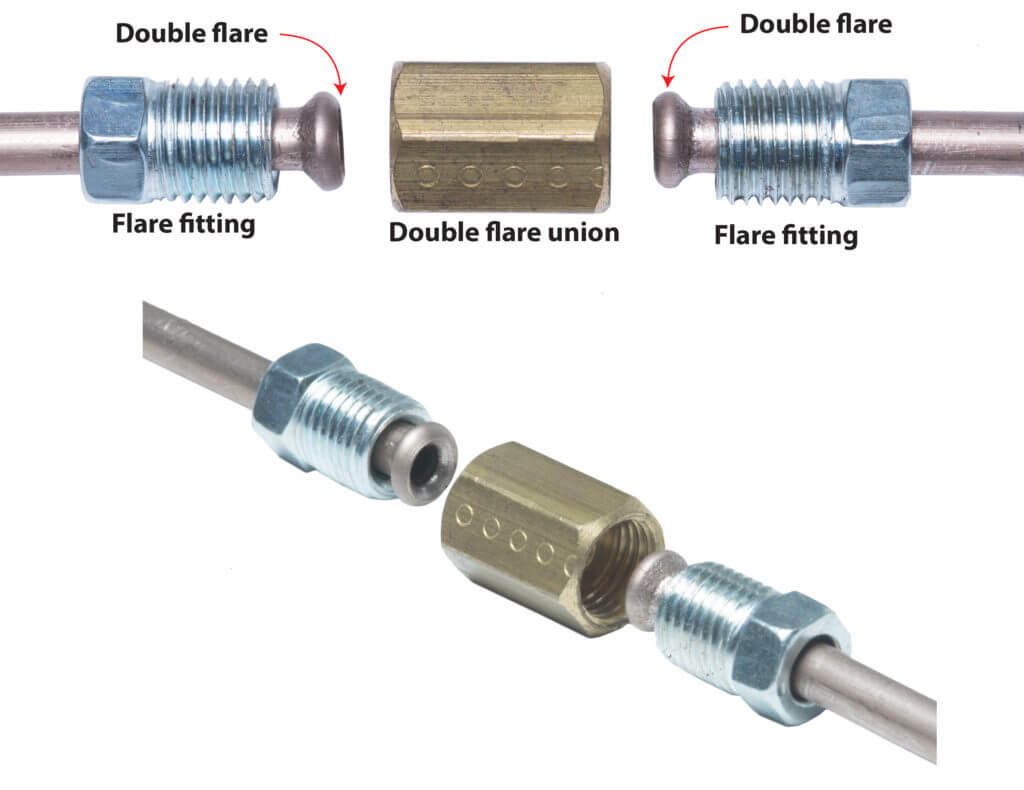
of the leak. I cut back to good metal, install new fittings, and join the repair section with a double-flare union that matches the vehicle’s flare type. This approach can save hours of labor and is often the most practical way to replace a localized area of rusted brake line damage.
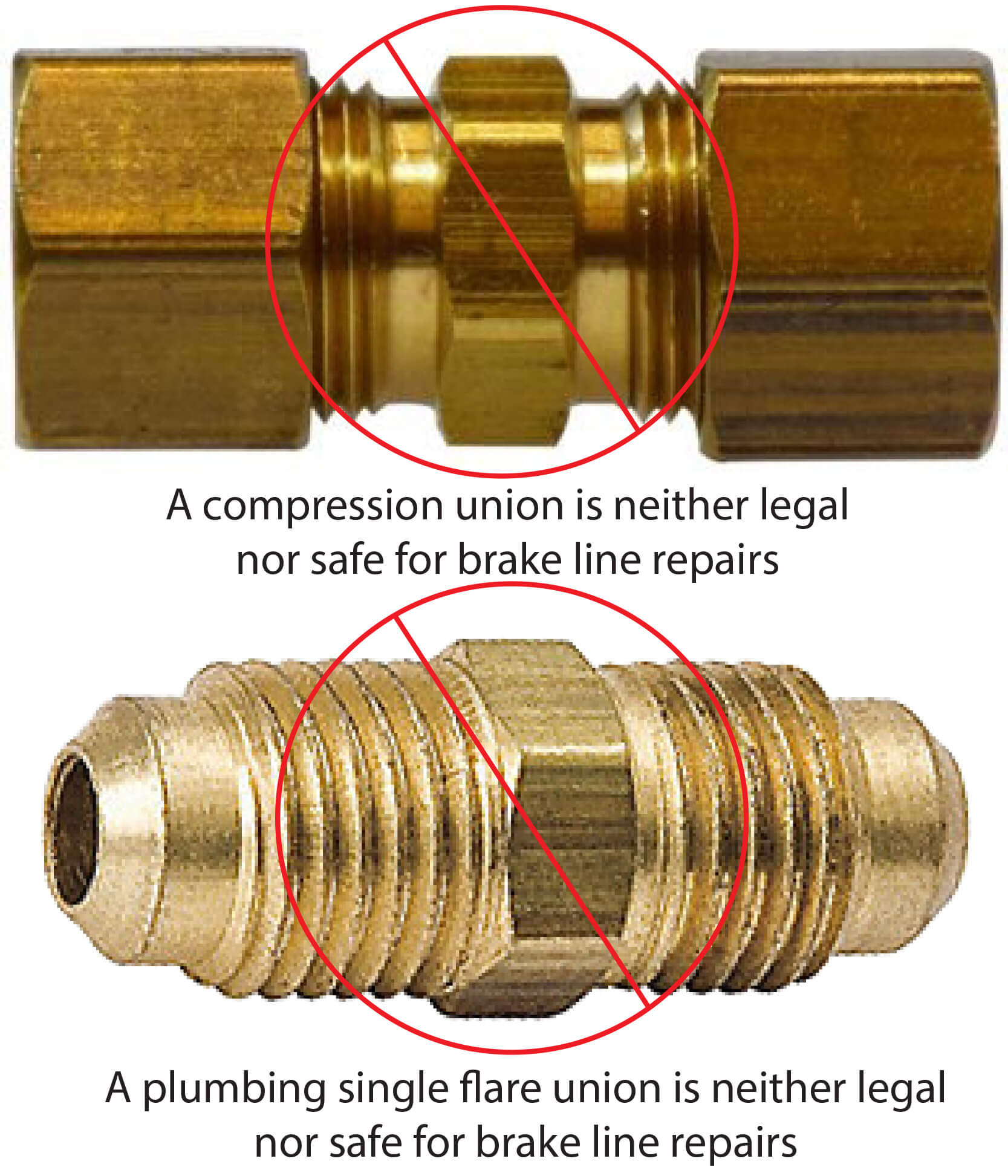
What you cannot do—ever—is use compression fittings or plumbing unions. Those parts are designed for household water pressure, not brake system pressures. Learning how to replace a rusted-out brake line safely means respecting the difference between plumbing and hydraulics.
Contrary to online folklore, it is not illegal to splice in a replacement section as long as you do it properly (more on that below).
In fact, carmakers routinely install small sections of brake line between the master cylinder and a splice block, and then a smaller section of line to the brake flexible hose connector (see the photo to the right).
To consider this option, you first have a good section of tubing on each side of the leak. Those sections must be clean and accessible.
To make the splice, you’ll need an automotive-grade (NOT plumbing-grade) double-flare coupler, corresponding brake line fittings, new line, and a double-flare tool.
See this post to learn about brake line flaring tools.
Why Flare Quality Matters More Than Anything
Every brake line repair lives or dies by the flare. SAE double flares, bubble flares, and DIN mushroom flares are not interchangeable, and cheap tools make bad flares. I’ve seen more failed repairs caused by poor flaring than by rust itself.
If you don’t practice first, you’ll redo the job. If you reuse old fittings, they’ll rust faster the second time. If you guess at flare types, you’ll chase leaks. These are hard-earned lessons that matter every time you replace rusted brake line components.
Choosing the Right Tubing and Tools
Copper-nickel line is my go-to for DIY repairs because it bends without kinking and seals reliably. Thin-wall bargain tubing kinks easily and fights you at every bend. Good bending pliers and a quality flaring tool turn replacing a rusted-out brake line from a nightmare into a controlled process.
Even with good tools, expect mistakes. That’s normal. Straightening tools can save a section of line that would otherwise go into the scrap bin. In the long run, investing in proper tools often costs less than paying a shop a single time.
It IS illegal to use compression unions or single flare unions for brake line repairs
What you can’t do is use compression fittings or single flare plumbing unions to make a brake line splice. That’s not only bad practice, but it’s also just not safe. Compression fittings are designed for plumbing pressures around 40 psi, while brake lines must handle up to 2,000 psi. In other words, compression fittings can’t handle brake line pressure and can leak during heavy braking.
However, you can perform a brake line splice using an inverted double flare union and a double flare fitting
As long as you use an automotive grade SAE double/inverted flare, SAE “bubble” flare, or DIN Single Mushroom flare union with the appropriate size and type fitting, you can splice in a new section of brake line. But you should avoid these common DIY brake line repair mistakes:
Common rusted brake line repair mistakes
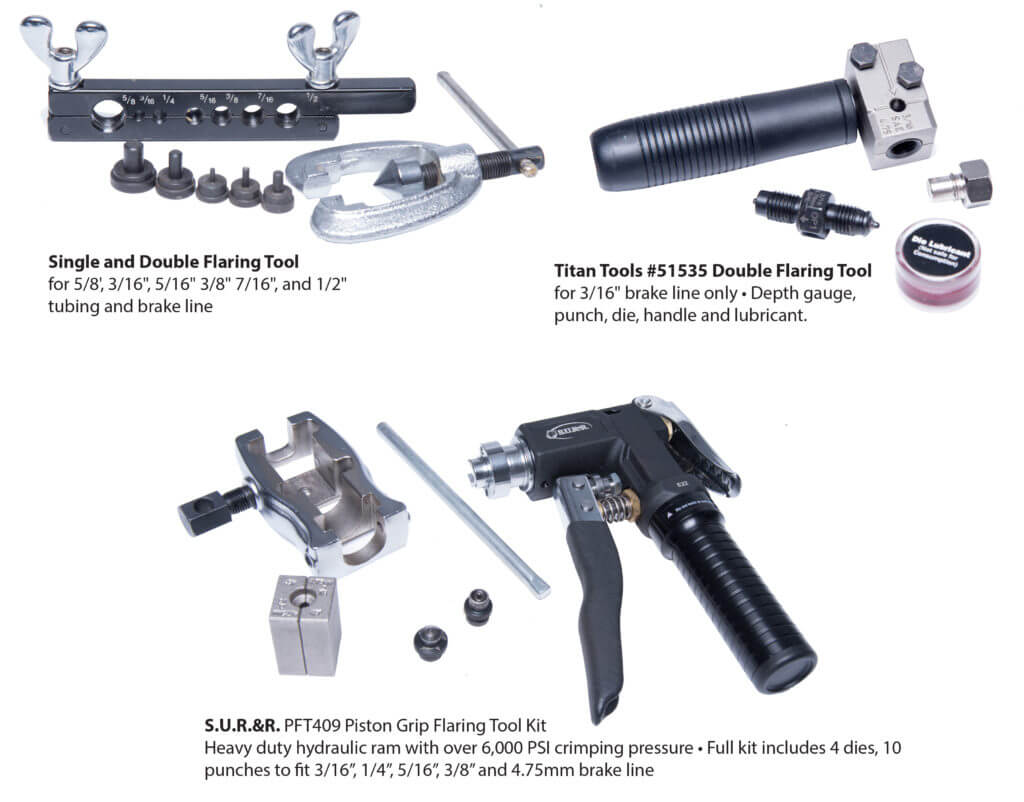
• Using cheap flaring tools—Making a double/inverted or bubble flare requires high-quality tools. If you think you can buy a cheap flaring tool and make good flares, take it from me, you’re kidding yourself. The clamps won’t hold tight, and the forming tools won’t fit properly. You’ll wind up with lopsided flares.
This flare was made using the S.U.R.&R. PFT409 Piston Grip Flaring Tool Kit. To see how it’s done, click here
• Not practicing before starting the repair— Making high-quality double/inverted or bubble flares takes practice. If you think you’re going to make a good flare on your first try, I promise you, your connections will leak, and you’ll have to remake the entire line.
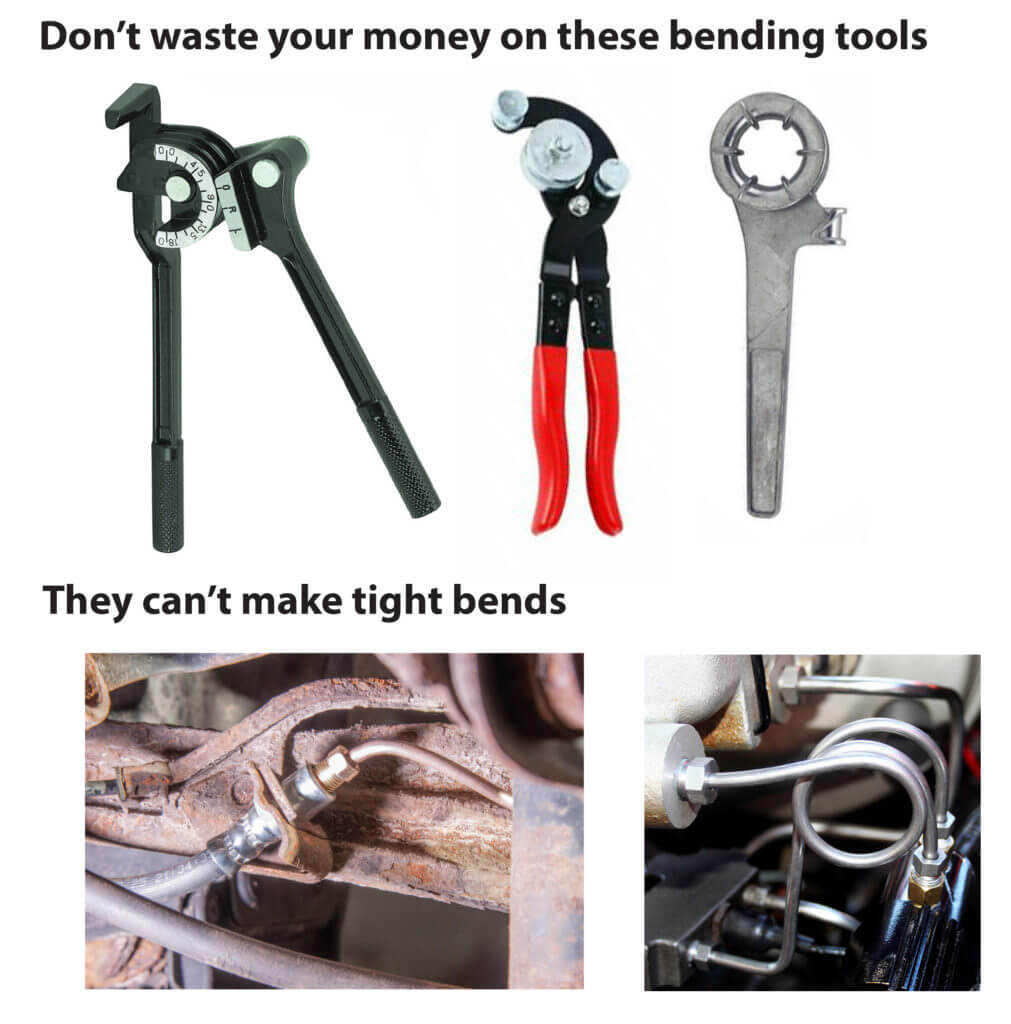
• Not having the proper bending tools—Most auto parts stores sell cheap bending tools. They work well for large-diameter bends. But you’ll need to make some sharp 90° bends, and those cheap bending tools won’t cut it. I’ve listed some bending tools below. Trust me, you’ll need them.
• Using steel brake line—Yes, that’s what they used at the factory. But the steel brake line
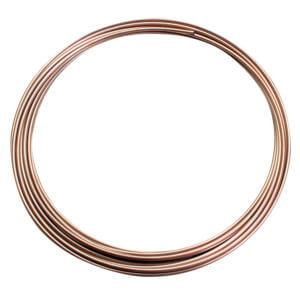
S.U.R.&R. UltraBEND® Flexible Brake Line Tubing
is hard to bend and hard to flare out in the field. Do yourself a favor and buy a spool of copper/nickel easily bendable brake line. Not all auto parts stores carry it, but it’s worth finding because it’ll make the job MUCH easier. I like S.U.R&R because it bends easily without kinking and flares much more easily than a steel brake line. It costs a bit more than the copper/nickel other brands you can find online, but it’s also a much better product. The cheap stuff is made with thinner walls, so it kinks easily. Find S.U.R&R UltraBEND® Flexible Brake Line Tubing at many national retailers and most commercial parts stores and tool distributors.
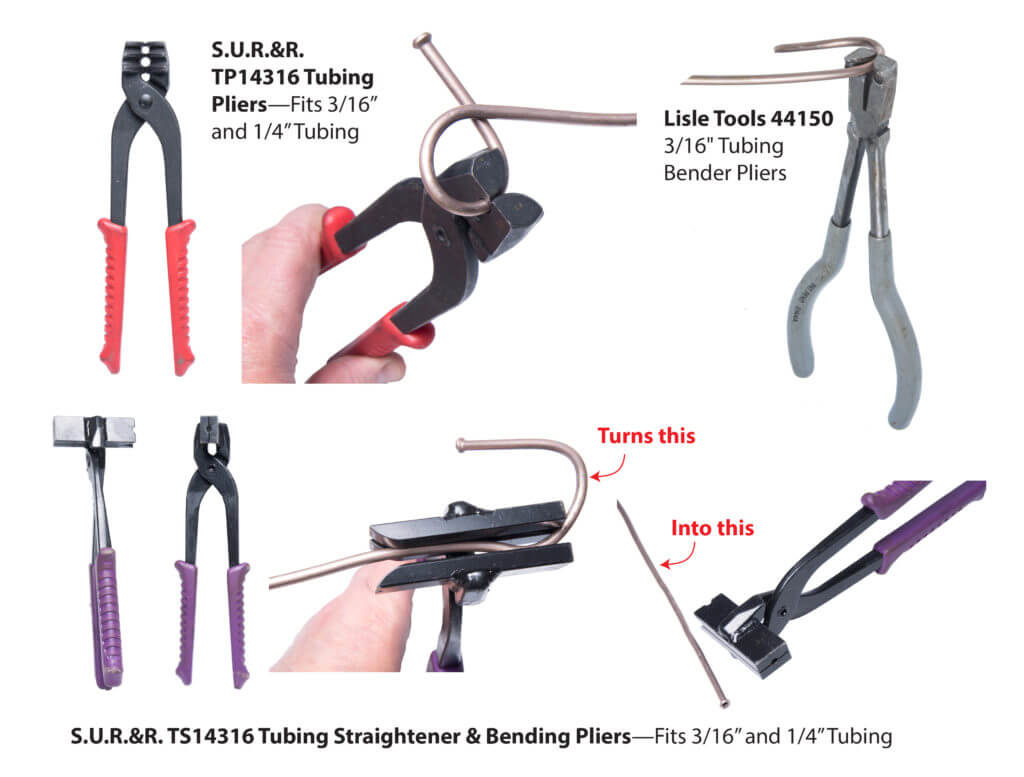
If you have a tight bend, invest in one of the bending tools shown below. You’re going to make mistakes, so it pays to invest in a brake line straightening tool as well. That can save you from having to reform an entire section of line.
TIP: Shop on ebay for used S.U.R.&R. bending, flaring and straightening tools. If you can’t find them used, buy them new. Then do your brake job and sell the tools on ebay to recoup most of your investment.
• Reusing brake line fittings—Most of the time, the brake line fittings are rusted to the brake line. If you can get the fitting off, you’ll likely have to drill out the old steel brake line. Even if you get the old line out, the fitting is already compromised. It’s lost its rust preventative zinc coating. So it will rust much faster if you reinstall it. New fittings are a few bucks. Be a sport and buy new fittings.
• Reusing old flexible brake lines—If the steel brake lines are rusted, chances are the metal ends on your flexible brake lines are rusted as well. They’re cheap (especially at Rockauto.com). Buy new lines and start fresh.
• Not checking to see what type of fittings you have on your vehicle— There are three types of flare connections on vehicles: the SAE double/inverted flare, SAE “bubble” flare, and DIN Single Mushroom flare. You can’t make a bubble or mushroom flare using an SAE double flaring kit. Also, DIN bubble/mushroom flare kits are harder to find and are more expensive.
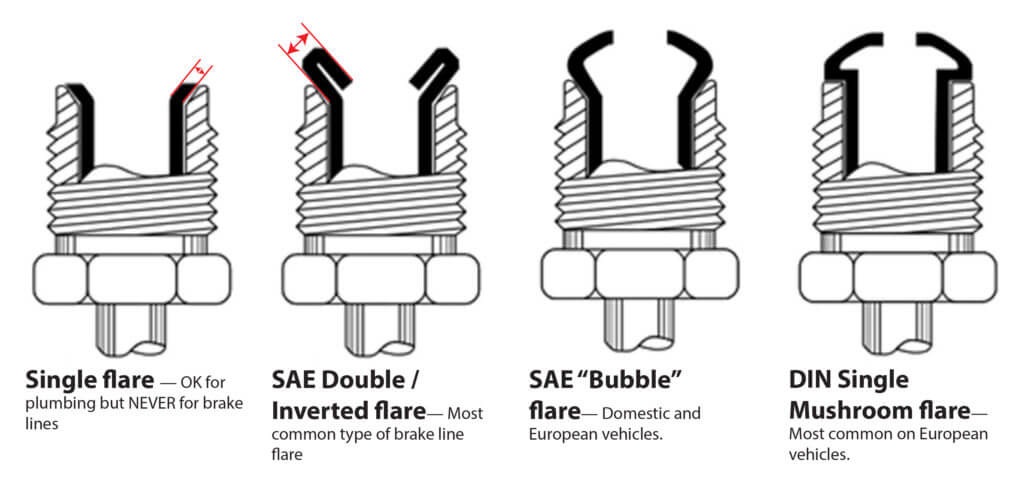
Tools you’ll need to repair rusted brake lines
Double-flare tool kits
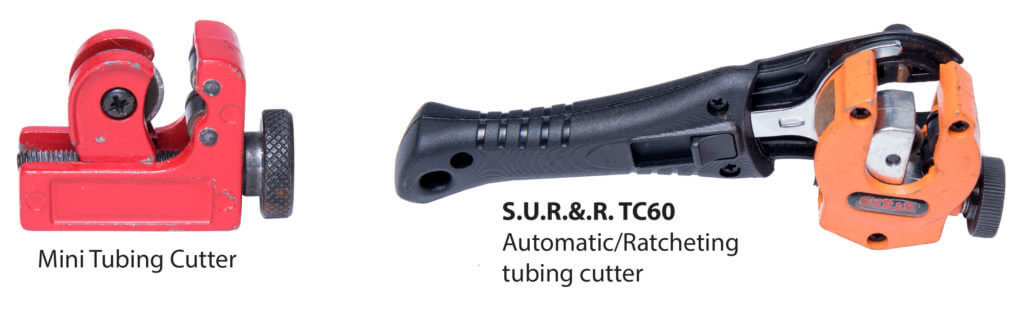
Brake Line Tubing Cutters
Brake Line Bending and Straightening Pliers
You’ll have to make some really tight bends with the flare fitting already on the line. Cheap tools can’t do that.
Instead buy a brake line bending pliers. They provide nice tight bends.
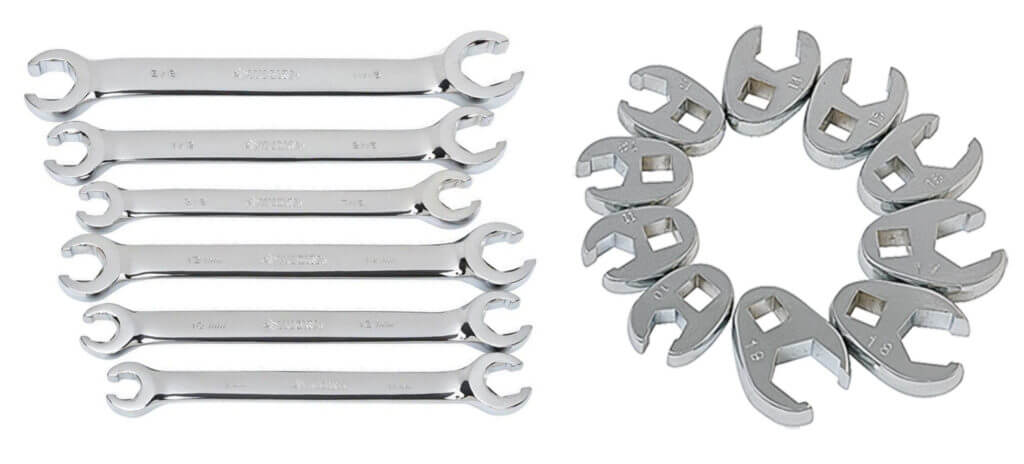
Flare Nut Wrenches and Flare Nut Crowsfeet wrenches
Don’t Forget the Rest of the Brake System
Whenever I repair a corroded steel line, I check the flexible brake hoses. If the steel line rusts through, the hose fittings are usually compromised as well. Replacing them while the system is open adds little cost and improves reliability.
Once the repair is complete, the system must be bled properly. A perfect flare won’t save you from a spongy pedal if air remains trapped. Mastering how to replace a rusted-out brake line includes restoring a firm, predictable pedal feel before the car ever leaves the driveway.
©, 2019 Rick Muscoplat