
How far can you drive on a donut spare tire?
Don’t Push Your Luck—Here’s What You Need to Know About Driving on a Donut Spare
If you’ve ever had a flat tire, you know how much of a lifesaver that little spare—commonly called a “donut”—can be. It gets you back on the road fast, but let’s be clear: a donut spare is not a long-term solution. It’s a temporary fix designed to get you safely to a tire shop for a proper replacement. But how far can you really drive on a donut spare tire? Let me break it down for you.
You’re Limited to 50 to 70 Miles—No Exceptions
Most automakers recommend driving no more than 50 to 70 miles on a donut spare. And that’s under ideal conditions—dry roads, moderate speeds, and minimal braking. If you’re dealing with bad weather, rough roads, or highway speeds, you should aim to replace that spare even sooner.
When manufacturers say 50 miles, they mean it. Here’s why:
1) Donut Spares Are Smaller, Thinner, and Have Almost No Tread— Unlike a full-size spare, a donut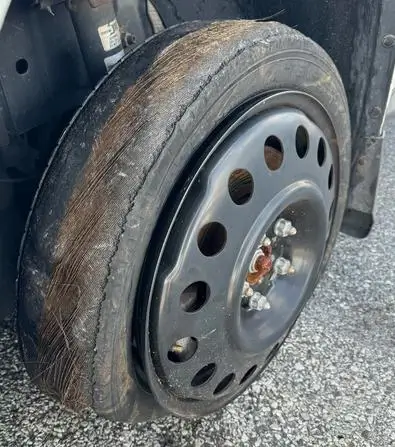 spare is designed to be compact. It has:
• A smaller diameter affects your vehicle’s handling and braking.
• A narrower tread, giving you less road grip.
• Only 4/32″ of tread depth—the same amount that signals it’s time to replace a regular tire. That means stopping distances are longer, and traction is poor, especially in wet or icy conditions.
2) Donut Spares Wear Out Faster Than Regular Tires— Because they’re smaller, all of your vehicle’s weight is focused on a much smaller contact patch. That means more stress on the rubber, which leads to rapid wear.
3) The Rubber Compound Isn’t Built for the Long Haul— Donut spares are made with a softer/cheap rubber compound—not the same durable material as your regular tires. That’s because they’re only designed to last long enough to get you to a repair shop. Push it beyond its limit, and you risk a blowout.
4. Donut Spares Can’t Handle High Speeds, Hard Braking, or Sharp Turns— If you treat a donut spare like a regular tire, you’re asking for trouble. The more aggressively you drive, the faster it degrades.
• Speed limit: Don’t exceed 50 MPH.
• Cornering: Take turns slowly—you’ll have less grip.
• Braking: Expect long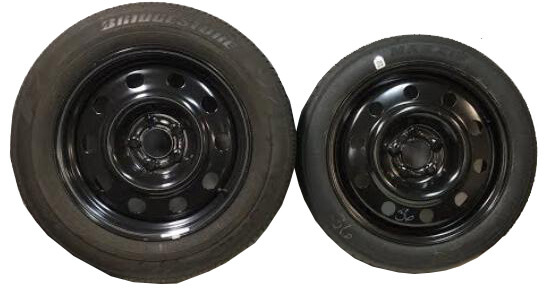 er stopping distances.
5) Donuts Can Wreck Your Differential— Here’s something most people don’t realize: If you put a donut spare on a driven axle (front wheels on FWD, rear wheels on RWD), you can actually damage your differential.
That’s because the smaller spare spins at a different rate than your regular tires, forcing the differential to compensate. If you drive too far like this, it can cause premature wear or even failure.
For AWD vehicles, the risk is even worse—uneven tire sizes can damage the AWD system.
Most automakers recommend driving no more than 50 to 70 miles on a donut spare. And that’s under ideal conditions—dry roads, moderate speeds, and minimal braking. If you’re dealing with bad weather, rough roads, or highway speeds, you should aim to replace that spare even sooner.
Donut Spare Tire Rules—Follow These or Risk an Accident
If you’re driving on a donut, stick to these rules:
✅ Check the air pressure – Donut spares often require 60 PSI (check your label).
✅ Stay under 50 MPH – Any faster and you’re increasing your risk of failure.
✅ Avoid wet or icy roads – You’ll have less traction than a normal tire.
✅ Expect warning lights – The smaller tire can trigger ABS and traction control warnings.
✅ Install it on the rear if possible – Never put a donut on a steering wheel unless it’s unavoidable.
If you must put a donut on the front, drive extra cautiously and replace it ASAP.
©, 2023 Rick Muscoplat
Posted on by Rick Muscoplat