
How Long Does a Car Battery Last on Average?
Learn how long a car battery lasts and what makes them fail
Quick Summary
Modern car batteries last 3-5 years, depending on how often you drive the vehicle, in what temperatures, and how long you drive and at what speeds. Battery life is shortened by high heat, lack of use, and undercharging. Battery life is lower in modern vehicles because of increased electrical loads and more heat degradation due to packed engine compartments. M’ll explain all of it in plain English and show you what actions make the biggest difference.
Article
For decades, I’ve watched the average lifespan of the car battery steadily shrink. If you’re wondering how long a car battery lasts on average, the honest answer today is 3–4 years—and yes, that really is shorter than in the past. Years ago, most batteries routinely lasted 4–5 years. Today, battery manufacturers admit that only about 30% of batteries survive 48 months.
As an automotive technician, I’ve seen why: modern vehicles draw more power than ever, and drivers are taking more short trips, which leaves their batteries in a constant state of discharge. Also, families with multiple vehicles often let their cars sit unused for extended periods, which can lead to early battery sulfation. Lastly, the engine compartment in later model vehicles is packed tight, so the battery absorbs more heat, reducing its lifespan.
Why Sitting Too Long Destroys a Car Battery
If you want the truth about how long a car battery lasts on average, start with how often you drive. Modern vehicles pull power even when they’re off—alarm systems, keyless entry, computer memory, telematics, and many more systems create a constant parasitic draw.
Combine that with natural self-discharge, and your car battery can be dead in as little as 4–6 weeks of sitting.
When a car battery discharges, lead sulfate crystals form on the plates. Light sulfation is reversible if you recharge the battery wholly and slowly,
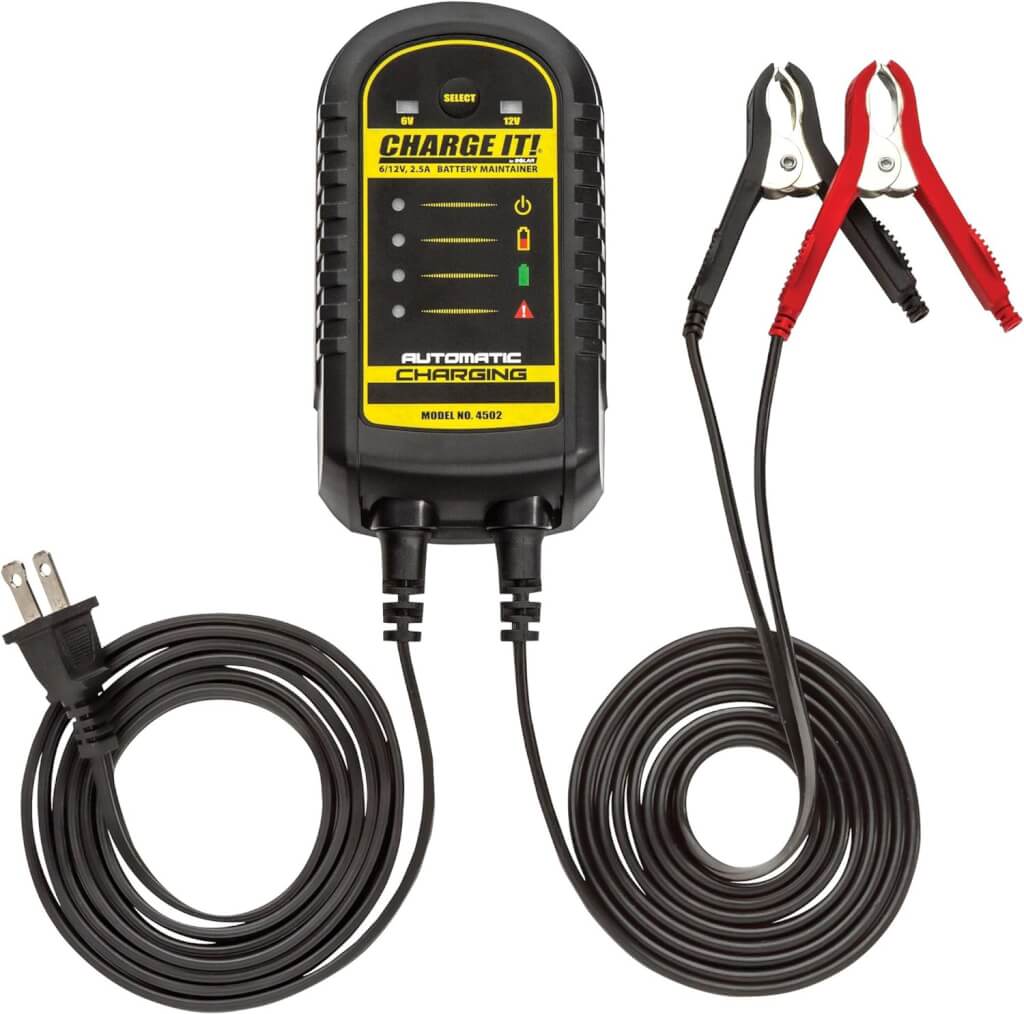
A battery maintainer can keep your battery fully charged and prolong its life
but heavy, hardened sulfation kills it permanently. During the pandemic, I saw this firsthand: millions of batteries died simply because the cars weren’t driven long enough to stay charged. So many batteries died from non-use during the pandemic that the demand for replacement batteries in 2024 is up by almost 40%.
If you don’t drive often, buy a quality battery maintainer. It’s the single best way to extend battery life.
For the longest battery life:
• Take at least one 20–30 minute drive every 7–10 days
• Or fully recharge with a maintainer once a month
• Avoid “trip stacking” short journeys without a longer drive in between
Heat: The Silent Battery Killer No One Talks About
Heat is far worse for a car battery than cold. High temperatures accelerate the chemical reaction inside the battery and increase internal corrosion. Late-model cars cram batteries into tight engine bays right next to exhaust manifolds, turbochargers, and other heat sources.
The result? Boiled-off electrolyte, warped plates, and dramatically shortened lifespan.
This is why drivers in hot climates replace batteries far more frequently—even if the vehicle starts perfectly fine during winter.
Modern Electrical Loads Are Overwhelming Car Batteries
Today’s vehicles have more electrical demand than any cars in history:
• Heated seats, wheels, and mirrors
• Radar and camera systems
• Collision avoidance sensors
• Massive infotainment screens
• High-draw audio systems
• Multiple onboard computers
• Phone charging, WiFi, and power ports
Most alternators only produce about 25–30% of their rated output at idle. That means at stoplights or in heavy traffic, the alternator often can’t keep up—so the car battery fills the gap, cycling more deeply and more often than ever intended.
Cycling reduces overall battery lifespan.
Vibration, Corrosion, and Poor Mounting Also Shorten Battery Life
A car battery is designed to withstand vibration—but not uncontrolled vibration. If the hold-down bracket is loose or missing, every bump and pothole accelerates internal plate damage.
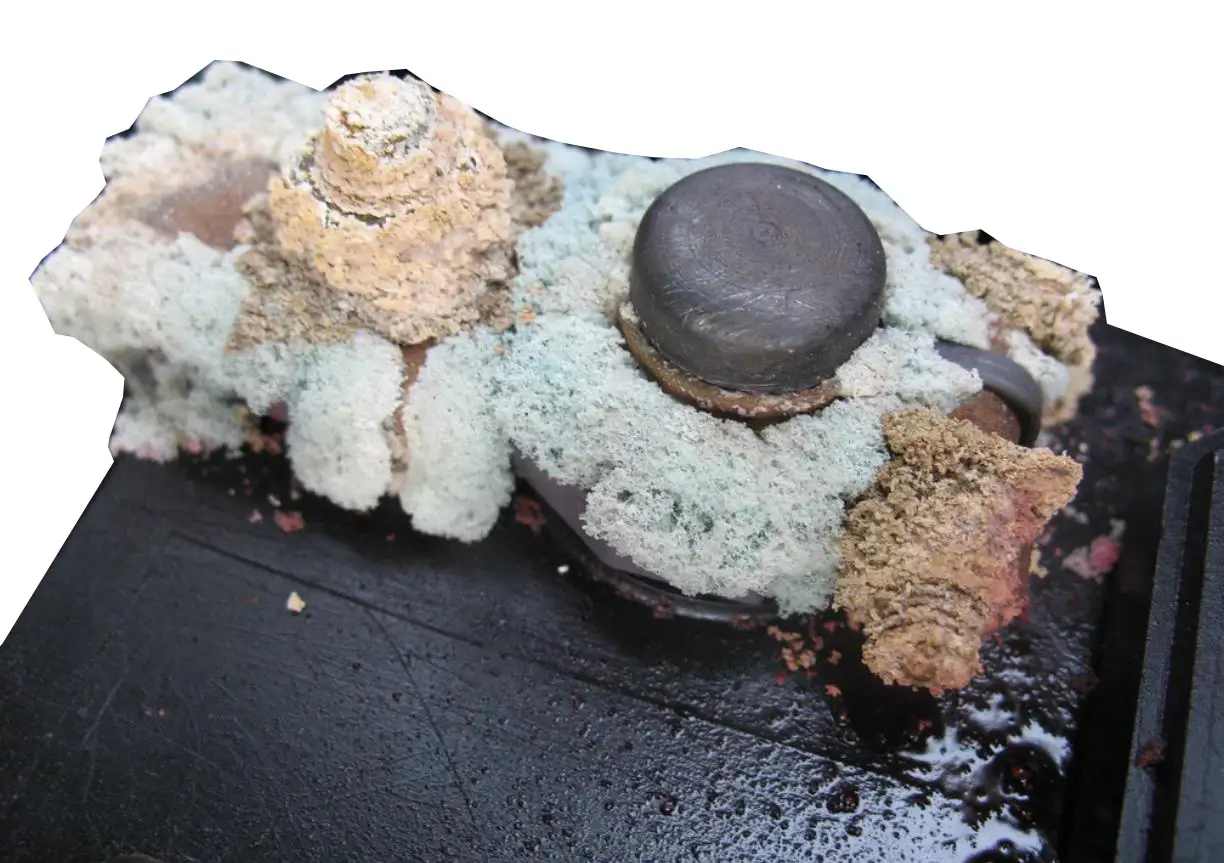
Notice the corrosion and the wetness on the top of the battery. This car battery is leaking between the case and the post
Corrosion on the battery terminals increases electrical resistance, preventing full charging and leaving the battery permanently undercharged. Once again, sulfation follows.
I always tell drivers:
Clean your battery terminals once a year and make sure they are firmly clamped.
How to Make Your Car Battery Last Longer Than Average
If you want to stretch how long a car battery lasts on average, here are the most effective steps:
• Drive longer trips regularly
• Avoid letting the car sit for weeks
• Use a battery maintainer when not driving for long periods
• Keep terminals clean and free of corrosion
• Check that the battery is properly secured
• Have the battery tested annually
A modern conductance tester can give an accurate pass/fail result in seconds. Most auto parts stores will test your battery for free.
Give your battery an annual checkup

A modern battery tester can test your battery in seconds, giving you a pass/fail results. They’re very accurate
Modern battery testers can accurately diagnose your battery’s condition, giving you a simple pass/fail result. Any auto parts store will test your battery for free.
©, 2015 Rick Muscoplat
Posted on by Rick Muscoplat