
How Often Should You Replace Your Car’s Engine Air Filter?
When to Change Engine Air Filter and How to Check It
As a professional automotive expert, I’ve seen countless people waste money replacing filters far too soon. Most carmakers recommend changing the engine air filter every 12,000 to 15,000 miles, but that’s just a baseline. The real answer depends on where and how you drive.
If you drive primarily in clean suburban or highway conditions, you can usually go 20,000 miles before needing a change. However, if you operate your vehicle in dusty environments—gravel roads, construction zones, or rural areas—then you’ll need to shorten that interval dramatically. The manufacturer’s maintenance schedule always includes a phrase like “replace more often if driving in dusty or dirty conditions.” That’s your clue to inspect more frequently.
So, when people ask me when to change the engine air filter, my answer is simple: follow your owner’s manual for normal conditions—but back that up with a visual inspection every oil change. Conditions can vary so much that the manual’s mileage-based advice might not reflect your actual environment.
There’s no hard and fast rule about what a dirty engine air filter looks like
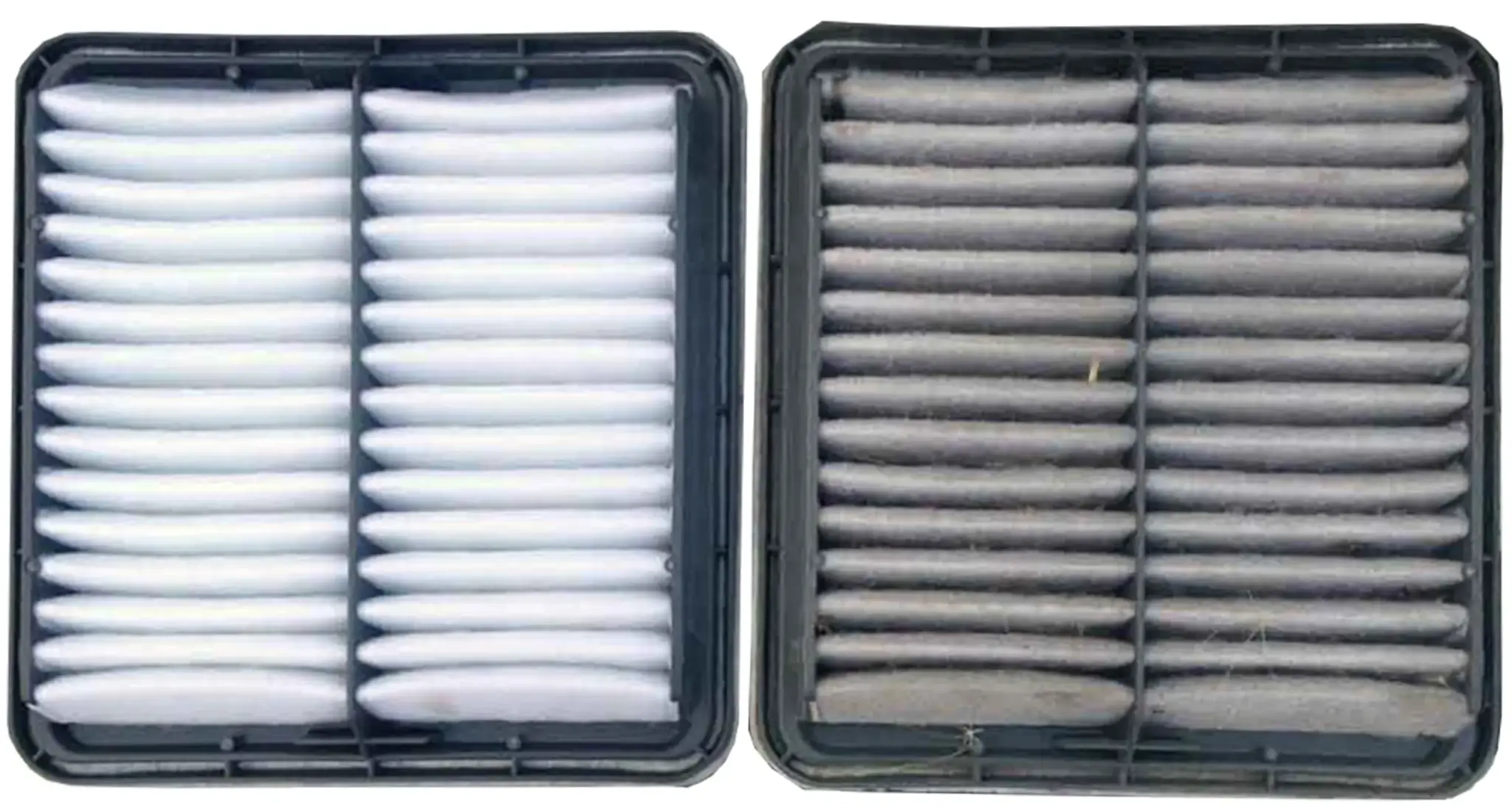
Let’s take a look at these two air filters. The one on the left is new, and the one on the right would be called dirty” by every shop on the planet. But is it really dirty enough to justify changing?
The truth is, the filter on the right is fine. I opened the pleats on this filter, and there was no dirt buildup at the bottom. All you see on this “dirty filter” is a light dusting on the top of the pleats. That’s not enough reason to change it. In fact, it has a LOT of air filtering capacity left. This filter will allow all the air your engine needs to flow through. So don’t get talked into a filter change just because it’s slightly grey.
How to Check an Engine Air Filter the Right Way
Now, let’s talk about how to check the engine air filter properly. A visual inspection is far more reliable than guessing based on mileage alone. To do it right:
1) Remove the air filter from its housing carefully.
2) Spread the pleats apart and look deep into the folds. The amount of dirt in the pleats—not just on the surface—tells the real story. Only when dirt fills half the height of the pleat should you replace it.
3) Check for oil contamination. If you see oil spots or damp areas, that’s a sign of an engine problem (like excessive blowby or a faulty PCV system), and you should replace the filter immediately.
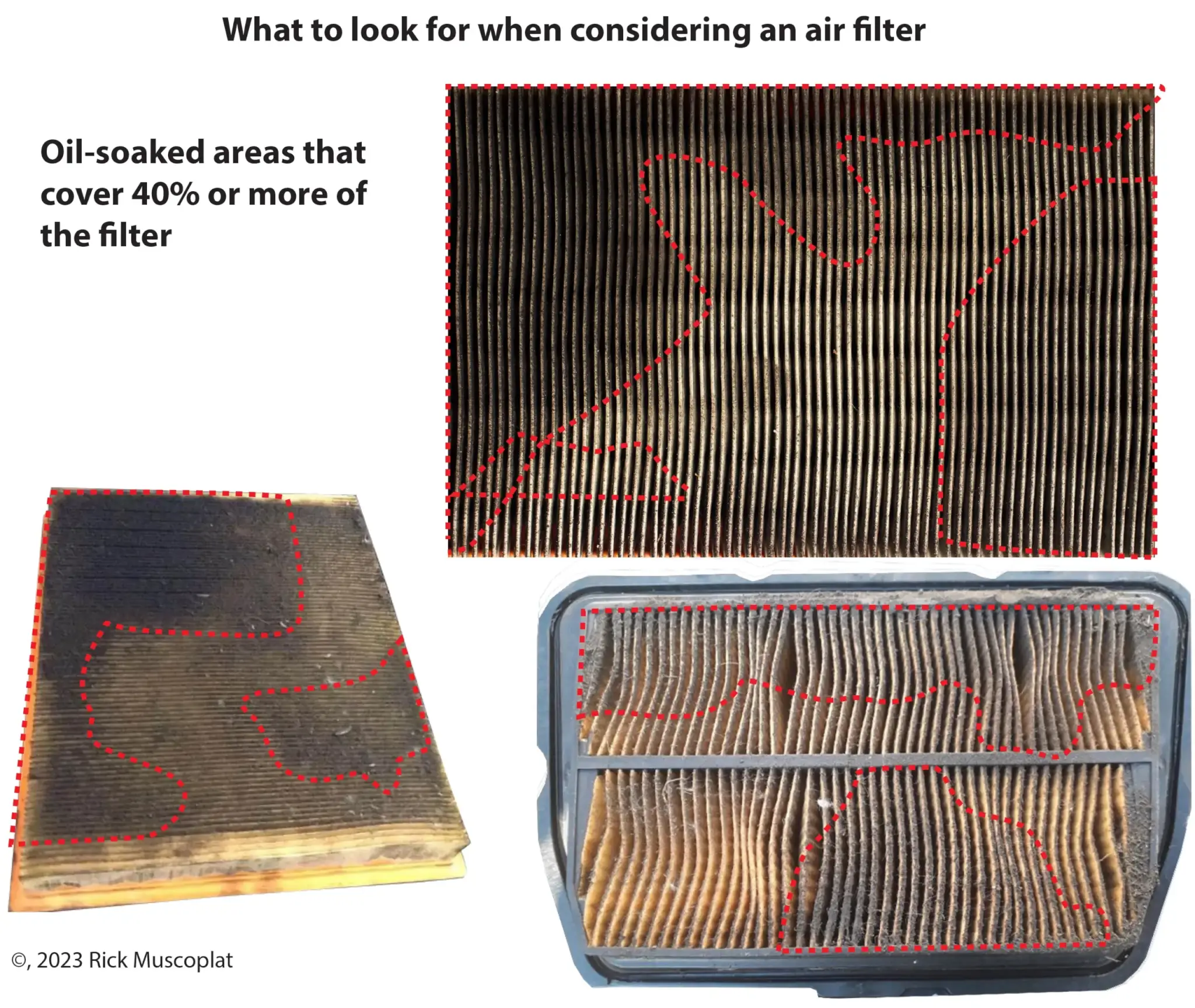
These filters have large areas of oil that comprise 25%- 40% of the filter, so they’re not allowing airflow through those areas. Technically speaking, these filters can probably flow enough air through the non-soaked areas, but those areas will clog up much faster since the rest of the filter is oil-soaked. I’d replace each of these filters.
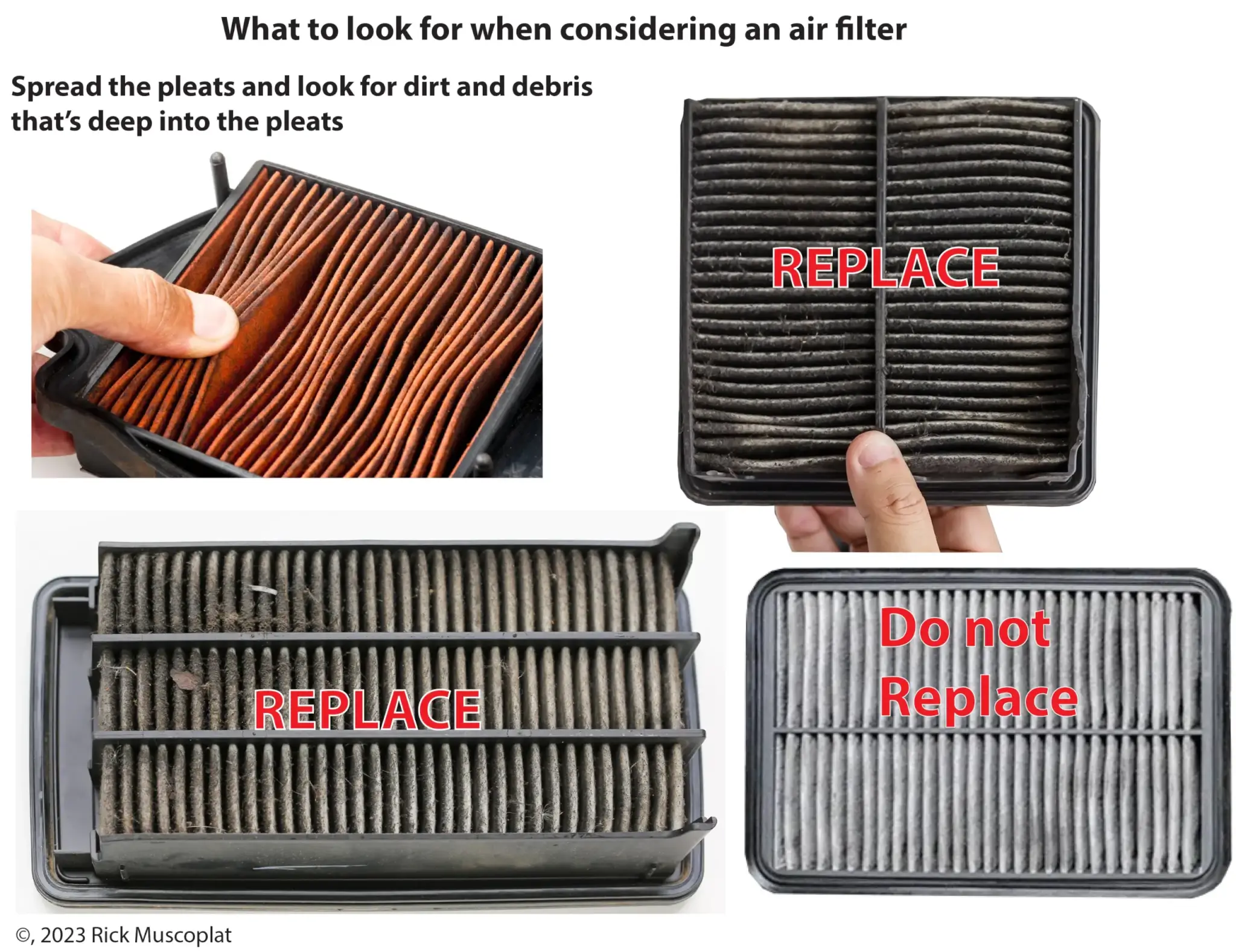
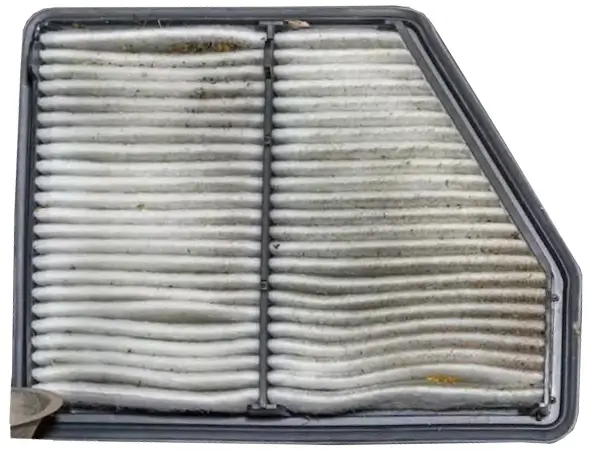
This car filter has many more miles before it needs replacing
Don’t Fall for the “Tap Test,” “Bakclight Test,” or “Blow Test” Myths
A lot of drivers and even some technicians still believe in “quick tests” to check air filters, but most of them are unreliable or downright harmful.
• The tap test—tapping the filter against a hard surface to see how much dust falls out. Not only does this fail to measure the dirt deep in the pleats, but it can also damage the delicate filter media or tear the sealing edges.
• The Backlight Test— Another myth involves holding a shop light behind the filter or holding the filter up to the sun to see how much light comes through. Laboratory testing proves that light transmittance through an air filter has no bearing whatsoever on its condition. It’s a meaningless test.
• The Compressed Air Blow Test— And perhaps the worst advice I’ve heard is the compressed air method, where someone blows air backward through the filter to “clean” it. This “test” can damage the filter by rupturing the fibers, allowing larger debris to enter the engine. Once the integrity of the filter media is compromised, the filter can no longer protect your engine.
So, when people ask how to check the engine air filter, I remind them: never tap, blow out, or rely on sunlight tests. Always perform a proper visual inspection by examining the pleats for embedded dirt.
What Carmakers Say About When to Change the Engine Air Filter
Each carmaker publishes its own schedule, but they all emphasize one thing: the replacement interval depends heavily on driving conditions. Here’s a summary of common guidance:
Toyota and Honda: Every 15,000 miles or 12 months, whichever comes first. Replace more often in dusty areas.
Ford and GM: Typically every 30,000 miles, but inspect at every oil change.
Hyundai and Kia: Every 15,000 miles under normal driving; 7,500 under severe conditions.
Subaru: 12,000 to 15,000 miles under normal conditions; more often in dusty environments.
Final Thoughts: Don’t Replace Too Early
Many service centers will show you a slightly gray air filter and suggest replacement “just to be safe.” Don’t fall for that. A light coating of dust is completely normal and even helps the filter trap finer particles.
The key takeaway about when to change engine air filter is that it’s not about looks—it’s about how much debris has filled the pleats. When you learn how to check engine air filter correctly, you’ll avoid premature replacements and keep your engine breathing freely without wasting money.
Can you clean a car air filter? Find out here
How to choose a car air filter
©, 2023 Rick Muscoplat
Posted on by Rick Muscoplat