
How to Bypass an O2 Sensor: What Works and What Fails
How to Bypass an O2 Sensor: What Actually Works, What Doesn’t, and Why It’s Risky
Quick Summary (Read This First)
I’ve seen countless drivers try to bypass an O2 sensor to shut off a check engine light for a P0420 or P0430 code, and to avoid an expensive catalytic converter repair. Some standard methods, such as sensor spacers, may appear to work temporarily, but most fail over time—and all carry real mechanical, legal, and financial risks. Understanding how the ECM tests O2 sensors and catalytic converters explains why shortcuts rarely hold up and often cost more in the long run.
Article
Understanding What an O2 Sensor Really Does
Before you even consider bypassing the downstream O2 sensor on your vehicle, it’s essential to understand what that sensor actually does. Oxygen sensors measure the oxygen concentration in the exhaust stream. The engine control module (ECM) uses this information to continuously adjust the air/fuel ratio so the engine runs efficiently while minimizing emissions.
Upstream O2 sensors directly control fuel delivery. Downstream sensors don’t control fuel; they monitor catalytic converter efficiency. When drivers talk about bypassing sensors, they’re almost always referring to the downstream (post-catalyst) O2 sensor, usually because of a P0420 or P0430 code.
Why People Try to Bypass an O2 Sensor
In my experience, people don’t wake up one morning wanting to bypass emissions equipment. They usually arrive there out of frustration.
The most common reason I hear is to get rid of the constant check engine light. A failing catalytic converter or a lazy O2 sensor can keep that light on indefinitely, and it’s annoying—especially when the car still seems to drive fine. Others have modified their exhaust with headers or removed a catalytic converter for off-road use and don’t want the ECM reporting an issue. And then there’s the cost factor. A catalytic converter replacement can easily exceed $1,500, so bypassing an O2 sensor feels like a cheaper alternative.
I get the motivation. I just don’t recommend the outcome.
The Most Common Ways to Bypass an O2 Sensor
Here’s the bottom line: What you’re really trying to do here is trick the ECM into believing everything is working normally when it isn’t.
One of the most common tricks is the O2 spacer or defouler. This
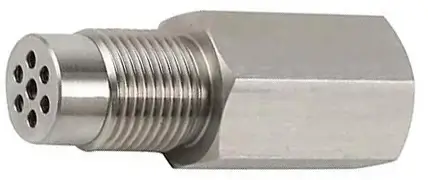
O2 spacer/spark plug defouler
screws into the exhaust bung, and the O2 sensor screws into the spacer. The idea is simple: by pulling the sensor out of the direct exhaust stream, the readings get “smoothed out.” In very mild cases—where a catalytic converter is borderline failing—this can temporarily prevent a P0420 code from appearing. But I’ve rarely seen it work in the long term, and visual inspections catch them immediately.
Another popular method is a mini-cat or dummy sensor.
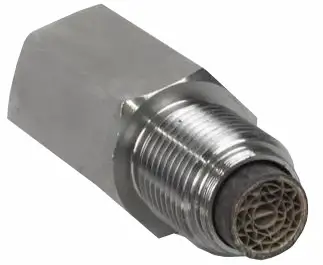
Mini Cat
These devices attempt to simulate a properly functioning catalytic converter by altering the downstream O2 sensor signal. Some are mechanical, others electronic. Most fail eventually because they can’t keep up with the ECM’s built-in catalyst efficiency tests.
Then there’s the resistor trick. This involves installing resistors in the sensor wiring to create a fixed-voltage signal. On paper, it sounds clever. In reality, it doesn’t work on modern vehicles. The ECM expects a
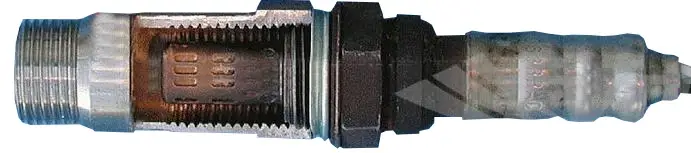
When using an O2 spacer, the spacer screws into the cat/exhaust downstream bung and the sensor screws into the spacer. So the sensor only sees a small portion of the exhaust
dynamic waveform, not a flat voltage, and will flag the system almost immediately.
Why O2 Spacers and Mini-Cats Eventually Fail
To understand why attempts to bypass an O2 sensor don’t last, you have to understand how the ECM tests the catalytic converter.
During normal driving, the upstream O2 sensor rapidly switches between rich and lean as the ECM adjusts fuel delivery. A healthy catalytic converter stores oxygen and burns off excess hydrocarbons, so the downstream sensor should show a relatively flat signal.
But the ECM doesn’t just watch passively. It actively tests the converter by commanding rapid rich-then-lean fuel conditions. During this test, the downstream sensor is expected to briefly exhibit those extremes and then return to a flat line at the end of the test. If the downstream sensor doesn’t behave exactly as expected, the ECM sets a catalyst efficiency code.
That’s why spacers and mini-cats fail over time. They may hide normal exhaust conditions, but they fail the ECM’s active test routine.
Do Electronic O2 Simulators Actually Work?
True electronic O2 simulators can sometimes pass these tests because they’re designed to anticipate the ECM’s commands and artificially generate the expected voltage patterns. These devices are wired directly into the post-cat O2 sensor harness and must be hidden to pass visual inspections.
I’m not endorsing this practice. I’m explaining it. These simulators are intentionally deceptive, illegal for use on the street, and increasingly easy for inspection systems to detect.
Here’s a description from EZ CEL:
“EZ CEL Fix oxygen sensor eliminator gives the ECM with mimicked, fluctuating voltage signal and tricks the Power Control Module into thinking the emissions are within allowance. Car Truck SUV oxygen sensor simulator will allow you to drive without converter and still keep the ECU warning light off. A popular alteration is to decat the exhaust or install an aftermarket header, to free up the performance level. Exhaust gas is controlled through 2 to up to 4 oxygen sensors. The front sensor controls the fuel management system and aftercat monitors converter function. When headers are installed or catalysts removed, the result is a catalyst efficiency check engine light failure code alerting the Powertrain Control Module that converter is missing or not working properly. Modified engine produces a larger amount of exhaust gases than allowed. You do not want to drive in safe mode with constant MIL light, and your Car Truck SUV will not pass emission test in many US states and countries. The ultimate solution is to wire up O2 sensor simulator to the lambda probe’s harness to mimic the o2 sensor.”—https://www.magnumtuning.com
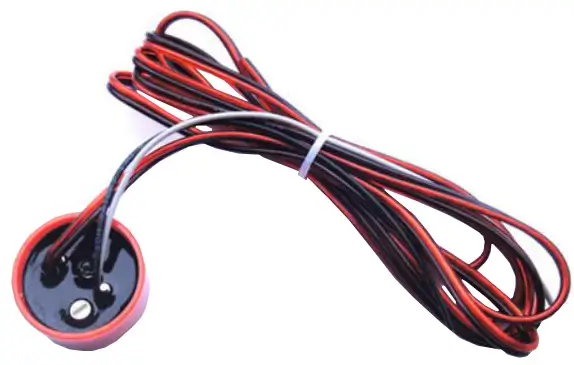
MAGNUM EZ CEL FIX
Simulators have to be wired into the wiring harness to the post cat O2 sensor. And they have to be hidden if you have visual inspections.
The Real Risks of Trying to Bypass an O2 Sensor
Every time someone asks me if they should bypass an O2 sensor, I tell them the same thing: you’re trading a known problem for a list of unknown ones.
When you bypass emissions feedback, emissions increase—sometimes dramatically. The ECM can no longer accurately assess exhaust-cleanup performance, which can lead to poor fuel economy, hesitation, a rough idle, or inconsistent performance. Worse, incorrect air/fuel ratios can overheat and destroy a catalytic converter that might otherwise have survived much longer.
Then there’s the legal side. Bypassing an O2 sensor is illegal under federal emissions law. It doesn’t matter if your state doesn’t test emissions. Federal law overrides state rules regarding emissions tampering.
And finally, warranties. Any emissions modification can void portions of your vehicle’s warranty, leaving you fully responsible for expensive repairs.
What I Recommend Instead
If you’re facing a P0420 or P0430, diagnose it properly. Sometimes the problem isn’t the converter at all—it’s an exhaust leak, a lazy upstream sensor, or a fuel trim issue. Replacing the correct part once is always cheaper than chasing failed bypass tricks.
I understand why people want to bypass an O2 sensor. I’ve just seen too many cases where it ends badly.
©, 2023 Rick Muscoplat
Posted on by Rick Muscoplat