
How to connect a portable dishwasher to a kitchen sink
Why a Portable Dishwasher Doesn’t Work with a Pull-Down Kitchen Faucet And How to Fix It
Quick Summary
A portable dishwasher is designed to connect to a standard threaded kitchen faucet with a solid, unrestricted water path. Most modern pull-down and pull-out kitchen faucets route water through a flexible hose, diverter valve, and quick-connect fittings that restrict water flow and reduce pressure. As a result, the dishwasher may not fill properly, may stop mid-cycle, or can even damage the faucet’s internal components. In most cases, a pull-down faucet is not compatible with a portable dishwasher.
Why a Portable Dishwasher Doesn’t Work Properly with a Pull-Down Kitchen Faucet
If you’ve purchased a portable dishwasher only to discover it won’t work correctly with your modern kitchen pull-down hose-style faucet, you’re not alone. This is one of the most common compatibility issues homeowners encounter after upgrading their kitchen.
While older faucets typically had a simple threaded spout that accepted a portable dishwasher adapter, today’s pull-down and pull-out kitchen faucets are engineered very differently. Their internal design creates several problems that interfere with a portable dishwasher’s operation.
Understanding why this happens can save you from expensive repairs and frustration
Unlike a built-in dishwasher that connects directly to your home’s plumbing, a portable unit attaches temporarily to the faucet using a quick-connect adapter.
For the dishwasher to operate correctly, the faucet must provide:
1) Full water pressure
2) Consistent water flow
3) A rigid threaded outlet
4) Continuous water supply during the entire wash cycle
Traditional faucets provide all four requirements. Pull-down faucets usually do not.
Modern pull-down faucets contain several internal components that don’t exist in older faucets.
These include:
• Flexible braided hose
• Spring-loaded or weighted hose retraction system
• Diverter valve/Backflow preventer
• Quick-connect fittings
• Multiple O-rings
• Spray selector valve
Every one of these components creates additional resistance to water flow.
Even when everything is functioning properly, the faucet delivers less unrestricted flow than a traditional threaded faucet.
That reduced flow can prevent a portable dishwasher from operating correctly.
The Main Reasons a Portable Dishwasher Doesn’t Work Even If You Manage To Make a Mechanical Connection
1. Insufficient Water Flow — Portable dishwashers require a relatively high volume of water during the fill cycle. Pull-down faucets are engineered to conserve water while maintaining good spray performance.
The result is:
• Reduced gallons per minute (GPM)
• Longer fill times
• Incomplete filling
• Cycle interruptions
Some dishwashers eventually time out because they never receive enough water.
2. Pressure Loss Through the Hose — The water inside a pull-down faucet must travel through:
• Supply lines
• Faucet body
• Flexible hose
• Diverter valve
• Spray head
Each change in direction and each fitting causes pressure loss. While you may never notice this when washing dishes by hand, the dishwasher certainly does.
Portable dishwashers are designed assuming a nearly unrestricted water path.
3. No Compatible Threaded Connection — Most portable dishwasher adapters screw directly onto faucet threads.
Unfortunately, many pull-down faucets:
• Have hidden aerators
• Use proprietary threads
• Use metric threads
• Have no exposed threads at all
Even if you can find an adapter, it often doesn’t create a secure connection.
4. The Backflow Preventer Can Fail or Interfere With Pressure Sensors on Your Portable Dishwasher— Inside every pull-down faucet is a backflow preventer valve. The backflow preventer valve is designed to prevent dirty water siphoning in the event the sprayer head is submerged in dirty sink water at a time when water pressure drops.
The backflow preventer can interfere with pressure sensing devices on your portable dishwasher
5. Hose Movement Causes Problems — A pull-down faucet is designed for occasional movement. During a dishwasher cycle, however, the hose remains under constant water pressure for an hour or more.
This can cause:
• Hose stretching
• Connector wear
• O-ring damage
• Early hose failure causing leaks beneath the sink
The faucet manufacturer typically never intended the hose to serve as a long-term appliance supply.
Why Some Portable Dishwashers Start Then Stop
One common symptom is that the dishwasher begins filling but suddenly shuts down.
This usually happens because:
• Water flow drops below the minimum required level.
• Internal safety controls detect an incomplete fill.
• The timer advances before enough water enters the tub.
• Low pressure prevents proper operation of the inlet valve.
The dishwasher itself is often functioning perfectly. The faucet simply can’t supply water the way the dishwasher expects.
Can Using a Pull-Down Faucet Damage the Faucet?
Yes. Repeatedly connecting a portable dishwasher may damage several internal parts.
Common failures include:
• Worn diverter valves
• Leaking quick-connect fittings
• Damaged spray hose
• Cracked plastic connectors
• Failed O-rings
• Reduced spray performance
These repairs often cost far more than purchasing the correct faucet.
The Only Safe Way To Connect A Portable Dishwasher to Your Kitchen Sink
If you have an unused hole in the kitchen sink deck or are willing to give up a deck-mounted soap dispenser, you can install a single-supply faucet with an aerator and then adapt it to fit your dishwasher. A hose-less single-supply faucet eliminates all the problems present in a pull-down hose style faucet. Find them at restaurant supply sellers. Make sure they come with a standard aerator.
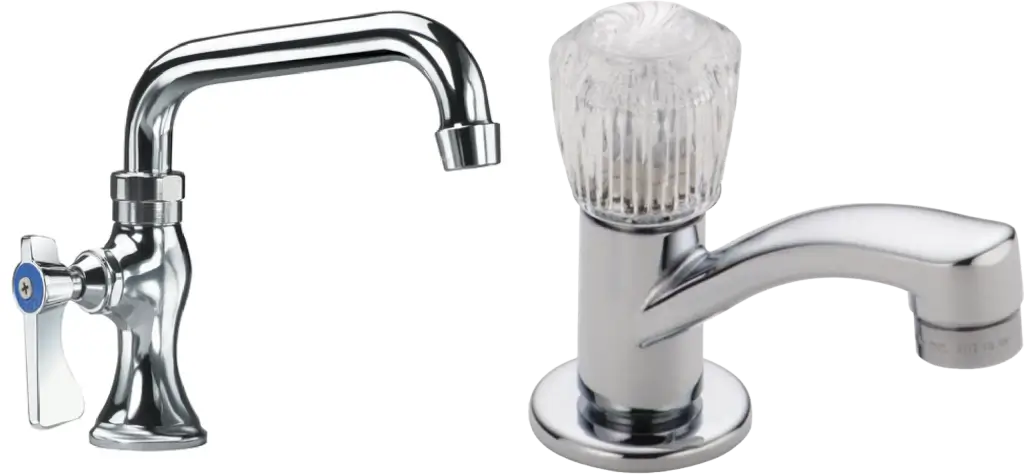
Step-by-Step Guide to Installing a Dishwasher Faucet on Your Kitchen Sink
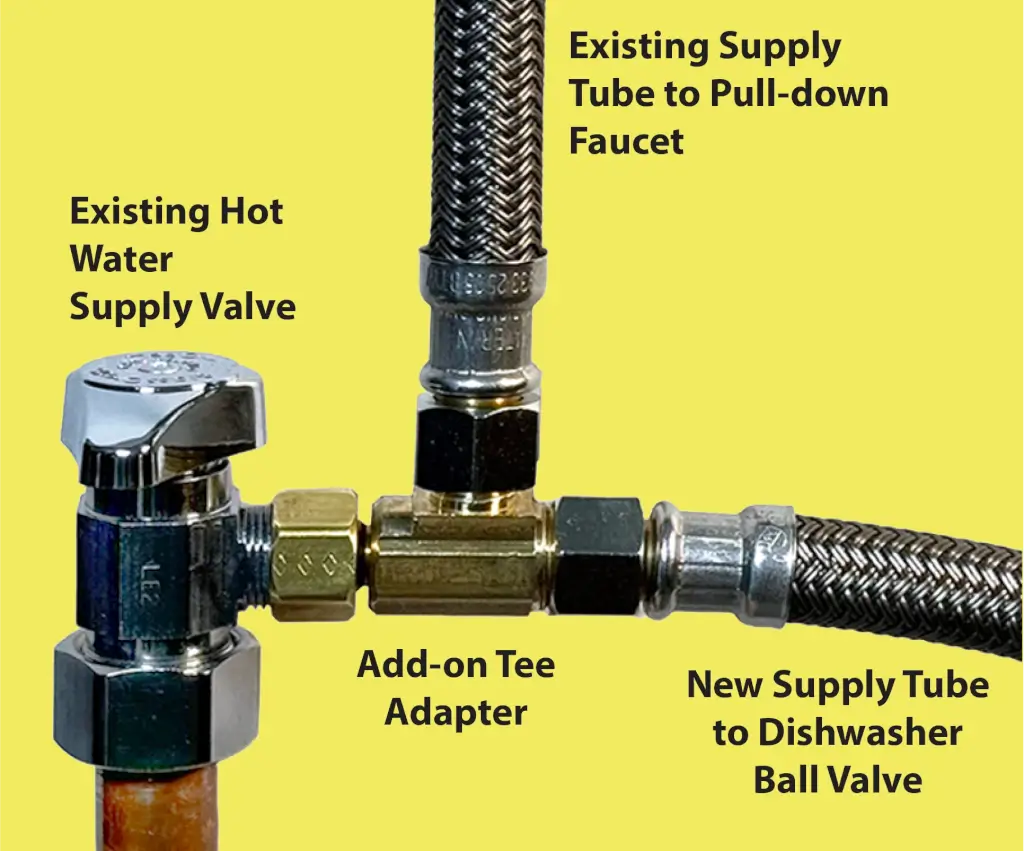
1) Connect a Tee adapter to your hot water supply valve — Turn off the hot water at the valve under your sink. Then screw on the Tee adapter. Connect your existing faucet supply hose to one fitting and add a supply hose to the other fitting to supply hot water to the new dishwasher faucet.
©, 2026 Rick Muscoplat
Final Thoughts
A portable dishwasher depends on a steady, unrestricted water supply from the kitchen faucet. Unfortunately, most modern pull-down faucets weren’t engineered for that purpose. Their flexible hose, diverter valve, proprietary connections, and reduced flow characteristics often prevent the dishwasher from operating properly.
Although adapters occasionally make the connection physically possible, they rarely solve the underlying hydraulic limitations. If you use a portable dishwasher regularly, the most reliable solution is a standard threaded faucet or a dedicated plumbing connection. You’ll enjoy better dishwasher performance while avoiding unnecessary wear and expensive faucet repairs.
©, 2026 Rick Muscoplat
Posted on by Rick MuscoplatCategories
Tags
- connect a portable dishwasher to pull down faucet
- connect portable dishwasher faucet
- dishwasher faucet adapter issues
- kitchen faucet dishwasher connection
- portable dishwasher faucet adapter
- portable dishwasher hookup
- portable dishwasher installation
- portable dishwasher plumbing
- portable dishwasher water supply
- pull down faucet problems