
How to Diagnose a P0420 catalytic converter code
How I Diagnose P0420 Catalytic Converter code the Right Way (Without Guessing or Throwing Parts)
Quick Takeaway
Diagnose a catalytic converter P0420 or P0430 code by verifying fuel control, misfire data, exhaust integrity, oxygen sensor behavior, and contamination risks. Most converters fail because something else killed them first—and if you don’t find that root cause, the replacement will fail too.
Article
Why P0420 and P0430 Are So Often Misdiagnosed
I see P0420 and P0430 misdiagnosed more than almost any other emissions code. Shops replace oxygen sensors, then catalytic converters, and the code comes right back. That’s not bad luck—that’s bad diagnostics.
Both P0420 and P0430 indicate that the PCM has determined the catalytic converter is no longer storing oxygen efficiently. P0420 refers to Bank 1, while P0430 refers to Bank 2. What these codes do not say is why that efficiency dropped. That’s where proper testing matters.
When diagnosing a catalytic converter, I follow a structured process every time. It’s not guesswork, and it’s definitely not “just throw a cat at it.”
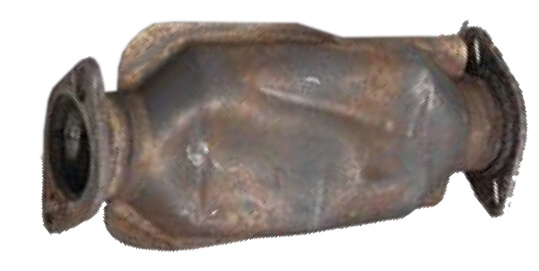
Check the catalytic converter for impact damage
Step One: Confirm the Code and Calibration Before Anything Else
The first thing I do when diagnosing P0420 or P0430 is verify the basics. I scan the vehicle, confirm which bank is setting the fault, and check for any related codes that could skew the data—fuel trim, misfires, coolant temp, or oxygen sensor codes.
Next, I verify that the ECM is running the latest calibration. Software updates and TSBs absolutely matter here. I’ve seen updated logic change how aggressively a PCM runs catalyst efficiency monitors. If the calibration is wrong, you’re diagnosing bad data from the start.
Fuel Control Comes First When You Diagnose a Catalytic Converter
Before I ever look at oxygen sensor waveforms, I go straight to fuel trims. If fuel control isn’t right, nothing else matters.
When diagnosing P0420 or P0430, I want to see combined short-term and long-term fuel trims within about ±10% on the affected bank. If the engine is running lean or rich, the converter can’t store oxygen properly—and the PCM will flag it as inefficient.
This is one of the most important steps in diagnosing a catalytic converter. A converter can look “bad” on a scan tool when it’s really just reacting to incorrect air-fuel ratios.
Oxygen Sensor Data Tells a Story—If You Know How to Read It
Once fuel control checks out, I move on to oxygen sensor data. I don’t just glance at numbers—I graph them.
The upstream sensor should switch rapidly as the PCM adjusts fuel. That tells me the engine is in closed loop and the sensor is alive. The downstream sensor is where P0420 and P0430 live or die.
A healthy catalytic converter smooths out the exhaust oxygen content. That means the downstream sensor should stay relatively stable—usually hovering in a narrow voltage range. When I see the downstream sensor start mimicking the upstream sensor, that’s a red flag.
But here’s the key: that alone does not prove the converter is bad. It only tells me the converter appears ineffective. The reason still has to be proven.
This is exactly why so many people misdiagnose P0420 and P0430.
Misfires Will Kill a Converter Faster Than Anything Else
Every time I diagnose a catalytic converter, I check the misfire data—both current and historical.
Even intermittent misfires dump raw fuel into the exhaust. That fuel overheats the converter substrate, destroying its oxygen storage capacity. What matters is not whether the misfire is happening right now, but whether it’s happened often enough in the past to cause damage.
If I find misfire counts on the same bank as a P0420 or P0430, I stop right there. Replacing a catalytic converter without fixing misfires first is a guaranteed comeback.
Exhaust Leaks: The Silent P0420 and P0430 Trigger
Before condemning any converter, I physically inspect the exhaust system. Even a small leak upstream of the downstream oxygen sensor can introduce extra oxygen into the exhaust stream.
That false oxygen fools the PCM into thinking the converter isn’t storing oxygen, which sets P0420 or P0430 even when the converter is perfectly fine.
This is one of the easiest—and most overlooked—checks when diagnosing a catalytic converter.
Oil and Coolant Contamination Matter More Than You Think
Catalytic converters don’t like contamination. Oil ash and coolant residue permanently coat the substrate, reducing efficiency.
That’s why I always check the oil level and condition. An overfilled crankcase, an oil consumption problem, or a failed PCV system can slowly and quietly poison a converter.
I also pressure-test the cooling system. Internal coolant leaks don’t always show up as drivability complaints, but they will absolutely kill a converter and trigger P0420 or P0430.
If contamination is present and you don’t fix it, the new converter won’t last.
One Last Thing: The Right Converter Actually Matters
When I diagnose a catalytic converter, and everything else checks out, I still verify that the correct converter is installed.
Wrong substrate volume, incorrect EPA certification, or cheap universal converters are notorious for setting P0420 and P0430. The PCM is expected to have a specific oxygen storage capacity. If the converter can’t meet it—even when new—the code will return an error.
The Bottom Line on Diagnosing P0420 and P0430
When I diagnose a catalytic converter, I don’t start with the converter—I end there. P0420 and P0430 are results, not root causes. Fuel control issues, misfires, exhaust leaks, contamination, and incorrect parts are the first to be addressed.
If you don’t diagnose P0420 and P0430 methodically, you’re just guessing. And guessing gets expensive.
©, 2026 Rick Muscoplat
Posted on by Rick Muscoplat