
How to Fix a Leaking Gas Tank Yourself
DIY Gas Tank Repairs That Actually Work
If you’re trying to fix a leaking gas tank yourself, you’ve got to understand exactly what you’re working with—because not all leaks are created equal, and not all repairs will hold. I’ve seen plenty of DIY disasters when it comes to fuel tank repair, so let me walk you through how to do it the right way—and when it’s time to stop patching and replace the tank.
Rust-through pinholes, corroded seams, or large areas of rust on the top or bottom of the tank usually cause leaks in steel gas tanks. You can temporarily fix small punctures and rust-through pinhole leaks using a special gasoline-resistant epoxy patching material. But you’re kidding yourself if you think epoxy patch material will permanently fix rust-through pinholes or leaks in seams. Those must be professionally repaired by welding/brazing and sealing, or with a new tank.
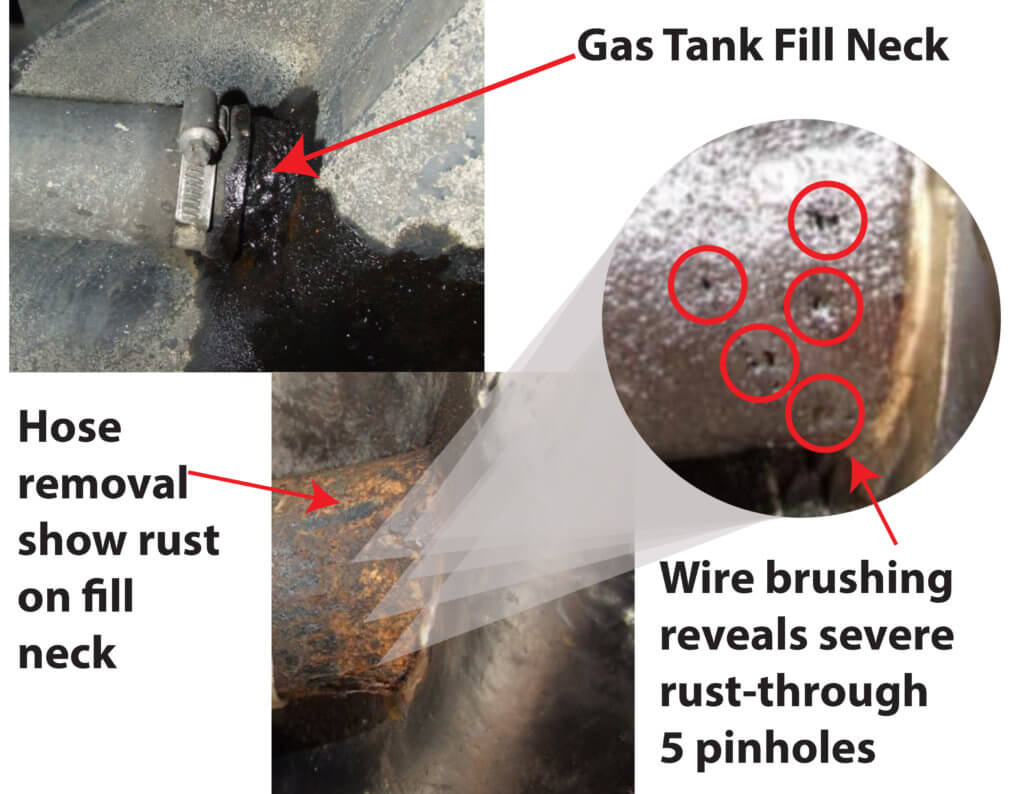
Here’s an example of what looked like just severe rust-through pinholes on the gas tank fill neck. However, once the rust was removed, it revealed 5 pinhole leaks within a 2″ diameter circle. This steel is severely compromised and is quite literally Swiss cheese. An epoxy patch won’t last on this perforated steel.
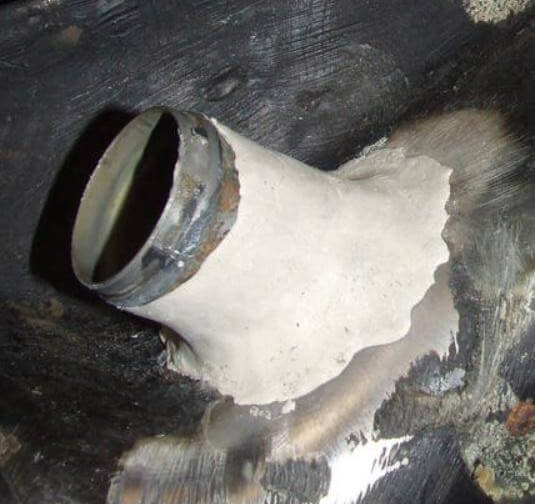
There’s no way this gas tank patch will last.
Which steel gas tank leaks can be repaired with epoxy?
Is It Surface Rust or Is It Swiss Cheese?
In most of the steel tanks I’ve worked on, leaks usually come from rusted-through pinholes, corroded seams, or widespread surface corrosion—especially on the top of the tank where moisture collects. It might start with a tiny spot, but once you wire-brush that area, don’t be surprised if it turns into a patch of pinholes. No epoxy on Earth will fix a leaking gas tank like that for more than a few weeks.
What Kind of Leaks Can You Patch?
Know the Limits of Epoxy Repairs
Let me be clear: gasoline-resistant epoxy can temporarily fix a leaking gas tank, but only in specific situations.
Use epoxy only when:
• You have a pinhole leak smaller than 1/8”
• The surrounding steel is solid and not flaking away
• The leak isn’t along a seam or weld
Do not attempt an epoxy repair if:
• The leak is on a seam— The fix won’t last
• The steel has multiple pinholes in close proximity
• The metal is thin or flexes when you press on it
In those cases, the only safe, long-term fix is to either weld in a patch (done professionally) or replace the tank altogether.
You can’t fix a leaking plastic gas tank with epoxy
Most plastic gas tanks are made from:
• High-density polyethylene (HDPE)
• Polypropylene (PP)
• Recycled polyethylene (regrind plastic)
• Ethyl vinyl alcohol (EVOH)
HDPE and PP are especially challenging because they have low surface energy, which means most adhesives won’t bond to them effectively.
I know the epoxy manufacturers claim their products work on plastic gas tanks. But no epoxy manufacturer makes a product that works on HDPE or PP. In fact, JB Weld specifically states that their product is not compatible with those materials.
Aside from the inability of epoxy to stick to HDPE or PP, there’s also the issue of expansion and contraction from heat and cold, and bulge when filled. Epoxy cures to form a hard, rigid patch that doesn’t expand/contract or flex like the plastic gas tank. So, those repairs often fail.
There are Two Ways to Repair Plastic Gas Tanks
If you’re serious about doing this yourself, you need an automotive plastic repair kit. These kits come with a heat gun or melting iron and a selection of plastic filler rods. You’ll use a plastic rod that matches your tank’s composition and melt it into the crack or hole to form a permanent bond.
It takes practice, and the area must be clean and prepped correctly. But when done right, I’ve seen plastic welds hold for years.
Before you go this route, though, check the price of a replacement tank. In many cases, the aftermarket tank is cheaper than the repair kit—and far more reliable. Still, if a replacement isn’t available, this method is your best bet.
Instead of epoxy, plastic tank repairs must be performed 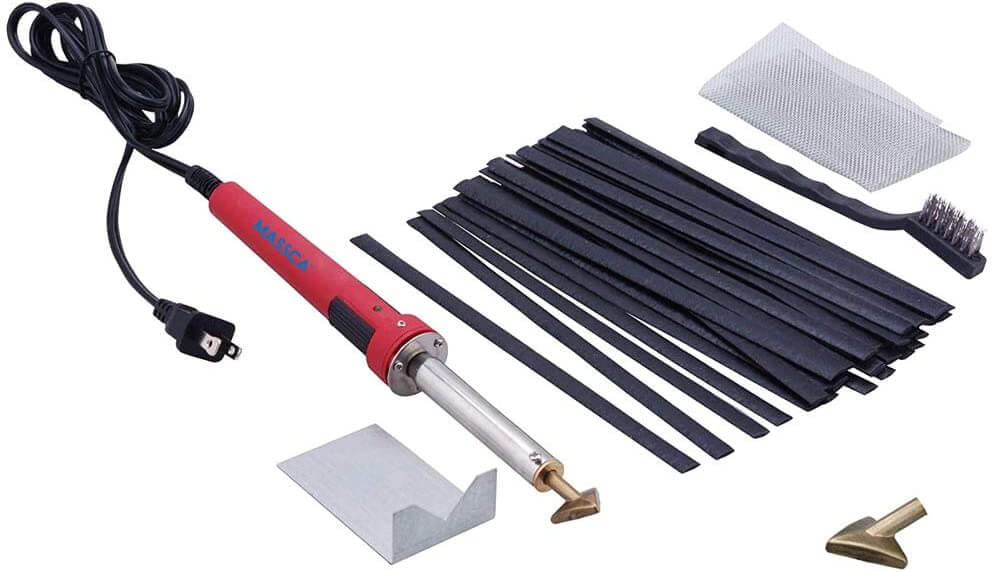 using a matching plastic patching material that’s melted into the puncture. If you want to fix a leaking plastic gas tank yourself, you’ll have to invest in an automotive plastic repair kit that comes with a variety of plastics and a melting iron. Before you do that, check on the price of an aftermarket gas tank; it may be worth your while to replace it rather than repair it.
Or, use a special adhesive designed for HDPE
If you’re dealing with a small crack, you may be able to glue it back together using a specialty chemical bonding system like Tech-Bond, which claims to work on HDPE
TechBond is one of the few companies that claims a repair system that works on plastic gas tanks. See their site for more information.
If you can’t buy a replacement steel gas tank, try a sealer
Rusted gas tanks can be renewed internally if
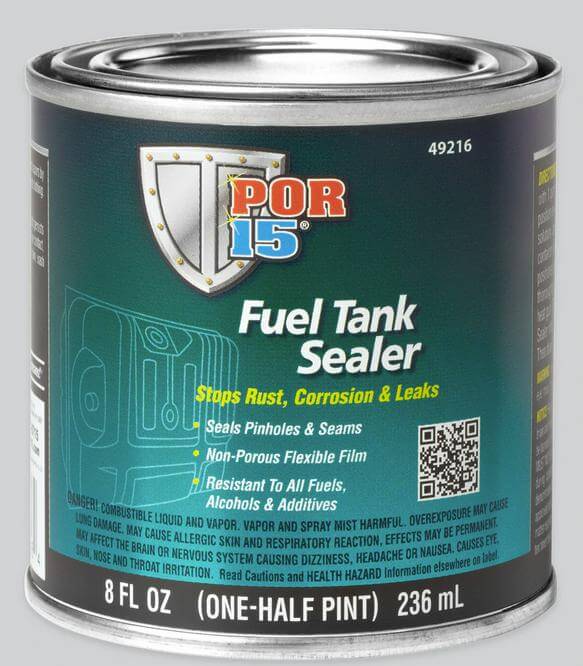
POR Fuel Tank Sealer
they’re otherwise sound. POR Fuel Tank Sealer gets good reviews and is just one of the gas tank sealer products you should consider. Here are the steps after removing the tank from the vehicle and draining the fuel:
1) Remove any old sealer that may have been applied to the inside of the tank
2) Degrease the inside of the tank to remove any gum or varnish
3) Add POR Metal Prep to dissolve rust inside the tank and coat/etch the tank with zinc phosphate to promote adhesion
4) Clean with water and allow to dry
5) Add sealer and rotate the tank to cover all internal surfaces
6) Drain off excess sealer
7) Allow the product to cure for the recommended time
©, 2022 Rick Muscoplat
Posted on by Rick Muscoplat