
How to fix a melted headlight connector
Melted Headlight Harness – Causes and Fixes
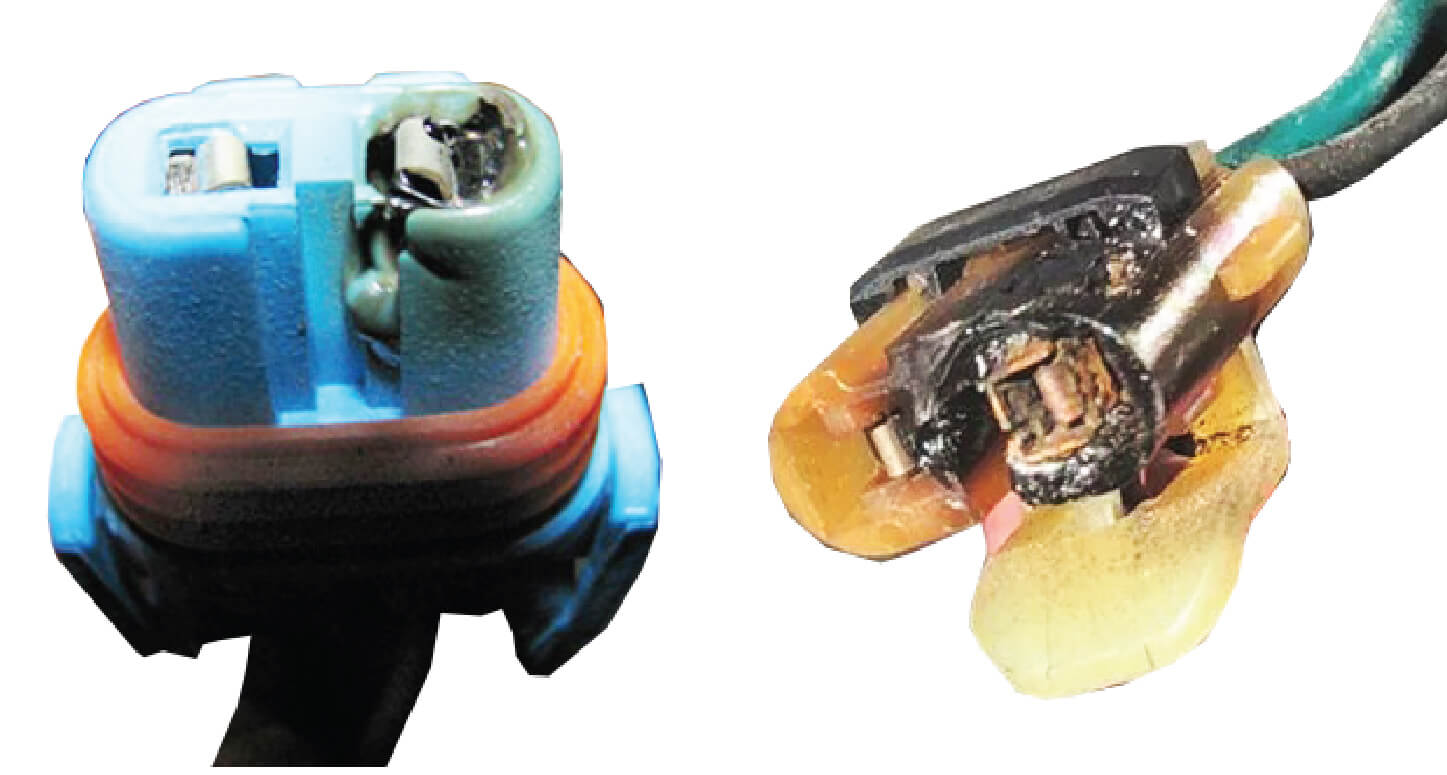
Typical examples of melted headlight connectors
Shops are seeing an increase in the number of customers with headlight problems caused by a melted headlight connector. This article explores what causes a headlight connector to melt and why it’s happening more often on late-model cars and trucks.
Melted Headlight Connector: Causes
Carmakers are using smaller gauge wiring
It’s pretty obvious that the root cause is poor engineering, but that’s not the complete picture. Carmakers use 20-gauge wire for headlights. Then, they bury the headlight in the corner of an already-packed engine compartment. When you combine the effects of a thin gauge wire, engine compartment heat, and little airflow, no one should be surprised that you wind up with a melted headlight connector.
Car owners are installing “upgraded” bulbs
Federal regulations cover how much current a headlight bulb can draw, but some “brighter” bulbs create more heat than the factory bulb, and that heat radiates off the reflector near the headlight connector.
A loose terminal in the connector or corrosion can cause the plastic to melt
A loose terminal inside the connector or corrosion can increase electrical resistance, creating more heat than the plastic can handle, causing it to melt.
How to fix a melted headlight connector
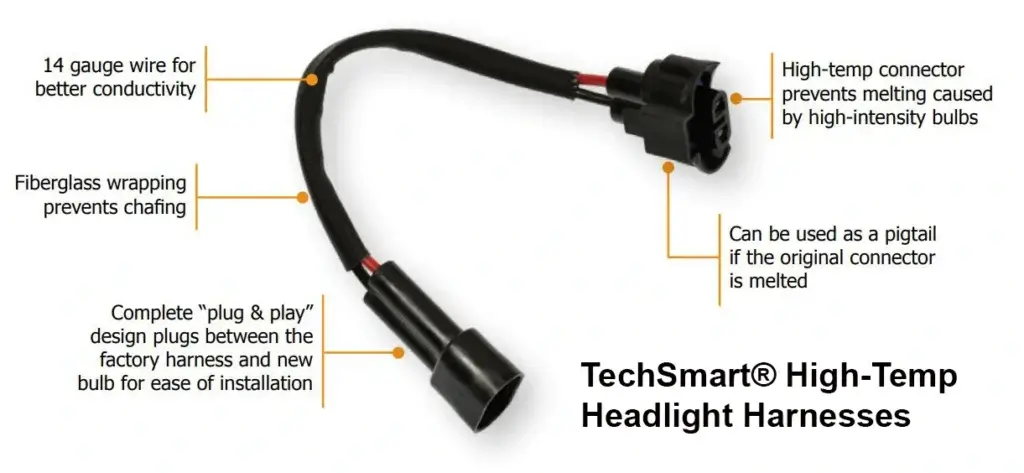
We all agree it was poor engineering. But how do you prevent it from happening again? Buy a replacement pigtail that uses a heavier gauge wire or one with a ceramic core.
Buy a non-dealer replacement headlight connector (pigtail)
TechSmart, a division of Standard Motor Products and Dorman Products have developed complete lines of wiring harnesses that use 14-gauge wire and have a ceramic connector that can’t melt. You can also find no-ceramic headlight pigtails at findpigtails.com. See this post for instructions on how to properly splice in a new pigtail.
With a heavier gauge pigtail in place, you’ll never have to deal with a melted headlight connector again.
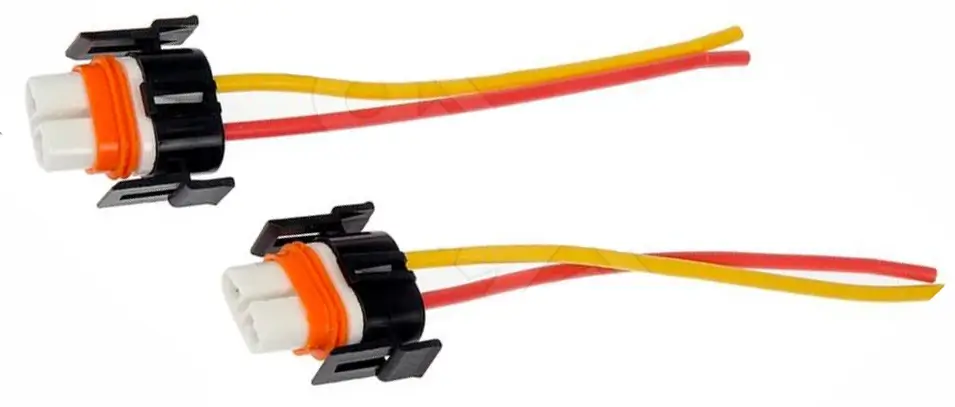
Dorman Products Ceramic headlight pigtail
Posted on by Rick Muscoplat