
How to read a dipstick with dots
Learn how to read a dipstick, even if it has dots or cutouts
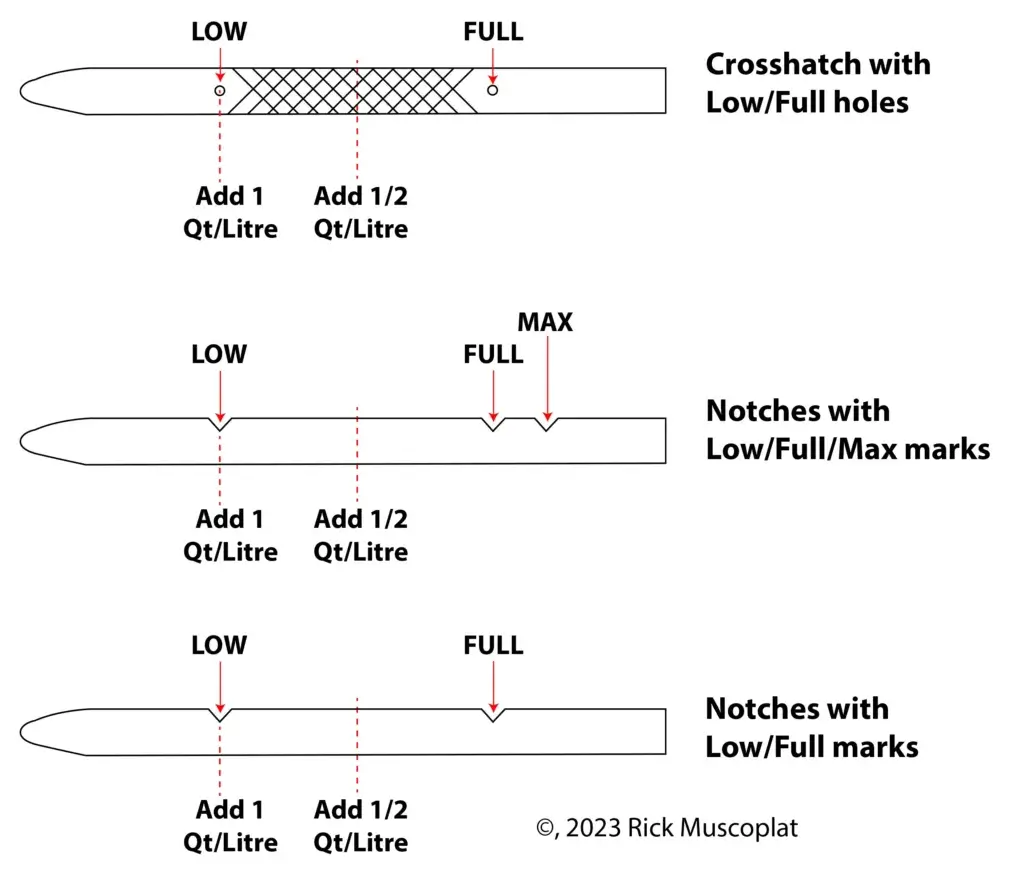
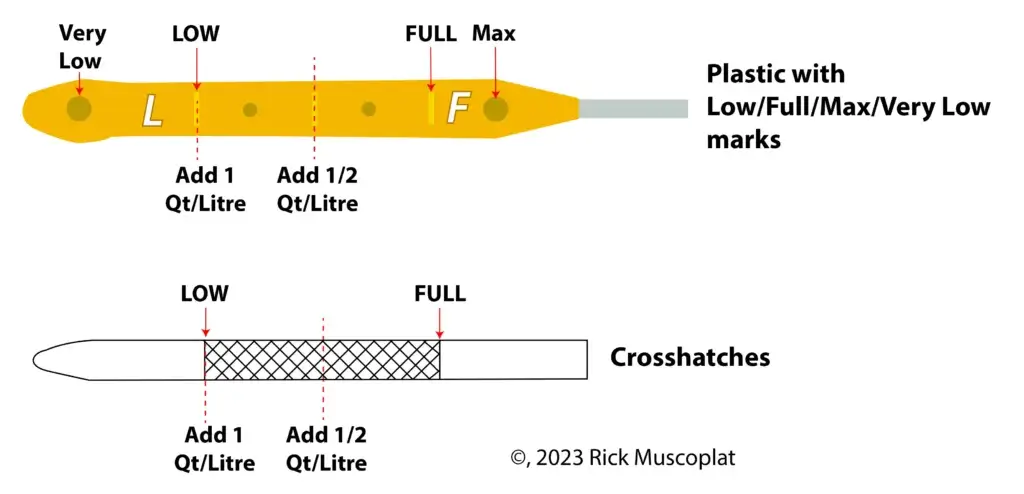
Carmakers use several types of dipsticks. Some have two dots indicating full and low, while others have three dots indicating full 1/2 quart low and full quart low. Still others use cross hatch marks to indicate oil levels between full and empty. This article will show you how to check your oil level on the dipstick using all the different types of dipsticks.
What you need to check your oil level
1) A clean rag
2) A bottle of the recommended oil
Steps to check the oil level on your dipstick
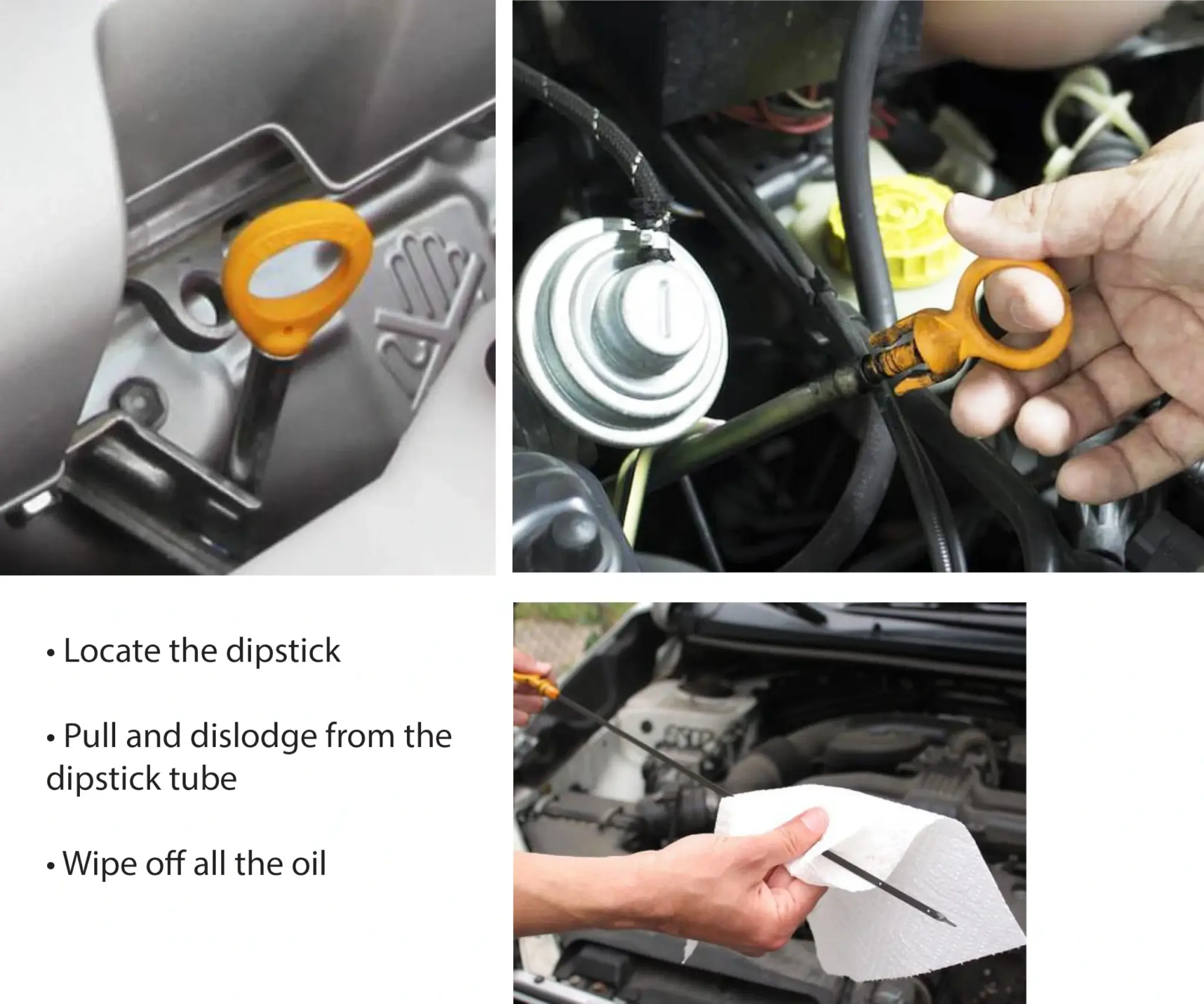
1) Locate the handle for the dipstick and pull it all the way out of the dipstick tube, using your rag to wipe off all the oil.
2) Reinsert the dipstick all the way into the dipstick tube, making sure it’s fully seated.
3) Remove and read the oil level
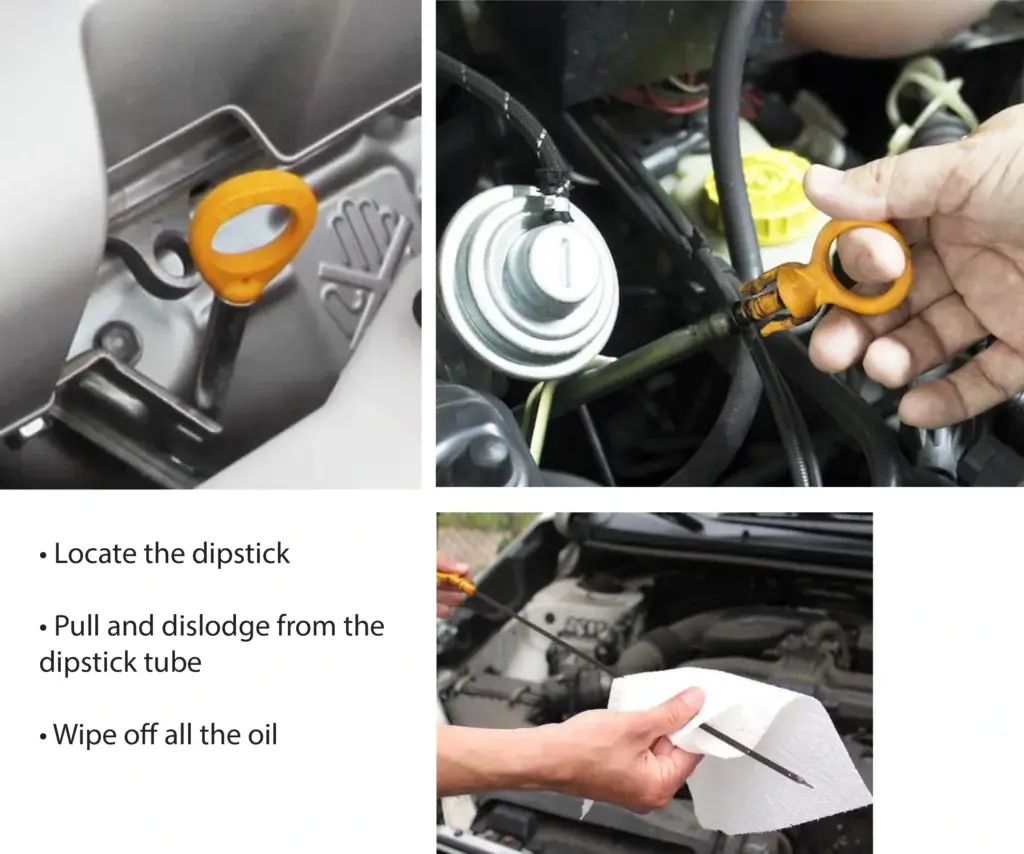
How to read an oil dipstick
Carmakers use several variations of oil dipsticks. Some contain letters to indicate FULL and LOW, while others include holes or notches and expect you to know what they mean. So, you need to know how to read an oil dipstick.
Here’s a rundown of the most common types of dipsticks.
When to add more oil after reading the level on the dipstick

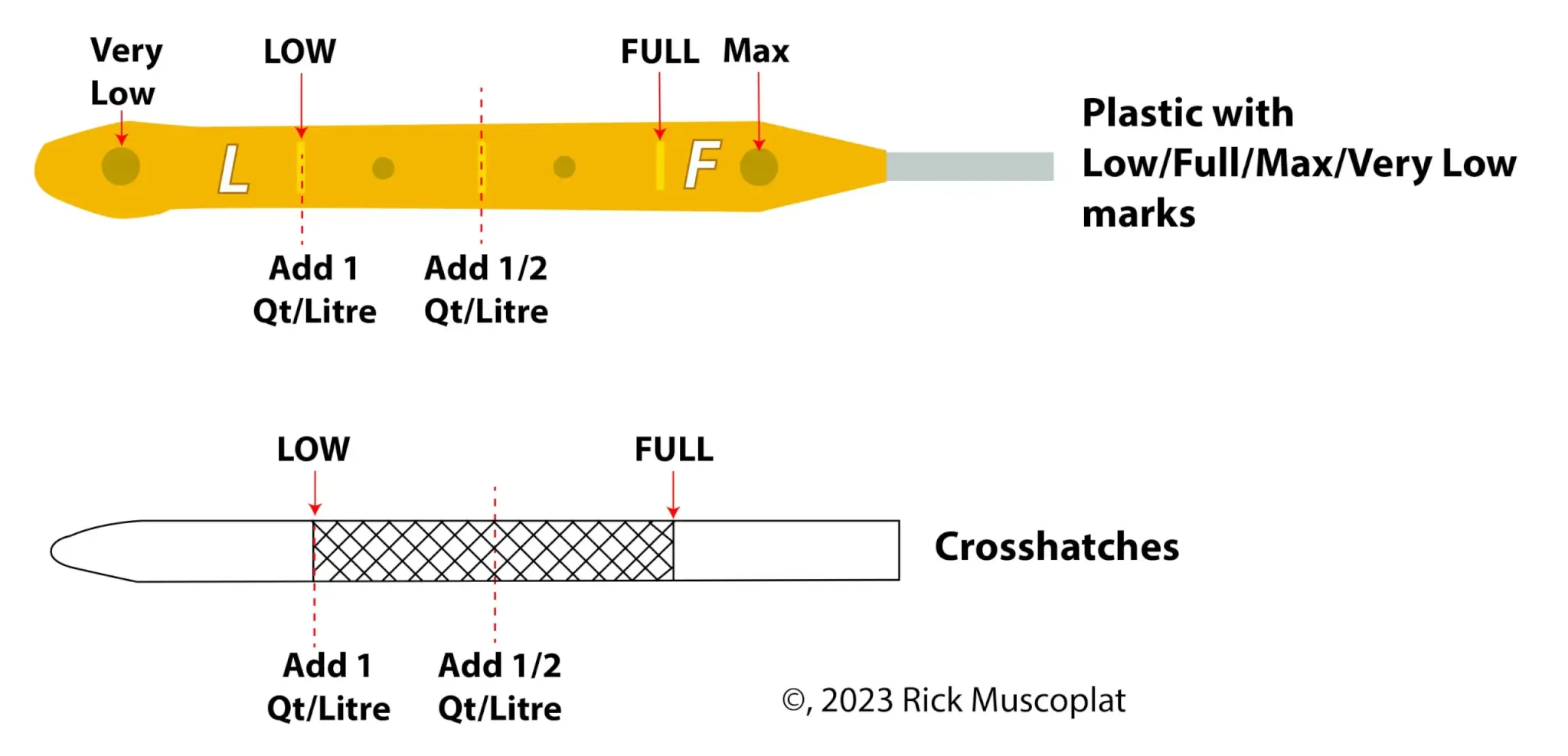
You can add oil whenever the oil level is below the full mark. But most carmakers recommend adding oil when the dipstick shows you’re a half-quart low or midway between the FULL and LOW marks.
How to add more oil to your engine
The recommended oil is listed in your owner’s manual and on 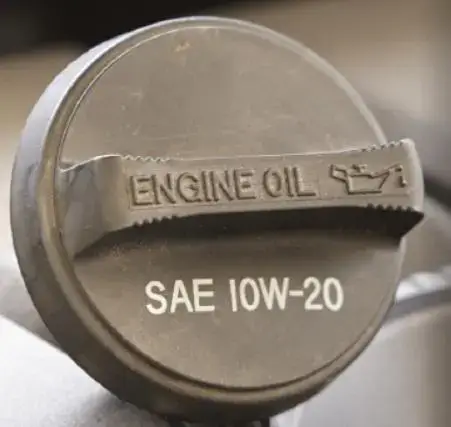 the oil fill cap on your engine. NEVER use a different oil. The oil life monitoring system is calculated to work properly only if you use the recommended oil.
Next, pay attention to the bottle. Notice how the spout is off center and the top is angled.
The bottle is designed to help you pour a smooth flow without a funnel and without “glugging.”
Most people think you should start the pout with the spout closest to the engine’s oil fill hole. WRONG!
Holding the bottle in that position will cause it to burp and glug as you pour, and the oil will shoot out between burps.
Instead, start your pour slowly with the angled spout up. It’s a bit harder to aim that way, but it makes for a
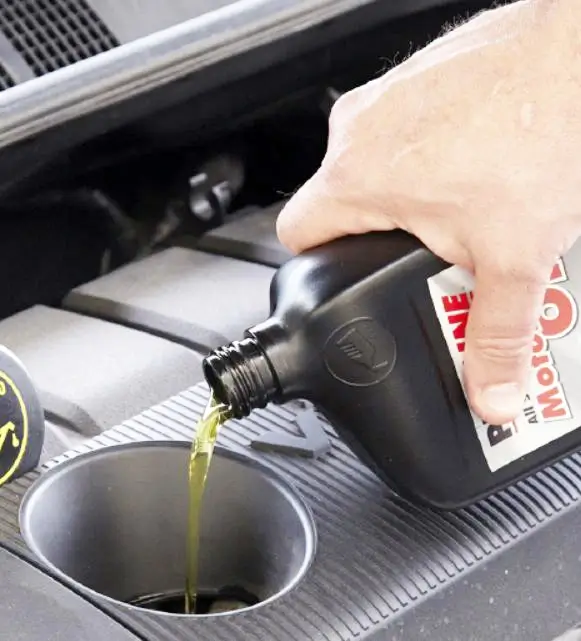
Pour motor oil the right way, with the angled spout up. This allows air into the bottle so it burbs itself and eliminates glugging and oil spills.
much smoother pour.
When should you check your oil dipstick: when it’s hot or cold
In the past, all carmakers recommended checking your oil level when the engine was cold. That way, all the oil from the top of the engine had drained down to the oil pan, so you’d get an accurate reading.
However, several years ago, Ford Motor Company began recommending checking your oil level when the engine is hot. Why? Because they knew that very few people checked their oil first thing in the morning when the engine was cold. Quite the contrary, most people check their oil dipstick when they’re at the gas station, and the engine is still hot. So Ford recalibrated their oil dipsticks to reflect the proper oil level when the engine was hot.
Not all carmakers recommend this, and checking your oil when the engine is hot does mean that some of the oil hasn’t drained down to the pan from the top of the engine. However, tests show that the amount of oil that doesn’t drain right away amounts to no more than 1/8/quart, which is about 4 ounces. In other words, it is not enough to make much difference when reading your dipstick.
Does oil expand when hot?
Yes. The amount motor oil expands depends on the type of oil being used, conventional or full synthetic. But here’s a general rule of thumb: When the engine is at full operating temperature, oil expands about 6%. If your engine holds 4.5 quarts (4.5 quarts x 32 oz/quart = 144 oz), it will read approximately 8.64 oz. more when the engine is at operating temperature compared to when it is cold (144-oz x 6%= 8.64-oz).
What happens if you overfill your oil?
Carmakers list a specification for the amount of oil to add during an oil change. The amount shown includes the amount needed to fill the oil filter. In fact, some specifications show two numbers: one with a new filter and one without. The problem is that manufacturers of spin-on filters can make their filters any size they want. If they use a more efficient filter media, they can downsize the overall size of the can. Or they can use a less efficient filter media and make a larger can.
So, it’s possible to add the exact amount of oil to your engine but still have it slightly overfilled if the filter you chose is smaller than the OE filter.
Or, you can be slightly overfilled if you don’t let the oil drain long enough
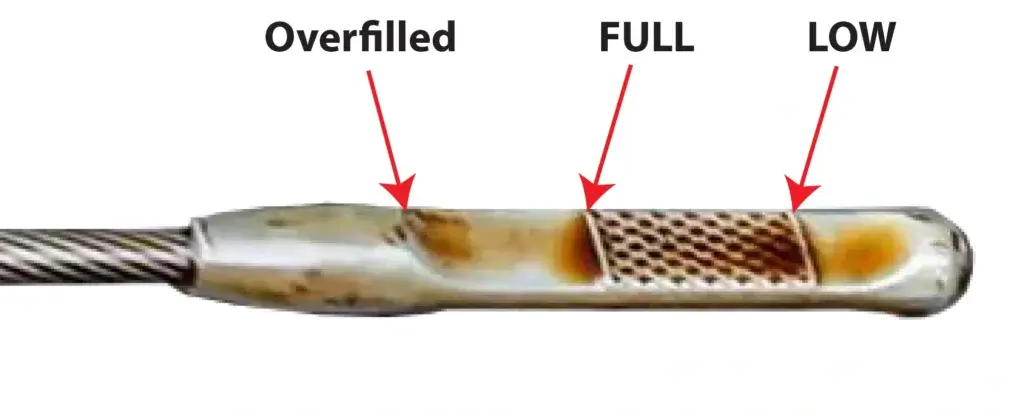
Most engines can handle a slight overfill without problems
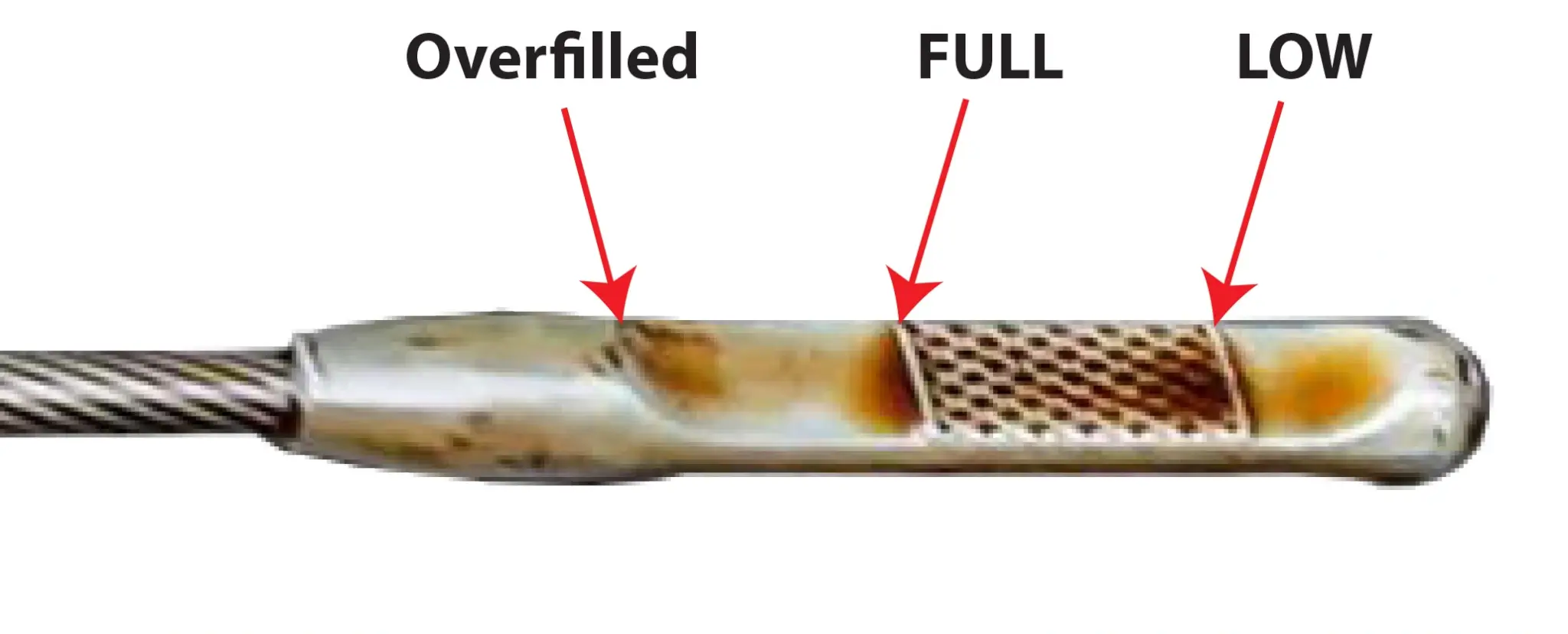
Overfilling by 1/2-quart is usually not a problem with most engines. However, if you’ve overfilled by more than that amount, that extra oil can cause big problems like:
• Accelerated oil bringing, spark plug fouling, and carbon buildup— An overfilled crankcase can splash too much oil onto the oil rings, causing them to drag too much oil into the combustion chamber. That can cause spark plug fouling, carbon buildup, and even catalytic converter damage.
• Engine damage— An overfilled crankcase can cause oil foaming (due to the crankshaft whipping air into the oil). Oil foam can’t properly pressurize, nor can it lubricate or remove heat. Oil foaming causes overheating in high-load areas, causing bearing damage and engine destruction.
Drain off the excess if the oil dipstick shows more than 1/2-quart overfilled.
©, 2023 Rick Muscoplat
Posted on by Rick Muscoplat