
AC Static Pressure Chart Guide for Beginners
What Is AC Static Pressure and Why It Matters
Quick Summary
AC static pressure readings are my first test when diagnosing an AC problem in a car.
• Static pressure is measured with the engine OFF and tells me if there’s enough refrigerant in the system to even start the compressor.
• If static pressure is too low, I immediately suspect a leak.
• If static pressure is normal, the system may still have problems—I move on to running pressure tests.
• Static pressure alone doesn’t confirm a full charge, but it tells me whether the system can even operate.
What AC Static Pressure Readings Really Tell Me
Any time I’m diagnosing a car AC problem, I start with AC static pressure readings. It’s one of the fastest ways I know to get a baseline before I even start the engine.
Here’s the key concept: when the engine is OFF, and the system sits long enough, refrigerant pressure equalizes throughout the system. That equalized pressure is what we call static pressure.
And that number? It tells me a lot—if you know how to interpret it correctly.
This is one of the simplest but most misunderstood steps in AC diagnostics. Done right, it can save you from guessing, overcharging, or unnecessarily replacing parts.
What Is Car AC Static Pressure? (Simple Explanation)
When the system is at rest:
• High side = Low side → Because pressure equalizes throughout the system
• The static pressure reading directly correlates to ambient temperature
In other words, static pressure is basically a temperature-to-pressure relationship of the refrigerant at rest.
Why this matters
• It tells me if refrigerant is present
• It tells me if the system can engage the compressor
• It gives me an early warning of leaks or contamination
But here’s the part most people miss:
• Static pressure cannot tell you if the system is fully charged. It only tells me if there’s enough pressure to operate
How I Measure AC Static Pressure (Step-by-Step Like a Pro)
This is where many DIYers go wrong, so here’s exactly how I do it.
Step 1: Let the system sit — Engine OFF
• Wait at least 20–30 minutes for pressures to equalize (especially on expansion valve systems)
Step 2: Hook up a manifold gauge set
• Connect to both high and low service ports
• Confirm that both gauges read the same pressure
Step 3: Measure the actual ambient temperature at the vehicle, not the weather service temperature. Never rely on a weather app.
I measure:
• In the shade
• Away from engine heat
• At the vehicle location
Step 4: Compare to a car AC static pressure chart
I compare my readings to a:
R-134a static pressure chart or
R-1234yf pressure chart
That tells me instantly if the system is:
• Low
• Possibly contaminated
• Within expected range
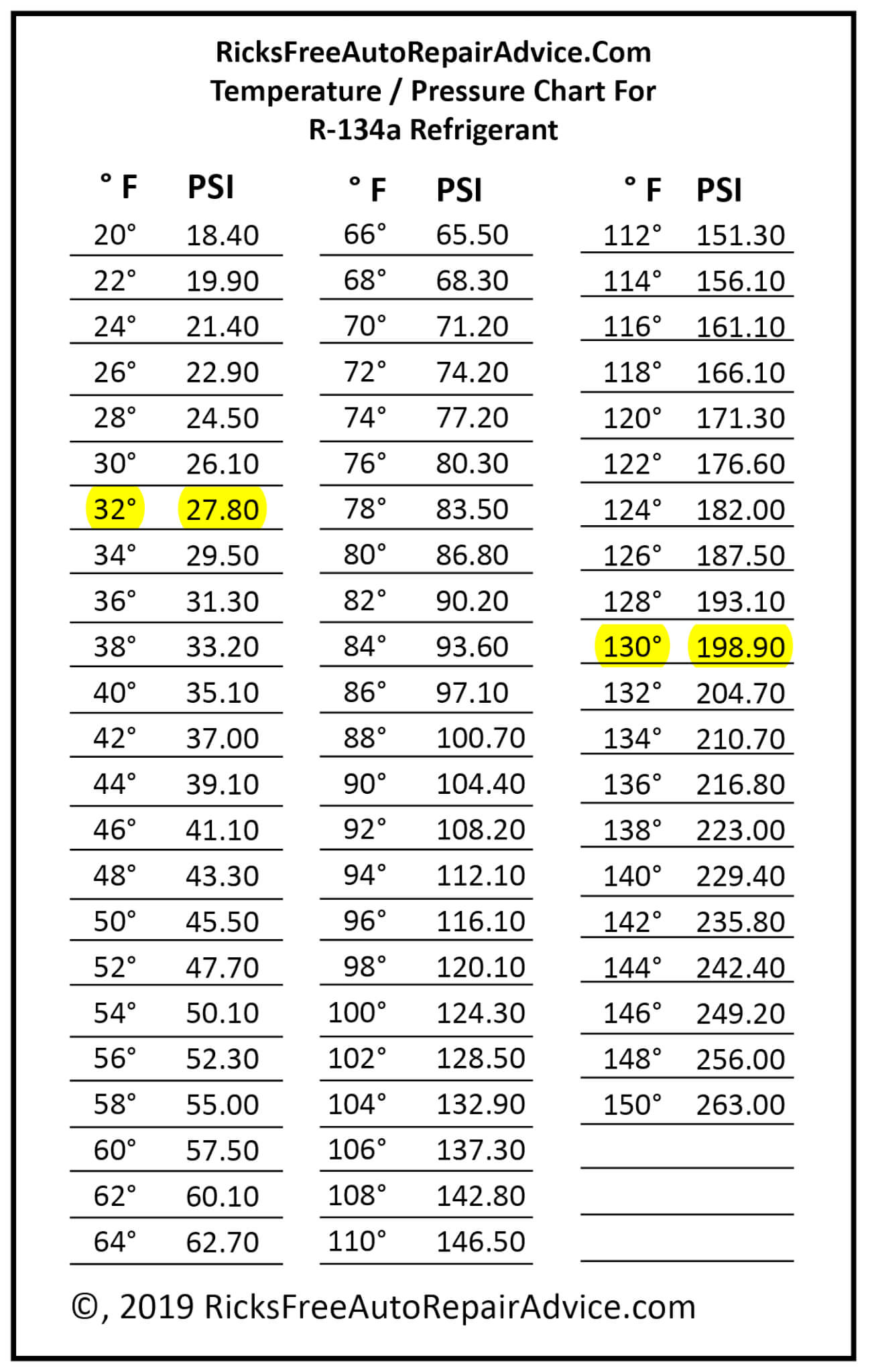

If Static Pressure Is Too Low
What it means
• The system is very low on refrigerant due to a leak.
What I do next
• Leak test (UV dye, electronic detector)
• Inspect common leak points (hoses, condenser, evaporator)
What I never do
• I never “just top it off”
Because if it’s low:
• It’s got a leak
• Oil leaked out with the refrigerant
• Air and moisture likely got in
If Static Pressure Matches the Chart
What it means
• There’s enough refrigerant in the system to engage the compressor
• The system may still be undercharged
What I do next
• Start engine
• Turn AC on
• Watch running pressures
If the compressor cycles rapidly, I already know:
• It’s likely low on charge despite normal static pressure
If Static Pressure Is Higher Than Expected
Possible causes
• Overcharged system
• Air contamination
• The system has recently run and is not fully stabilized
Key insight
• Air in the system can fool you:
• Static pressure may look normal or high
• But running pressures will spike abnormally
What Static Pressure Does NOT Tell You
This is where many bad diagnoses occur.
Static pressure:
• Does NOT confirm full refrigerant charge
• Does NOT diagnose airflow problems
• Does NOT confirm compressor health
It only tells me:
• “Do I have enough refrigerant to start testing?”
©, 2019 Rick Muscoplat
Posted on by Rick Muscoplat