
Hyundai P200A Code: Why Your Intake Runner Is Stuck Open
Common Causes of a Hyundai P200A Code
Quick Summary
The Hyundai P200A code indicates that the intake manifold runner control (IMRC) on Bank 1 is stuck open. It’s usually caused by a faulty actuator, carbon buildup, or a vacuum/control issue. Driveability symptoms may include:
• Reduced power
• Poor fuel economy
• Rough idle
Simply replacing parts without testing often wastes time and money. The fix depends on whether the issue is mechanical (stuck runner) or electrical (actuator/sensor problem)
What the Hyundai P200A Code Really Means
In plain terms, the Hyundai P200A code means the engine computer has detected that the intake manifold runner control system is stuck open when it shouldn’t be. Let me explain how that system works in the real world.
Modern Hyundai engines use an intake manifold runner control system (IMRC) to improve airflow. At low speeds, the runners remain partially closed to increase air velocity, thereby boosting torque and fuel efficiency. At higher speeds, they open fully to maximize airflow. When the system gets stuck open, the engine loses that low-speed efficiency—and that’s when the code sets.
From a diagnostic standpoint, this is a performance mismatch code. The computer commanded one position, but the feedback didn’t match.
Hyundai has issued service bulletin #16-01-004-2 to address the issue affecting the 2.4 GDI-equipped vehicles listed below. Here’s how to deal with the problem.
Hyundai service bulletin #16-01-004-2
Hyundai has issued a software update to address the P200A (Intake Manifold Runner Performance – Bank 1) trouble code. In addition to the check engine light, you may also notice a slight hesitation or reduced power during acceleration, an automatic transmission upshift hesitation during acceleration, and a clicking noise from the intake manifold VCM (Variable Charge Motion) actuator when the engine RPM is increased.
In the 2015 Hyundai model years, you may also encounter a P0605 Engine Control Module – ROM Error with the electronic Stability Control (ESC) Warning Light ON and limited engine power (“Limp Home”) mode.
Vehicles affected by Hyundai service bulletin #16-01-004-2
2015-16 Hyundai Sonata vehicles with the 2.4L GDI engine
How to fix a Hyundai P200A code
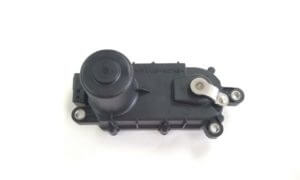
Variable charge motion activator
The service bulletin advises checking the variable charge motion activator (VCM) to determine if it’s working properly. To do that, check the actuator sensor voltage on terminal 5 at the VCM connector with the engine running. As you raise and lower the RPM, the voltage should change from 1.8 volts to around 3 volts with no abnormal noises.
Set your meter to measure pulse width if the voltage doesn’t change. Then connect to the VCM terminal at PCM terminals 1 (red) and 3 (black). Raise and lower RPM and look for a change in pulse width. If you see a change in pulse width with no abnormal noises, the problem is with the VCM. Replace with updated Hyundai part #28323-2GGA1.
If you hear abnormal noise, replace the VCM.
Update the ECM software to the latest version.
Clear adaptive memory
The Most Common Causes (Based on Real Diagnostics)
After diagnosing dozens of these, I can tell you the root cause usually falls into one of these categories.
1. Faulty Intake Manifold Runner Control Actuator — This is the most common failure point. The actuator moves the internal flaps, and when it fails, the system sticks open.
2. Carbon Buildup in the Intake Manifold — Direct-injection engines are especially prone to this. Carbon deposits can physically prevent the runners from moving.
3. Vacuum Leaks (On Vacuum-Operated Systems) — Some Hyundai engines use vacuum to control the runners. A leak means the system can’t move properly.
4. Wiring or Connector Issues — Corrosion, broken wires, or poor connections can prevent the actuator from receiving the correct signal.
5. Failed Position Sensor — If the sensor that reports runner position fails, the computer thinks the runners are stuck—even if they’re not.
How I Diagnose a Hyundai P200A Code
Here’s where most people go wrong—they replace the actuator without confirming it’s bad. That’s not how I do it.
Step 1: Scan Tool Data Review — I look at commanded vs. actual runner position. If they don’t match, I know the system isn’t responding.
Step 2: Visual Inspection — I check:
• Vacuum lines
• Wiring harness
• Electrical connectors
Step 3: Actuator Test
Using a scan tool or direct power, I command the actuator and watch for movement.
No movement? Either the actuator is bad, or the runners are stuck.
Step 4: Check for Mechanical Binding — If the actuator moves but the runners don’t, carbon buildup is likely the problem.
Step 5: Electrical Testing — I verify:
• Power and ground at the actuator
• Signal voltage from the PCM
• Sensor feedback
This step separates a bad actuator from a wiring or control issue.
How to Fix a Hyundai P200A Code
The correct repair depends on what you find during diagnosis. Here’s how I typically fix a Hyundai P200A code:
1. If the actuator is faulty, replace the intake manifold runner control actuator.
2. If there’s Carbon Buildup — Remove the intake manifold and clean the runners thoroughly. In severe cases, replace the manifold
3. If there’s a vacuum leak, repair or replace damaged vacuum lines.
4. If it’s an electrical issue, fix wiring, connectors, or replace the sensor as needed.
5. If the Manifold Is Damaged — Sometimes the internal flaps break. In that case, replacement is the only real fix.
©. 2019 Rick Muscoplat