
Identifying and Fixing a Transmission Fluid Leak
Common Signs and Causes of Transmission Fluid Leaks
A transmission fluid leak can lead to a variety of issues, including transmission damage and reduced vehicle performance. Identifying and addressing a transmission fluid leak promptly is essential to maintain the health of your vehicle. This article will cover the most common symptoms of a transmission fluid leak and provide guidance on how to fix them.
Common Symptoms of a Transmission Fluid Leak
1. Fluid Puddles Under the Vehicle— One of the most obvious signs of a transmission fluid leak is the presence of fluid puddles under your vehicle. Transmission fluid is usually red, although it can also appear brown or dark if it is old and dirty. If you notice red fluid pooling beneath your car, it’s a strong indicator of a leak.
2. Low Transmission Fluid Levels— Regularly checking your transmission fluid level can help you detect a leak early. If you find that your transmission fluid level is consistently low despite regular top-ups, it’s likely that you have a leak.
3. Transmission Slipping or Not Shifting Normally— Low transmission fluid can cause the transmission to slip, meaning the vehicle may unexpectedly change gears or fail to stay in gear. This can be dangerous, especially at high speeds, and indicates that the transmission is not receiving adequate lubrication.
4. Overheating Transmission— Transmission fluid helps cool the transmission. If there’s a leak, the fluid level can drop, causing the transmission to overheat. An overheating transmission can emit a burning smell, and you may notice a warning light on your dashboard.
5. Transmission Warning Light— Many modern vehicles have sensors that detect low transmission fluid levels or transmission issues. If the transmission warning light illuminates on your dashboard, it’s a sign that you should check your transmission fluid and inspect for leaks.
6. Unusual Noises— Grinding, clunking, or whining noises from the transmission can indicate a problem. While these noises can result from various transmission issues, they often accompany low transmission fluid levels due to a leak.
7. Strawberry shake colored engine coolant— This is a sign that the transmission cooler inside the radiator has ruptured and is leaking transmission fluid into the coolant.
The most common sources of a transmission fluid leak
Before you can fix a transmission fluid leak, you need to identify its source. Common sources include:
• Transmission Pan Gasket— The gasket between the transmission and the transmission pan can develop weak spots over time and leak transmission fluid onto the ground.
‘• Transmission Cooler Lines— The steel transmission cooling lines run from the transmission to a cooler inside the radiator. Over time and with corrosion, the lines can leak fluid onto the ground. You’ll usually spot the puddles near the front of the vehicle directly under the radiator.
• The transmission cooler inside the radiator— Most owners don’t know that there’s a radiator-within-a radiator to cool transmission fluid. If the transmission cooler fails, transmission fluid can leak into the cooling system. Worse yet, coolant can leak into the transmission causing it to fail.
• Seals and Gaskets— The most common seal leaks are the driveshaft seals, torque converter seal, and servo cover seals.
• Torque Converter Input Shaft Seal—This seal rarely fails. However, the most common cause of failure is using a high-pressure flush machine to perform a transmission flush procedure. The high pressure can rotate the converter seal outward, causing it to leak.
How to Fix a Transmission Fluid Leak
1) Transmission Pan Gasket: Remove the transmission drain pan and allow time for the fluid to drain out. Clean off any gasket or RTV sealant residue. Clean the transmission pan thoroughly, paying attention to any debris located in the pan. Clean the magnet. Then apply the new gasket or bead of RTV, depending on shop manual recommendations. Install the pan and tighten the pan bolts using a torque wrench. WARNING: Using a torque wrench is critical. It is very easy to over-tighten transmission pan bolts, causing them to strip out the threads in the soft aluminum transmission case, causing future leaks.
2) Transmission Cooler Lines: If the lines are leaking at a steel line-to-rubber hose connection, replace the rubber hose. I urge you to resist the temptation to simply tighten the clamps. If the rubber hoses are leaking, it’s because they have degraded over time. Tightening the clamps is a temporary fix and will result in future leaks. To replace the rubber hoses, remove the clamps, replace the rubber hose, and install the clamps. Find transmission fluid compatible hose at any auto parts store.
However, if the steel lines are leaking, you have two choices: you can purchase replacement lines from the dealer, or you can splice in a rubber section to replace the rusted-out section.
3) Seals and Gaskets: To replace driveshaft seals, you’ll first have to remove the driveshaft or CV axles. Use the proper removal and seal installer tools to properly seat the new seals without damaging them.
4) Torque Converter Input Shaft Seal: This is not a DIY job because the transmission must be removed from the vehicle to access the seal.
Recognizing the symptoms of coolant in the transmission
• You see transmission fluid blowing out of the vent tube
• You notice a puddle of pink transmission fluid on the ground after driving
• The transmission fluid is cloudy, strawberry milkshake colored
• You notice coolant or water floating on top of the transmission fluid sample
• You notice that the gaskets that are swollen or wrinkled
• You feel a shudder during gear engagement or during gear changes, especially when shifting into overdrive.
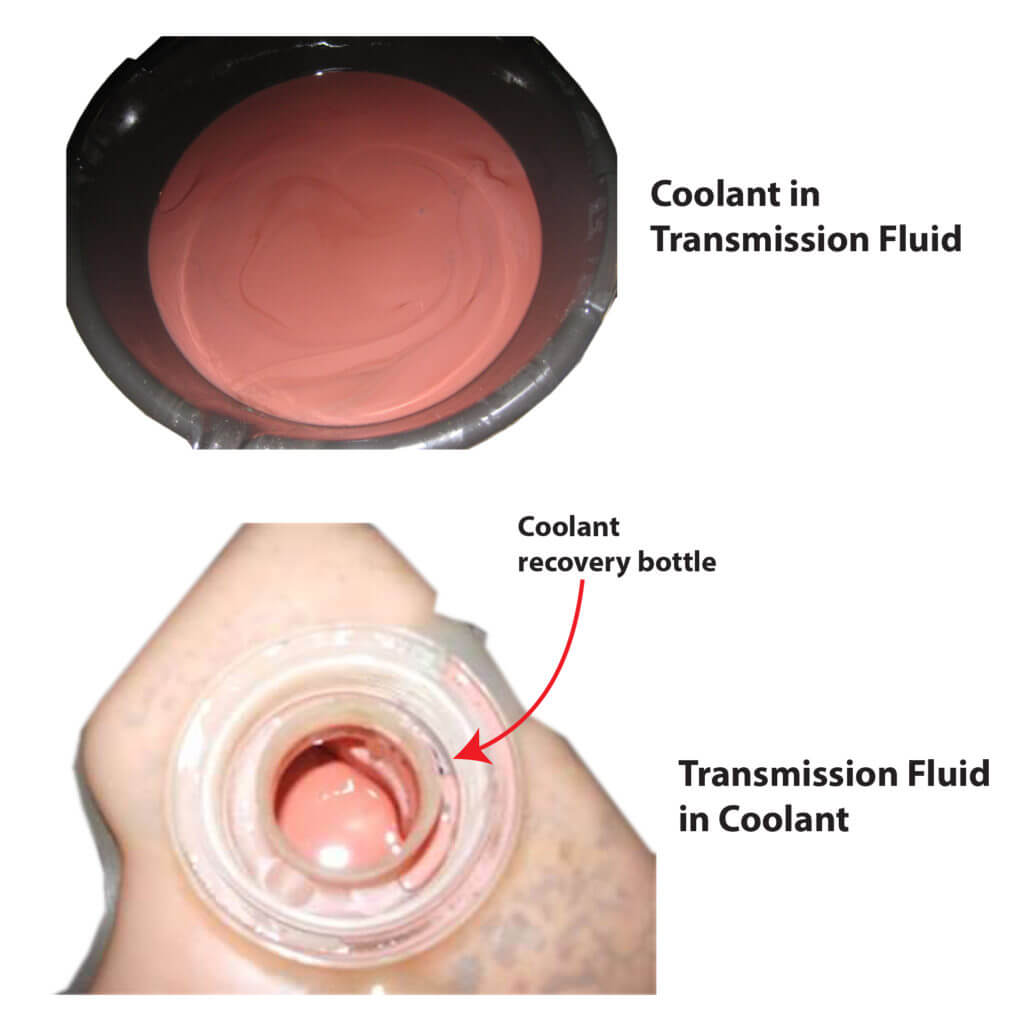
These images show what a transmission cooler leak looks like and transmission fluid leaks into the coolant
Transmission oil cooler failure
It may sound strange that the transmission oil cooler is located inside the radiator, but transmission fluid is often hotter than engine coolant. So even if the engine coolant is very hot, it’s still cooler than transmission fluid. So car makers locate a small transmission oil cooler inside the transmission. If you neglect the recommended coolant changes and corrosion begins inside your cooling system, it can attack the transmission oil cooler, causing a leak.
Depending on the size of the leak and the temperature of the coolant, transmission fluid can either leak into the coolant or coolant can leak into the transmission.
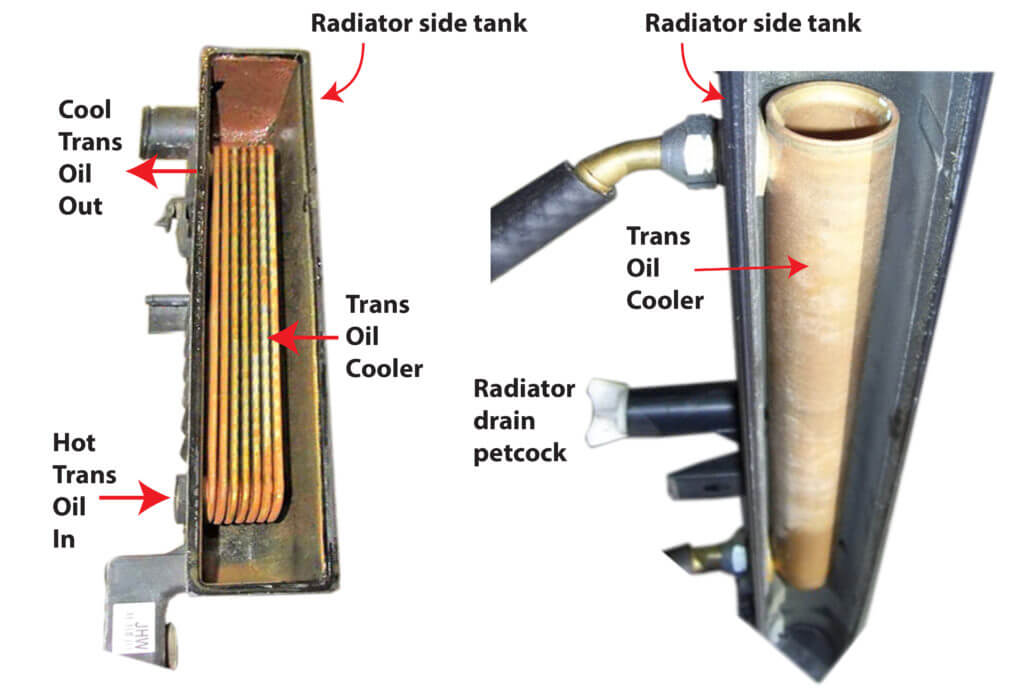
This image shows a typical transmission oil cooler located inside the radiator
What Happens When Transmission Fluid Leaks Into the Coolant?
When transmission fluid leaks into the coolant, it attaches to the surface area of the radiator and engine coolant passages, insulating the radiator fins and reducing cooling effectiveness, resulting in overheating. The transmission fluid mixes with the coolant when it’s circulating but rises to the top when the engine is off.
What Happens When Coolant Leaks Into The Transmission?
When coolant leaks into the transmission, it turns the normally red transmission fluid into a strawberry color or can turn it milky white. Since coolant doesn’t lubricate like transmission fluid, it can’t protect against internal wear. In addition, the water in the coolant swells the spacer plate gaskets, clutch facings, and band friction materials. It also rusts internal steel components. If you continue to drive with coolant in the transmission, it will fail.
Coolant in the transmission requires a complete teardown and rebuild. You can’t simply flush it out and continue running the transmission.
How to detect coolant in your transmission
In some cases, coolant won’t show the normal telltale signs of a strawberry color or white milky deposits. In that case, you should obtain a test kit. They’re available from several companies. The Acustrip is $25 and uses test strips. A kit is good for 10 tests.
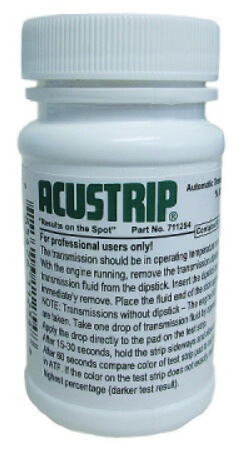
Accustrip test strips for detecting coolant in transmission fluid
Find the ACUSTRIP 711254 Series at acustrip.com/
Or, order the Gly-Tek TestKit and test a sample of the fluid. The kit costs $102 and contains enough supplies to conduct ten tests.
The test takes less than five minutes and shows results within fifteen minutes.
Obtain a test kit from this company
http://www.gly-tek.com/
Nelco Company
1047 McKnight Rd South
Saint Paul
MN
55119
Phone: 651-738-2014
Fax: 651-738-944
©, 2019 Rick Muscoplat