
Is It Safe to Drive with the Engine Light On
Is It Safe to Drive with the Engine Light On? Read This Before You Risk It
When the check engine light pops up on your dashboard, your first instinct might be to panic. Don’t. Whether it’s safe to drive with the engine light on depends on the severity of the problem and whether the light is on steady or 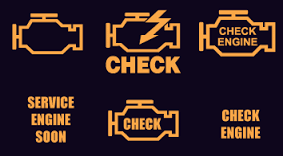 flashing. Most steady check engine lights are due to fairly minor issues that don’t present a driving safety issue. A steady light means the computer has detected an emissions, engine, or transmission performance issue that must be checked out; it doesn’t mean your wheels are about to fall off. A flashing check engine light, on the other hand, is more serious. I’ll cover what to do in that case later.
What to Do When the Check Engine Light Comes On
Step 1: Check for Immediate Issues— Look at your temperature gauge, listen for unusual noises, and see if there’s any smoke. If everything seems normal, proceed with caution.
Step 2: Tighten the Gas Cap—This is one of the most common (and easiest) fixes. If the cap is loose, drive for a bit to see if the light turns off.
Step 3: Use an OBD-II Scanner—If you want to know which system is causing the check engine light to come on, use an OBD-II scanner. These devices read trouble codes from your car’s computer, giving you a better idea of the problem. Most auto parts store will read the trouble code(s) for free.
Step 4: Drive Cautiously (If Safe to Do So)— If the car is running normally and the light isn’t flashing, you can usually drive it to a mechanic. However, avoid hard acceleration and high speeds.
Step 5: Get the Problem Fixed
Even if the car seems fine, don’t ignore the check engine light for too long. Small issues can turn into big, expensive problems if left unresolved.
Steady vs. Flashing Check Engine Light: What’s the Difference?
• Steady check engine light – A steady check engine light usually indicates a relatively minor issue. If your car is running fine, with no loss of power, no overheating, and no unusual noises, it’s usually safe to drive with the engine light on—at least temporarily. However, you still need to diagnose the problem as soon as possible.
• A Flashing check engine light is a different story— A flashing light means the computer has detected an engine misfire that’s serious enough to damage your expensive catalytic converter. A flashing check engine light isn’t a road safety hazard, but continuing to drive in that condition can cause more damage. So, in that respect, it’s not safe to drive with an engine light that’s flashing.
Pull over as soon as safely possible and call for a tow truck. Again, continuing to drive can cause more damage, sometimes costing well over $1,500 in addition to the initial repair.
Signs You Should Stop Driving Immediately
Flashing check engine light – This usually means a severe misfire, which can destroy your catalytic converter in minutes.
Loss of power – If your car won’t accelerate properly, it might be in limp mode, which means the vehicle is trying to prevent further damage.
Overheating – A hot engine can lead to a blown head gasket, warping, or even complete engine failure.
Smoke or burning smells – If you see smoke or smell burning oil, coolant, or plastic, stop driving immediately.
Strange noises – Knocking, ticking, or loud exhaust noises can indicate major engine trouble.
If you experience any of these, it is not safe to drive with the engine light on. Call for a tow and get your car inspected right away.
Here are the most common causes of a steady check engine light
1) Evaporative Emissions System (EVAP) Problems— The evaporative emissions system protects the environment by preventing the escape of fuel vapors from your gas tank. Every time you fill up your car, the EVAP system captures the fuel vapors that would typically have vented into the air, causing smog. The system stores the fuel vapors in a charcoal canister. When you start up after filling, the engine sucks the vapors into the engine where they’re burned. The EVAP system then conducts a system integrity test to make sure there are no leaks. Unfortunately, the EVAP system is failure-prone, generating many trouble codes and check engine lights. EVAP system problems are not emergencies but should be checked and fixed. It’s safe to drive with an engine light on due to an EVAP-related trouble code.
2) Air/fuel mixture problems and sensor Issues—Low fuel pressure, vacuum leaks, exhaust leaks, and worn-out oxygen (O2), Mass Airflow (MAF) sensors are the second most common causes of a check engine light. As long as your car idles smoothly and accelerates normally, you can continue to drive
3) Misfire issues—The most common cause of misfire issues is worn-out spark plugs. Contrary to popular belief, not all spark plugs last 100,000 miles. Spark plug replacement intervals are engine-specific. Engines with turbocharges, for example, often require spark plug replacement at 60,000 miles or, in some cases, as often as every 40,000 miles.
©, 2025 Rick Muscoplat
Posted on by Rick Muscoplat