
Knock Sensor Code: How To Test a Knock Sensor
How to Test a Knock Sensor: Step-by-Step Guide
If you’re dealing with a knock sensor trouble code, it’s crucial to get to the root of the issue before it leads to engine damage. I’ve seen countless cases where ignoring a failing knock sensor results in poor performance, increased fuel consumption, and even internal engine failure. That’s why I always make it a priority to test a knock sensor the right way before replacing it unnecessarily.
Understanding How a Knock Sensor Works
A knock sensor is your engine’s first line of defense against damaging pre-detonation (knock or pinging). When a knock occurs, this sensor detects vibrations and sends a voltage signal to the engine control unit (ECU). The ECU then adjusts the ignition timing to prevent further knocking. Without a properly functioning knock sensor, your engine could suffer from long-term damage due to uncontrolled detonation.
There are three main types of knock sensors used in vehicles:
Inductive resonant knock sensor
Piezoelectric non-resonant knock sensor
Piezoelectric resonant knock sensor
Each of these operates slightly differently, but the testing process remains similar. Here’s how I go about diagnosing a knock sensor code with accuracy.
How to test a knock sensor
The first step in testing a knock sensor is determining whether it’s electrically sound. A faulty sensor can either have an open circuit, a short to ground, or incorrect resistance readings.
Step 1: Test the Knock Sensor Resistance
1) Disconnect the knock sensor from the harness.
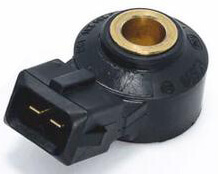
2) Set your multimeter to the ohms (Ω) setting.
3) Place one probe on the knock sensor’s connector terminal and the other on the metal housing of the sensor.
3) Compare your reading to the manufacturer’s specifications. Generally, resistance should be around 0.1Ω.
4)If you get an open circuit (infinite resistance) or a short, the sensor is faulty and needs to be replaced.
Step 2: Test the Knock Sensor’s Response to Vibration
1) Reconnect the knock sensor to the vehicle.
2) Attach a multimeter to the sensor—one probe on the connector terminal and one on the sensor’s metal housing.
3) Using a hammer or a mallet, tap the engine block near (but NOT directly on) the knock sensor.
4) Watch the voltage reading—if the sensor is functioning properly, it should generate a small voltage spike.
5) If no voltage is detected, the sensor isn’t responding and should be replaced.
Understanding Knock Sensor Types and How They Differ
Not all knock sensors function the same way. When I diagnose a knock sensor trouble code, I always consider the sensor type to ensure I interpret test results correctly.
Inductive and Piezoelectric Resonant Knock Sensors
These sensors rely on a vibration plate that responds to the same resonant frequency as an engine knock. They work using either electromagnetic induction or a piezoelectric effect to convert vibrations into an electrical signal. However, because they only detect a narrow frequency range, they’re called narrow-band knock sensors.
Piezoelectric Non-Resonant Knock Sensors
Unlike resonant sensors, piezoelectric non-resonant knock sensors use a spring-mass system to detect vibration across a much wider frequency range (typically 5 kHz – 15 kHz). This makes them more effective at detecting knock across different engine speeds.
Many modern vehicles use non-resonant knock sensors because they offer better performance across a broad RPM range. When I diagnose a knock sensor code, I always check the type of sensor in use because it affects how the ECU interprets knock events.
My Final Thoughts Knock Sensor Codes: Don’t Ignore a Knock Sensor Trouble Code
If your vehicle has thrown a knock sensor trouble code, don’t ignore it. A faulty knock sensor can lead to serious performance issues and potential engine damage. Before replacing it, make sure to test the knock sensor properly using a multimeter and vibration test. Understanding the type of knock sensor in your engine will also help you diagnose issues more effectively.
I’ve seen plenty of cases where a simple knock sensor test saved someone from replacing a perfectly good sensor or misdiagnosing an ignition or fuel issue. Follow these steps, and you’ll have a clear answer on whether your knock sensor is the culprit.
©, 2022 Rick Muscoplat
Posted on by Rick Muscoplat