
Leaking oil pan gasket — Seal versus Replace
Fix an Oil Pan Gasket Leak Before It Becomes a Bigger Problem
I’ve repaired hundreds of engines over the years, and one of the most common issues I see is an oil pan gasket leak. It starts as a few small drips on your driveway, but it can quickly turn into a significant repair bill. Replacing an oil pan gasket can cost nearly $1,000 in some vehicles, which is why I often get asked: “Can I fix an oil pan gasket leak myself?” The answer is yes — but only if you understand what kind of gasket you have and how to prepare it properly.
Which Oil Pan Gaskets Can Be Fixed Using RTV
Older engines that use neoprene or composite (cork and neoprene) gaskets can sometimes be sealed temporarily using RTV. I’ve successfully used this method on older vehicles where replacing the gasket immediately wasn’t practical. But here’s the catch — RTV won’t stick to oil, so surface prep is everything when you’re trying to fix an oil pan gasket leak this way.
How I Prepare the Area Before Applying RTV
When I fix an oil pan gasket leak using RTV, here’s my proven process:
1) Drain the oil completely. This prevents

Permatex The Right Stuff
contamination while you work.
2) Clean the exterior of the oil pan thoroughly using aerosol brake cleaner to remove all oil residue.
3) Inject brake cleaner into the breach of the leaking gasket so that it flushes through and drips out the drain plug hole. The goal is to clean and dry the gasket area where the RTV will bond.
4) Allow all solvents to evaporate. Use compressed air if you have it.
5) Apply fast-curing RTV, such as (Permatex The Right Stuff), into the leaking area and onto the cleaned surface surrounding it.
Done properly, this technique can stop a minor oil pan gasket leak in its tracks. However, it’s not a permanent fix — it’s a stopgap until you can replace the gasket correctly.
Why You Can’t Fix a Silicone Gasket Oil Pan Gasket Leak with RTV
Not every leak can be sealed with RTV. Many modern engines use RTV instead of a physical gasket, and RTV won’t adhere to cured RTV or a silicone gasket. If your oil pan was sealed from the factory with RTV, applying more RTV over it will never work.
In those cases, the only way to fix an oil pan gasket leak is to remove the oil pan completely, scrape away all the old RTV, clean the surfaces until they’re spotless, and reapply a fresh bead according to the manufacturer’s torque pattern.
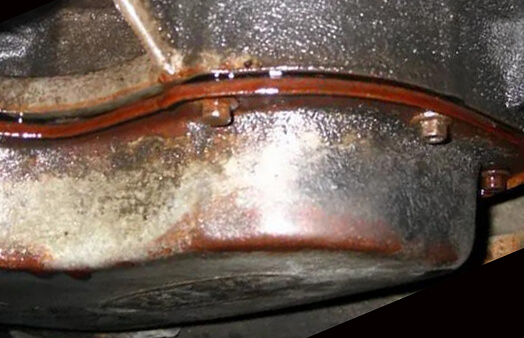
Leaking pan gasket
Types of Oil Pan Gaskets That Cannot Be Fixed with RTV
From my experience, here’s a quick rule of thumb:
Silicone gaskets → RTV won’t stick
RTV-only seals → New RTV won’t bond to old RTV
Aluminum pans with pitted flanges → Must be removed and resurfaced
If you see oil weeping through a previously RTV-sealed surface, it’s time to remove the pan entirely to properly fix an oil pan gasket leak.
Can You Use Stop Leak Products for an Oil Pan Gasket Leak?
Many people try to pour in an oil stop-leak product, hoping it will fix an oil pan gasket leak without getting their hands dirty. Here’s my honest professional take: it rarely works.
These products work, if they work at all, by swelling neoprene or nitrile rubber. In other words, stop leak products can only work on rubber gaskets, not cork or silicone gaskets, or RTV gaskets. None of those materials responds well to stop-leak chemicals.
Even worse, stop-leak products affect every rubber seal in your engine — not just the oil pan gasket. That includes crankshaft seals, valve cover gaskets, and timing cover seals. Using too much can actually create more leaks than it fixes.
If you decide to try a stop-leak product, use it sparingly and exactly as directed. But in my experience, if you really want to fix an oil pan gasket leak, mechanical repair is the only reliable solution.
My Pro Advice — Do It Right or Do It Twice
I can’t stress this enough: fixing a leak properly means understanding the materials, cleaning the surfaces, and using the correct sealant. Quick fixes with RTV or additives might buy you time, but they’re not long-term solutions.
If you can access the oil pan easily, removing it and replacing the gasket or RTV is always the right move. It ensures a proper seal and protects your engine from oil starvation — which can cost you a lot more than the gasket repair itself.
Key Takeaways for Fixing an Oil Pan Gasket Leak
A gasket leak can often be slowed with RTV — but only on cork or neoprene gaskets.
• RTV doesn’t adhere to cured RTV or silicone.
• Stop-leak products may cause more harm than good.
• The best way to fix a leak is to remove the pan, clean the surfaces, and reseal it correctly.
Always follow torque specs and allow full curing time before adding oil.
©, 2023 Rick Muscoplat
Posted on by Rick Muscoplat