
Mission Coupling Explained: When to Use It Instead of Fernco
Mission Coupling vs Fernco: What Every DIYer and Plumber Needs to Know
Quick Summary
A mission coupling is a shielded rubber coupling designed to join different types of pipe, such as cast iron, PVC, ABS, or copper. It provides structural support and maintains proper pipe alignment. By comparison, a Fernco coupling is typically an unshielded rubber sleeve that is best suited for underground or flexible applications. Choosing the correct coupling is critical because building codes often require shielded couplings in above-ground installations. Proper tightening, correct sizing, and selecting the right type of mission coupling or Fernco ensure a leak-free and durable plumbing connection.
Article
Understanding What a Mission Coupling Is
In my experience working on plumbing systems, a mission coupling is one of the most reliable ways to connect different pipe materials. 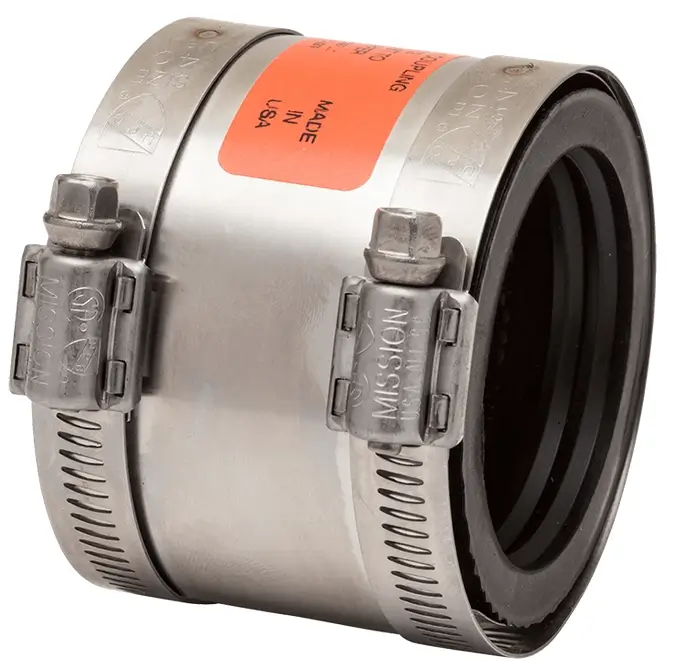 A mission coupling consists of three main parts: a thick rubber sleeve, a stainless-steel outer shield, and multiple stainless band clamps.
The rubber sleeve provides the watertight seal, while the stainless shield prevents the pipes from shifting or flexing out of alignment. That shield is the key difference between a mission coupling and many types of Fernco couplings. Because of that structural reinforcement, a mission coupling is widely accepted by plumbing codes for above-ground DWV piping.
When connecting cast iron to PVC during a remodel, I almost always use a mission coupling. The steel shield keeps the pipes aligned so that the joint doesn’t sag or develop leaks over time.
Type of shielded Mission Couplings: Smooth versus corrugated
When you look at shielded mission couplings, 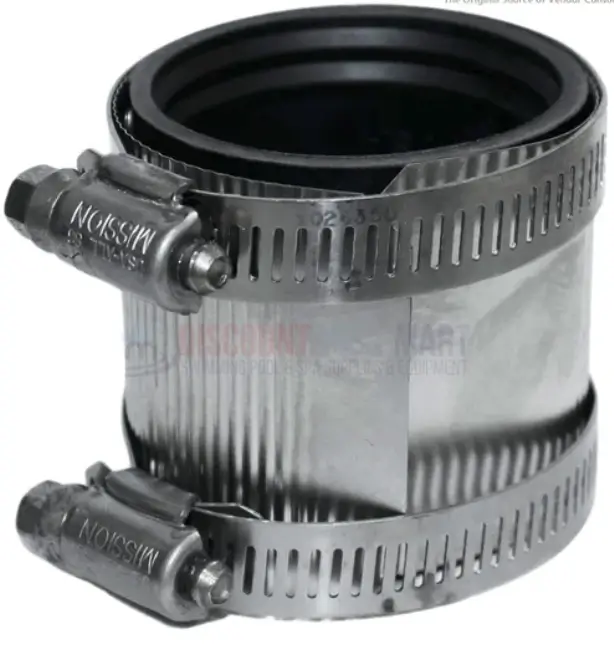 you’ll notice two styles of stainless steel shields: smooth and corrugated (or ribbed). Both are designed to reinforce the rubber sleeve and maintain pipe alignment, but they behave differently when installed. Understanding the difference matters, especially when you’re working on drain, waste, and vent (DWV) piping, where alignment and code compliance are important.
Smooth Shielded Mission Couplings — A smooth shielded mission coupling uses a flat stainless steel band that wraps around the rubber sleeve. The outer shield is smooth and typically fairly thick stainless steel, usually secured by two to four tightening bands depending on pipe diameter.
The smooth shield distributes the clamping force evenly around the rubber sleeve. When the bands are tightened, the rubber compresses uniformly against the pipe surfaces.
Because the shield is rigid and smooth, it:
• Maintains pipe alignment very well
• Prevents the joint from flexing
• Provides strong shear resistance
• This type of mission coupling is commonly used in above-ground plumbing systems, especially when connecting:
• Cast iron to PVC
• Cast iron to ABS
• PVC to PVC repairs
• Copper DWV transitions
In many plumbing codes, the smooth shielded mission coupling is the preferred connector for interior drain systems because the shield prevents the pipes from shifting or sagging over time.
Corrugated Shield Mission Couplings — A corrugated shield mission coupling features a stainless steel shield stamped with ridges (corrugations). Instead of being smooth, the shield looks slightly ribbed or wavy. These ridges allow the shield to flex slightly while still reinforcing the rubber sleeve.
The corrugations create small expansion points in the shield. When the bands are tightened, the shield can flex slightly to conform to pipe irregularities. This makes corrugated shields particularly useful when joining pipes that:
• Are slightly out of alignment
• Have uneven outside diameters
• Are older cast iron pipes with rough surfaces
• The corrugated design allows the coupling to grip the pipe more aggressively without requiring as much precision in pipe alignment.
Why Corrugated Shields Exist
Manufacturers introduced corrugated shields because older plumbing systems rarely have perfectly aligned pipes. When replacing sections of cast-iron drain pipe in older homes, the pipes may be slightly offset, pitted from corrosion, or out of round. A corrugated shield provides some flexibility, allowing the coupling to conform to those irregularities. However, the trade-off is that a corrugated shield is slightly less rigid than a smooth shield.
Smooth Shield — A smooth shield provides maximum rigidity. Once tightened, it locks the pipes in alignment and prevents movement. Because the shield is flat, the clamping force is distributed very evenly around the joint.
Corrugated Shield — A corrugated shield provides more flexibility and adaptability. The ribs allow the shield to flex slightly as the clamps tighten.
Code and Inspection Considerations — In many plumbing jurisdictions, both types are classified as shielded couplings, which means they are permitted for above-ground installations. However, inspectors often prefer smooth shield couplings when:
• Joining a plastic pipe to cast iron
• Installing long horizontal runs
• Supporting structural loads in DWV piping
That’s because the smooth shield offers better shear resistance and keeps pipes perfectly aligned. Corrugated shields are more commonly used in repair couplings or transition couplings, where some flexibility is necessary.
Where Mission Couplings Are Commonly Used
A mission coupling is designed primarily for drain, waste, and vent piping systems. These couplings are especially useful when transitioning between different materials.
• Cast iron to PVC
• Cast iron to ABS
• PVC to copper DWV
• Repairing broken sections of drain pipe
• Transitioning between different pipe diameters
When working in basements, crawl spaces, or inside walls, plumbing codes typically require a mission coupling rather than a Fernco sleeve because the shield prevents pipe movement.
A Fernco coupling can still be useful in certain situations, especially underground repairs where some flexibility is beneficial.
How to Tighten a Mission Coupling Correctly
Installing a mission coupling is simple, but tightening it correctly is critical for a leak-free connection.
1) Clean the pipe surfaces. Dirt, grease, or burrs can prevent the rubber sleeve from sealing properly.
2) Slide the rubber sleeve over one pipe, align the pipes together, and center the mission coupling over the joint.
3) Once the coupling is centered, slide the stainless shield into place.
4) Tighten the band clamps using a torque wrench or nut driver. Most mission coupling manufacturers specify tightening the bands to 60 inch-pounds of torque.
5) Tightening the clamps evenly is important. I tighten each band gradually in sequence so the mission coupling compresses evenly around the pipe.
6) Over-tightening can damage the rubber sleeve, while under-tightening can cause leaks.
The Key Differences Between a Mission Coupling and Fernco
Both are flexible pipe couplings used in plumbing, but they serve different purposes and have distinct designs.
Mission Coupling — A Mission coupling (also called a band seal coupling or shielded coupling) consists of a rubber gasket/sleeve surrounded by a stainless steel shield/band with clamps on each end.
Fernco Coupling — A Fernco coupling (the brand 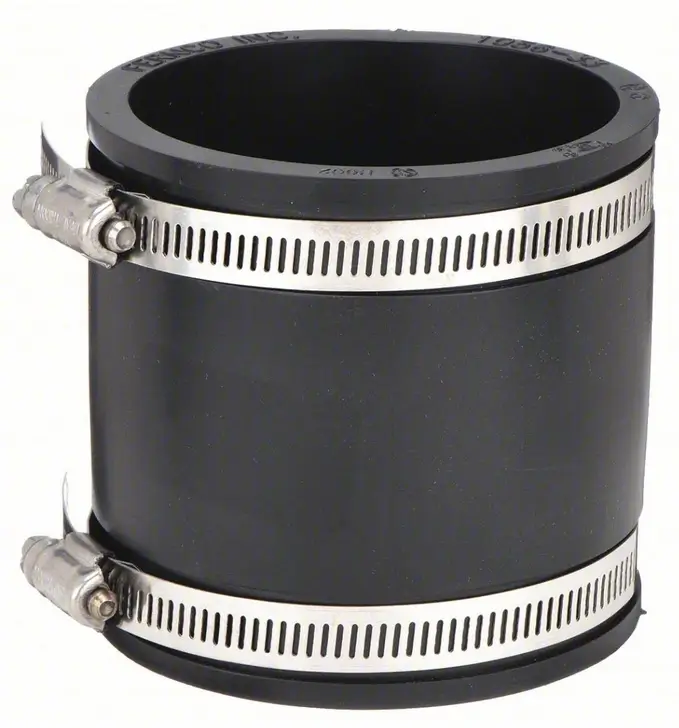 name has become a generic term) is essentially just a rubber/neoprene sleeve with stainless steel clamps on each end — no outer metal shield.
Many DIYers confuse a mission coupling with a Fernco coupling, but they are not the same thing. The biggest difference is structural reinforcement.
A mission-coupling includes a full stainless-steel shield and multiple tightening bands. This shield keeps the pipes perfectly aligned and prevents flexing.
A typical Fernco coupling, on the other hand, is usually an unshielded rubber sleeve with two band clamps. Because it lacks the metal shield, the pipe can shift slightly under load.
That flexibility can be helpful underground where soil movement occurs. But above ground, it can allow pipes to sag.
In most plumbing codes, a mission coupling is required for above-ground drain piping, while a Fernco sleeve is often allowed only underground or outside the structure.
Another difference is precision. A mission coupling is usually designed for very specific pipe transitions, whereas a Fernco coupling is generally more universal.
Both products serve important roles in plumbing systems, but choosing the wrong one can lead to inspection failures or long-term leaks.
When to Use a Mission Coupling vs a Fernco
Based on decades of plumbing and repair experience, I generally follow this rule: Use a mission coupling whenever the joint is inside the building or above ground. Use a Fernco sleeve when repairing underground sewer piping or when flexibility is beneficial.
For example, If I’m replacing a section of cast iron stack with PVC in a basement, I use a mission coupling. If I’m repairing a cracked clay sewer line outside the house, a Fernco coupling can be the better choice. Both types of couplings can create strong, leak-free joints when used in the right application.
Final Thoughts
A mission coupling is one of the most useful fittings in modern plumbing. It allows plumbers and DIYers to connect different pipe materials quickly and securely while maintaining proper alignment.
Understanding the difference between a mission coupling and a Fernco coupling is essential. A mission coupling provides structural support and is typically required above ground, while a Fernco sleeve offers flexibility and is often used underground.
If you choose the correct coupling, install it properly, and tighten the bands to the recommended torque, these connectors will provide a durable and reliable plumbing repair that can last for decades.
©, 2026 Rick Muscoplat
Posted on by Rick Muscoplat