
How to Replace an O2 Sensor: Step-by-Step Guide
Step-by-Step Guide to Replace an O2 Sensor
Replacing an oxygen sensor isn’t the most complicated job, but if you don’t do it right, you’ll end up frustrated, dealing with a stuck O2 sensor or damaging the exhaust pipe, O2 sensor bung, or the catalytic converter. I’ve replaced more than my share of oxygen sensors, and I can tell you that the right approach—and the right tools—make all the difference. Whether getting a check engine light for a bad sensor or performing preventative maintenance, this guide will walk you through the entire O2 sensor replacement process, from preparation to installation.
Step 1: Gather the Right Tools and Parts
1) O2 sensor socket set
Many oxygen sensors screw into the exhaust pipe or cata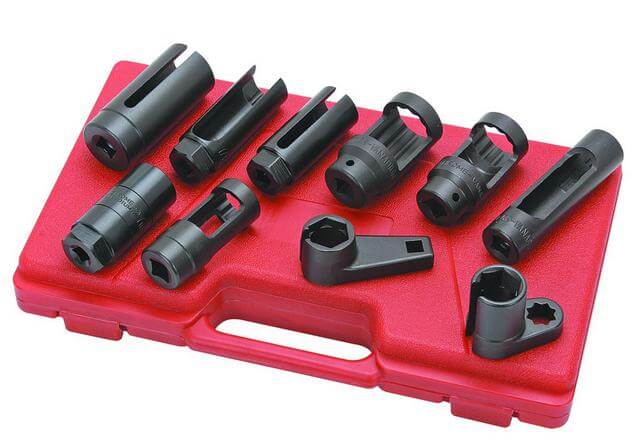 lytic converter. When it’s time to replace that type of oxygen sensor, you’ll need an oxygen sensor socket set. You can rent oxygen sensor sockets from many auto parts stores.
Why a set? Because O2 sensors are often located in tight spaces that are too cramped for long sockets. However, if your engine has a bolt-on (flange type) air/fuel ratio sensor, you won’t need special tools, just a ratchet, extension, and standard 6-point socket.
2) Rust penetrant (PB Blaster is my favorite)– I’ll be honest with you: the old sensor will be stuck. You’ll need a rust penetrant to get it unstuck. WD-40 won’t cut it. You need a real rust penetrant.
3) Breaker bar – You’ll need lots of leverage to get it unstuck and a short ratchet alone won’t cut it.
4) Propane torch— You may have to heat up a stubborn rusted-in-place sensor
5) Torque wrench – Essential for tightening the new sensor to spec.
6) Anti-seize compound (if not pre-applied) – Prevents the new sensor from seizing in place over time.
7) Shop manual or online torque specs – You don’t want to guess the torque.
Step 2: Locate the Oxygen Sensor
Most vehicles have at least two oxygen sensors, but some have four or more. There’s usually one before the catalytic converter (upstream) and one after (downstream). If you’re unsure which one to replace, scan for error codes using an OBD-II scanner. The trouble code will tell you exactly which sensor needs to go.
Once you find the sensor, inspect the area around it. If you see rust or corrosion, prepare yourself for a potentially stuck O2 sensor situation.
Step 3: Prepare for Removal
Cold Exhaust vs. Warm Exhaust
Here’s a trick that many beginners overlook—heat helps. A slightly warm exhaust can make removing a stuck O2 sensor easier, but you’ll burn yourself if it’s too hot. I recommend letting the car run for a few minutes and then shutting it off. The metal should be warm, not scorching.
Apply Rust Penetrant
If you see any rust, spray a liberal amount of PB Blaster or a similar penetrant onto the sensor’s threads. Let it sit for at least 15 minutes (longer if the sensor looks heavily corroded). If you have time, apply the penetrant and let it sit overnight.
Break Up the Rust With Vibration
Rust is like glue. The rust penetrant can work its magic if the threads are sealed with rust. Heat and vibration are the keys to breaking the rust. If you’ve already heated the exhaust by running the engine, your next step is to vibrate the heck out of it.
Spray the O2 sensor with a rust penetrant. Wait about 15 minutes for the penetrant to seep into the threads. Then, use a ball-peen hammer to tap all around the sensor’s hexagonal base. Do this for about 5 minutes. Then spray and continue hammering. The vibration helps wick the penetrant through the cracked rust and into the threads. Don’t go overboard—you’re not trying to break anything, just loosening up corrosion.
Step 4: Remove the Old O2 Sensor
Use the Right Socket
Select a socket that fits your situation. Slide the oxygen sensor socket over the sensor, ensuring the cutout clears the wiring harness. If you use an open-ended wrench instead, you risk rounding off the sensor and turning it into a nightmare.
Make sure you disconnect the sensor’s electrical connector before turning the sensor.
Apply Force Correctly
• Start with a long-handled ratchet.
• If it doesn’t budge, switch to a breaker bar for more leverage.
• Still stuck? Try heating the sensor with a propane torch for about 30 seconds, then attempt removal again.
Patience is key here. Forcing it too hard without proper technique can strip the threads or snap the sensor, which turns a simple O2 sensor replacement into an expensive repair.
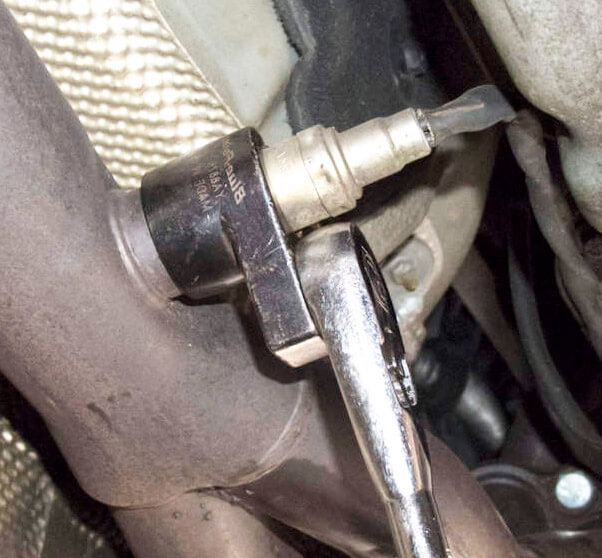
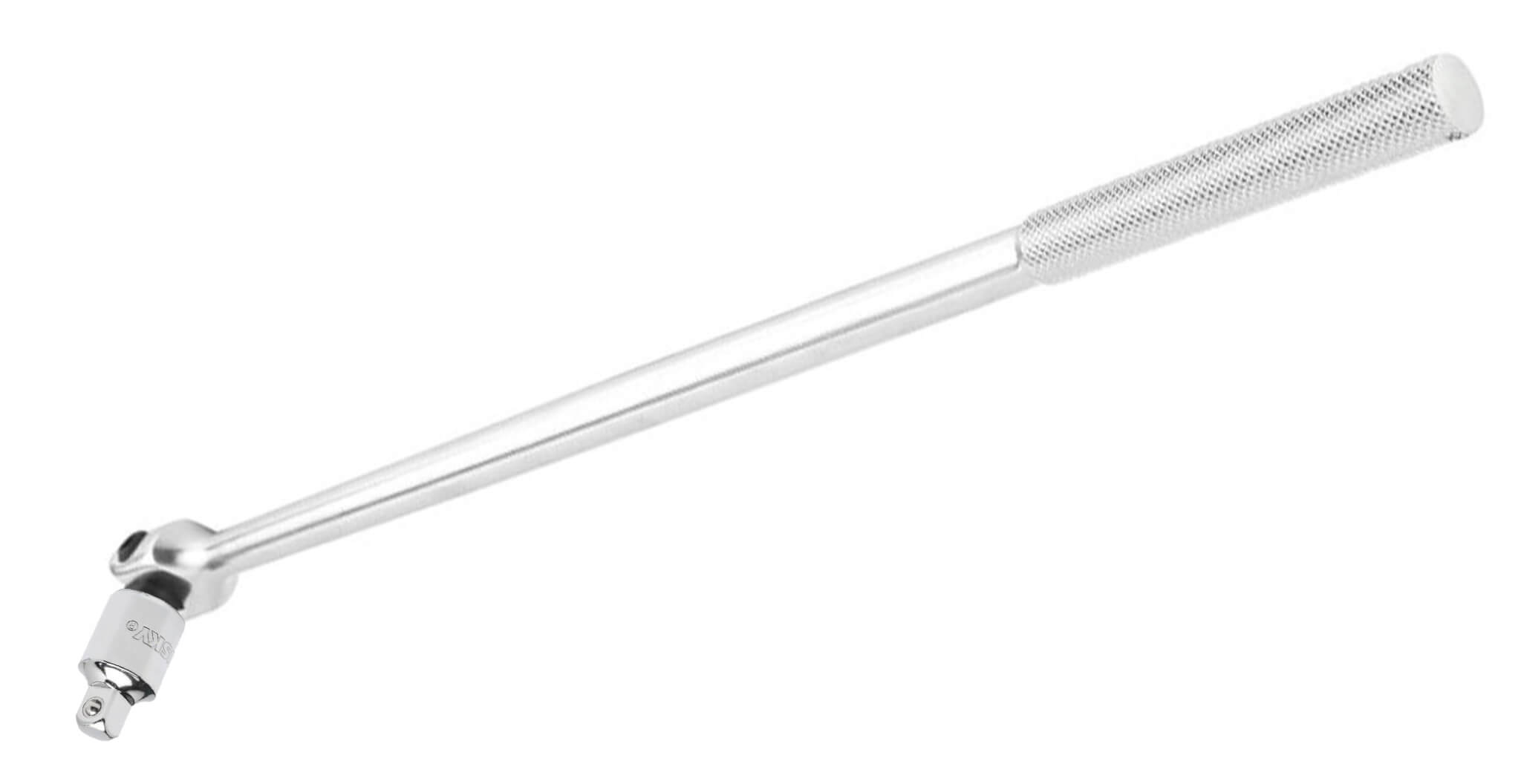
Use a long-handled 3/4″ drive breaker bar with a 3/4″ to 1/2″ or 3/4″ to 3/8″ adapter so it fits the oxygen sensor socket
Use a long-handled 3/4″ drive breaker bar with a 3/4″ to 1/2″ or 3/4″ to 3/8″ adapter so it fits the oxygen sensor socket
Step 5: Step 5: Install the New Oxygen Sensor
Most new sensors have anti-seize pre-applied

New O2 sensor with protective cap and pre-applied anti-seize
to the threads and a protective cap. Or, they’ll have an anti-seize tube in the box. Remove the protective cap and apply the anti-seize to the sensor threads if it’s not pre-applied.
Refer to the instructions or a shop manual for the proper tightening torque.
Hand-Tighten First
Thread the new sensor in by hand to avoid cross-threading. If it doesn’t screw in smoothly, back it out and realign.
Torque to Spec
Check your vehicle’s shop manual for the correct torque setting. Over-tightening can strip threads, while under-tightening can cause exhaust leaks. Use a torque wrench to tighten the sensor properly.
If you can’t find torque specifications or you can’t fit your torque wrench in the tight space, follow this general guide for tightening the O2 sensor.
• M18 sensors– Install-finger tight then 1/2 – 3/4 turn with wrench/O2 sensor socket 26 – 33ft. lbs.
• M12 sensors– Install-finger tight then 3/4 – 1 turn with wrench/O2 sensor socket 13.2 – 17ft. lbs
Step 6: Reconnect and Test
Check for corrosion inside the vehicle’s wiring harness connector. If you find corrosion, remove it using an electrical contact cleaner. Then, reconnect the wiring harness to the new oxygen sensor. Make sure it’s securely fastened—loose connections can cause false readings.
Clear the trouble codes
Use an OBD-II scanner to erase any stored codes related to the sensor.
Start the engine and check for leaks. You may have an exhaust leak if you hear a hissing sound near the sensor.
After driving for a few miles, re-scan the system to ensure no new error codes appear. Double-check your installation and wiring if the check engine light comes back on.
© 2012 Rick Muscoplat
Posted on by Rick Muscoplat