
Polishing Compound Versus Rubbing Compound Explained by a Pro
How to Choose Between Polishing Compound Versus Rubbing Compound
Quick Summary
Rubbing compound is more aggressive. It contains coarser abrasives designed to remove deeper scratches, oxidation, and paint defects. You’d use it first when you need to actually cut into the clear coat to level out imperfections.
Polishing compound is finer and less aggressive. It’s meant to refine the surface after using rubbing compound, removing the haze or microscratches it left behind, and bringing out a smooth, glossy finish.
Think of it like sandpaper grits: rubbing compound is like starting with 1000-grit, while polishing compound is more like 3000-grit. You typically work from rubbing to polishing for the best results, though for minor imperfections, you might skip straight to polishing.
Article
Polishing Compound Versus Rubbing Compound: The Real Difference Explained
What Polishing Compound Actually Does
Polishing compound uses extremely fine abrasives suspended in a lubricating carrier. Common abrasives include aluminum oxide, cerium oxide, and titanium dioxide, usually well under 10 microns in size. These particles are small enough to level microscopic surface defects without visibly scratching the paint.
When I use polishing compound, I’m not trying to remove damage—I’m trying to remove haze left behind by previous steps. That’s why polishing compound is ideal for clear coat paint, fiberglass, plastics, and even headlights. In the polishing compound versus rubbing compound discussion, polishing compound is always the refinement stage.
Polishing compound can be applied by hand, with a dual-action polisher, or with a buffer at low speeds. Its job is to bring clarity and gloss back to the surface—not to remove serious defects.
What Rubbing Compound Is Designed to Do
Rubbing compound is far more aggressive. It contains larger abrasive particles—often 20–25 microns—made from materials such as aluminum oxide or silicon carbide. These abrasives physically cut into the surface to remove oxidation, stains, and deeper scratches.
When evaluating polishing compound versus rubbing compound, reach for the latter when the surface is dull, chalky, or visibly damaged. It’s especially useful on single-stage paint, heavily oxidized clear coat, fiberglass boats, and gelcoat surfaces.
However, rubbing compound leaves behind its own fine scratches. That’s not a flaw—that’s expected. Which is why rubbing compound is never the final step.
Why Polishing Compound Always Follows Rubbing Compound
This is where people go wrong. They stop after rubbing compound and wonder why the finish looks cloudy. That’s because rubbing compound removes damage but doesn’t restore gloss. Polishing compound does that.
In the real-world workflow, polishing compound refines the surface, while rubbing compound corrects it. Skipping polishing compound is like sanding wood and never staining or sealing it—you did the hard work, but you didn’t finish the job.
When to Use Rubbing Compound
If you’re dealing with visible defects, rubbing compound is the right starting point. A scratch that looks white or milky usually means it’s in the clear coat, not through it. In that case, rubbing compound can level the surrounding clear coat enough to minimize or eliminate the scratch.
If a scratch has gone through the clear coat and into the base coat, rubbing compound alone won’t fix it. That repair requires paint and clear coat, followed by leveling with rubbing compound and then refining with polishing compound. This is a perfect example of why polishing compound versus rubbing compound isn’t an either-or decision—it’s a sequence.
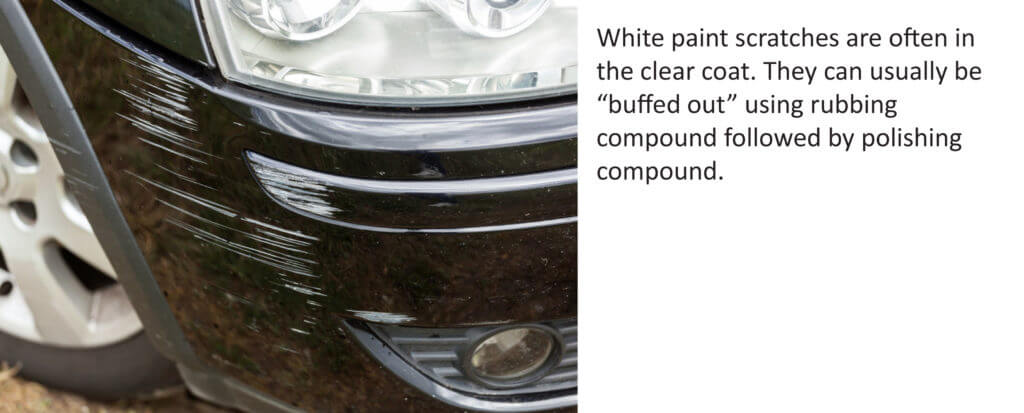
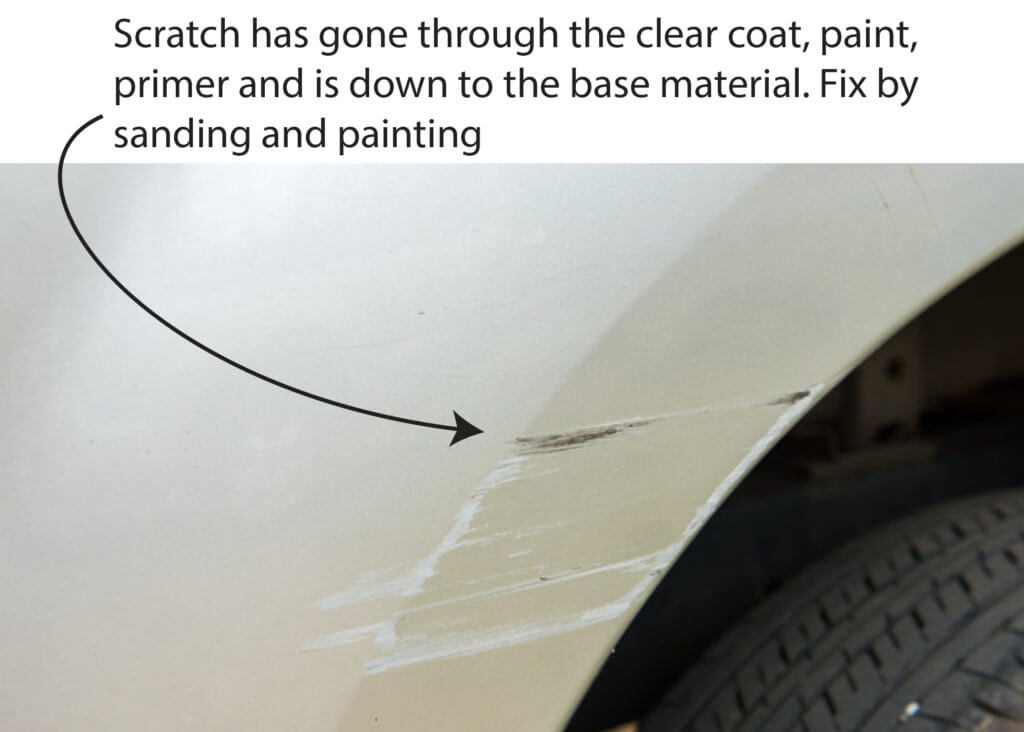
• Use rubbing compound to remove the oxidized paint layer or stains from single-stage paint.
• Use rubbing compound to remove orange peel from single-stage paint
• Never use rubbing compound on clear coat unless you’ve over-sprayed and want to remove small imperfections.
When Polishing Compound Is the Better Choice
If the paint is dull but not badly damaged, polishing compound may be all you need. Light swirl marks, fine scratches, and oxidation haze respond extremely well to polishing compound alone.
In the polishing compound versus rubbing compound debate, polishing compound is the safer choice if you’re unsure. It removes far less material and carries much less risk of thinning the clear coat.
Polishing Compound Versus Wax: Not the Same Thing
This is another common misconception. Polishing compound and wax do completely different jobs. Polishing compound removes material. Wax does not.
Wax—whether carnauba, synthetic polymer, or ceramic—adds protection and gloss, but it does not fix paint defects. In the polishing compound versus rubbing compound workflow, wax always comes after both.
If you polish without waxing, the shine will fade quickly because the polishing compound contains no protection
Neither the rubbing compound nor the polish provides any long term protection
Your paint job will look shiny after polishing. But if you don’t apply a wax to protect it, the shine will fade. Polishing compound doesn’t contain any protectants.
Combination Wax and Polish Products: Why I Avoid Them
Combination wax-and-polish products try to do two jobs at once and usually do neither very well. They save time, but they don’t deliver professional results.
A true polishing compound removes defects. A true wax protects the finish. Mixing them compromises both functions. When people ask me about polishing compound versus rubbing compound, I always stress the importance of using dedicated products for each step.
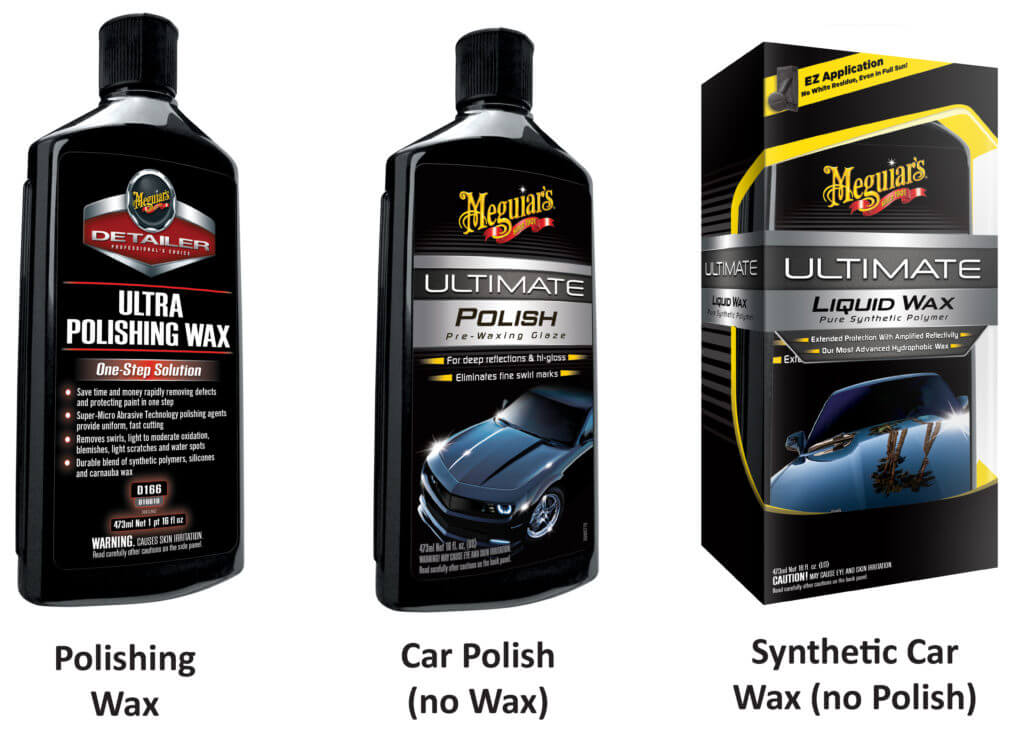
These are not the same products! Polishing wax contains a small amount of abrasive to smooth out scratches, along with a top-coating wax. A polishing compound, on the other hand, is designed only to remove scratches and “polish” the paint to a gloss. But it doesn’t contain any protective wax. A synthetic wax is just that, a protective coating. It doesn’t contain any polishing compound. It goes on after you’ve polished the paint.
How I Apply Polishing Compound Safely
Polishing compound by hand takes effort, but it’s safe. Use a foam applicator, work in small overlapping circles, and wipe off with a microfiber towel. If defects remain, repeat.
With a dual-action polisher, the process is faster and more consistent. The random orbital motion dramatically reduces the risk of burning paint, which is why it’s my go-to recommendation for DIYers.
High-speed buffers are effective, but unforgiving. Unless you’ve used one before, don’t start learning on your own car.
Don’t Over-Polish Your Paint
This is the part most people overlook. Every time y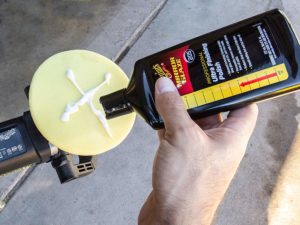 ou polish, you remove a measurable amount of clear coat. Over time, that adds up.
In my experience, polishing every four to five years and waxing once or twice a year is the sweet spot. That approach keeps the paint looking great without sacrificing longevity—another practical lesson in polishing compound versus rubbing compound that too many people learn the hard way.
Wipe off the dried polish using a dry, clean microfiber towel.
Differences in car wax
Carnauba Wax
Some classic car owners swear by Carnauba wax. It provides a warm, deep color and shine to your vehicle. But Carnauba wax doesn’t last long. Bottom line; it’s a lot of work to apply and doesn’t last. That’s why I don’t like it. Instead, use a synthetic polymer wax.
Polymer wax is a paint sealant
A synthetic polymer wax seeps into the pores of the paint better than Carnauba wax, which is why it’s often referred to as a “paint sealant.” That’s right, the paint sealant the dealer tries to push on you is nothing more than a synthetic wax that you can apply yourself at home. A synthetic car wax gives your paint a “wet look” that shines more than a Caranuba wax.
Ceramic “wax”
Ceramix car wax isn’t really wax at all. It’s a combination of synthetic polymers and hydrophobic silicon dioxide (SiO2). Unlike traditional car wax, which is a coating, the silicon dioxide doesn’t just sit on the surface of your paint. Instead, it chemically bonds with the paint or clear coat, creating a hydrophobic (water-repelling) layer. So it sheds water better than wax and resists dirt attraction so your car stays cleaner. In addition, ceramic wax offers far better UV protection, chemical contamination resistance, and protection against everyday wear and tear.
Ceramic products last much longer than either carnauba or synthetic car waxes.
How to apply polymer wax
The directions tell you to avoid waxing your car in direct sunlight. The reason is that the sun dries out the solvents in the wax too quickly, causing it to cake up fast and making it harder to remove. Find a shady spot to apply polymer wax.
Apply the wax to a sponge, then wipe it onto your car in overlapping circular motions. As the wax dries, remove the remaining coating with a microfiber towel.
How to apply ceramic coating
See this article for a step-by-step
How to remove dried wax
The easiest way to remove dried wax from crevices is to apply fresh wax, then wipe it off.
©, 2019 Rick Muscoplat
Posted on by Rick Muscoplat