
The most common causes of water pump failure
Learn the 8 most common causes of water pump failure
The water pump is responsible for circulating coolant through the engine to maintain optimal operating temperatures. When this vital part fails, it can lead to severe engine damage, leaving you stranded on the roadside and facing costly repairs. Understanding the common causes of water pump failure can help you recognize early warning signs and take preventive measures to extend the life of this essential component.
In this article, we’ll explore the primary culprits behind water pump breakdowns, ranging from normal wear and tear to more specific issues like coolant contamination and improper installation. Additionally, we’ll discuss the telltale symptoms of a failing water pump, empowering you to detect problems before they escalate into major mechanical issues.
A failed seal is the most common water pump failure
A water pump seal keeps high pressure coolant 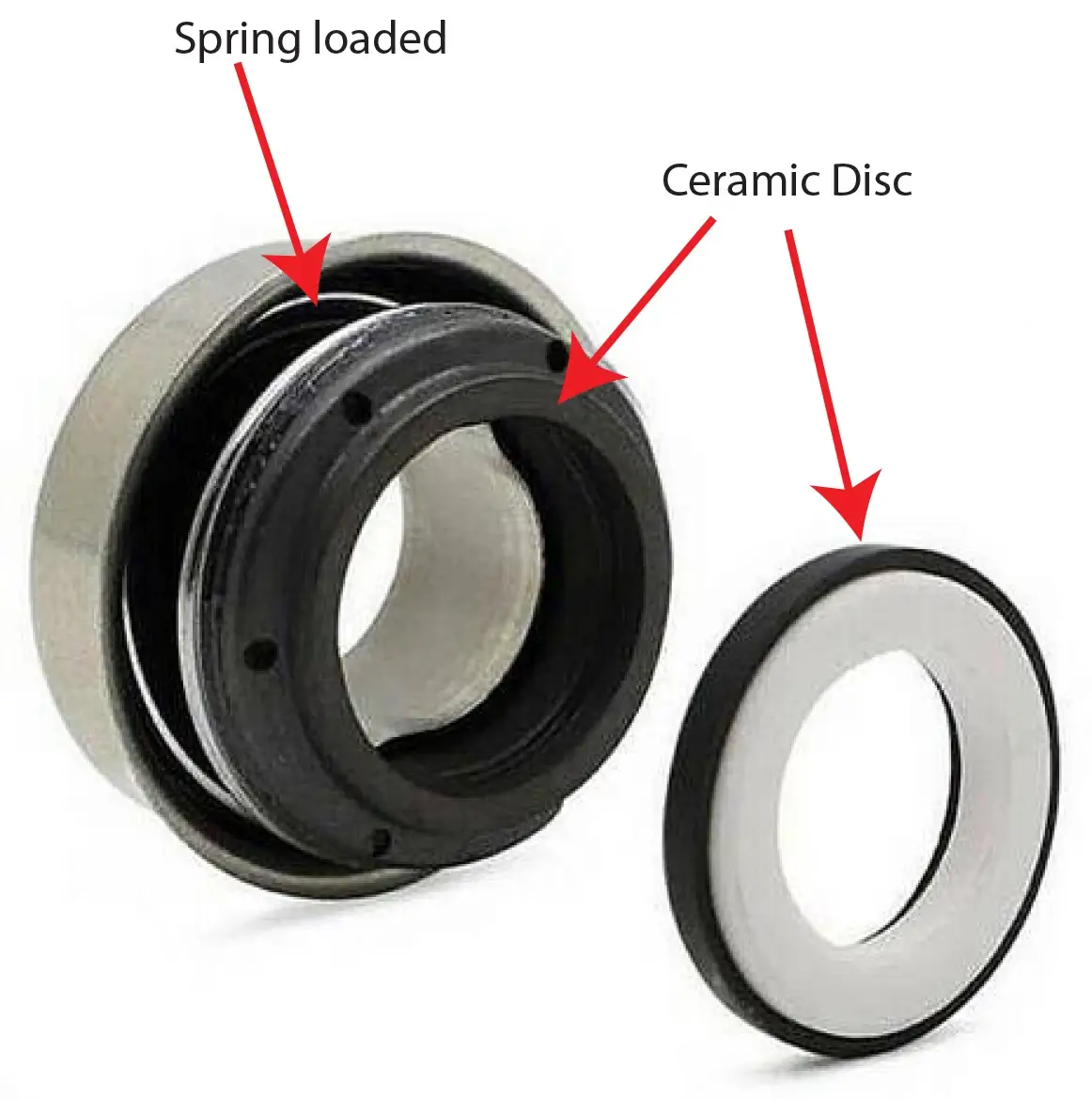 from leaking out of a rotating component. The water pump seal prevents coolant from reaching the row of bearings that allow the pulley shaft to rotate.
In some cases the seal is made from two ceramic disks; one stationary, the other rotating. The discs are lubricated by the engine coolant.
How water pump seals get damaged
1) Rotating the pump shaft when the seals are dry— If you’re installing a new pump, never rotate the shaft without first pouring coolant over the seals. Dry turning can score the seals, causing them to leak as soon as the pump is installed
2) Worn out coolant can degrade water pump seals causing water pump failure— Engine coolant has a life span. Once the anti-wear additives are exhausted, corrosion can set it, creating wear particles that degrade the water pump seals.
3) Particulate matter in the cooling system can cause water pump seal failure— Corrosion particles can form when the anti-corrosion additives are exhausted and those particles can wear out the seal. Mixing incompatible coolants or using stop leak products can also produce particulate matter that can damage the seal.
4) Using the wrong coolant can damage water pump seals— Asian carmakers do not want coolant with silicates used in their engines because they believe the abrasive silicates damage the water pump seals.
Worn bearings are a common cause of water pump failure
The water pump shaft rides on double-row bearings. 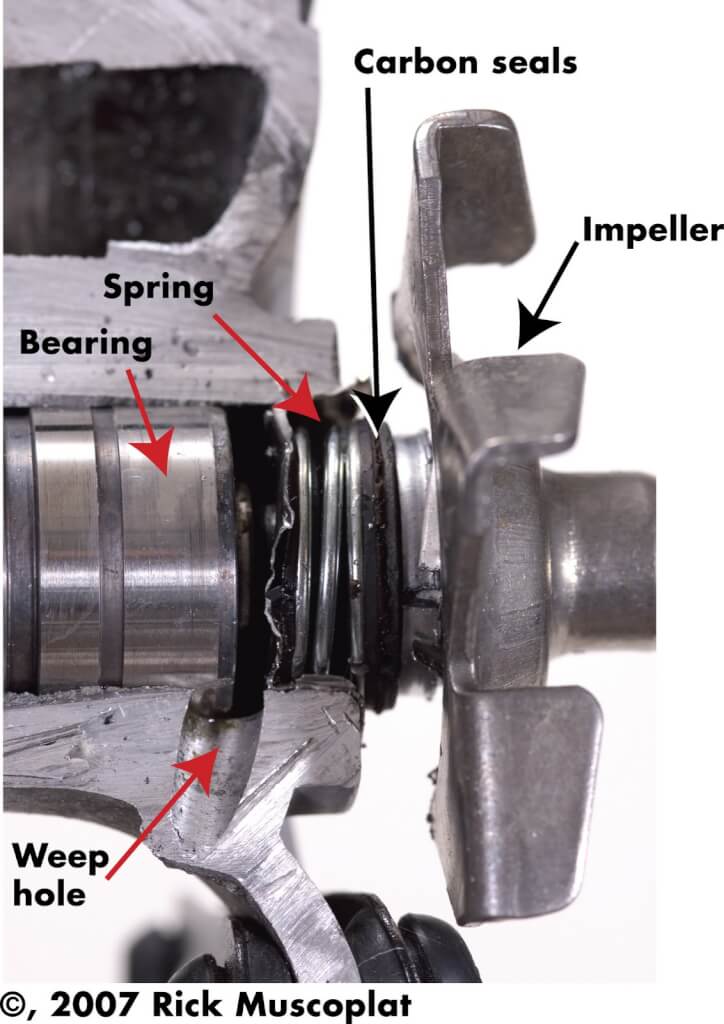 Over-tightening the drive belt can cause premature bearing wear.
A leaking seal can also cause the bearings to wear prematurely
Corrosion can cause water pump failure
The anti-corrosion additives in the coolant prevent the entire cooling system from corroding. If you neglect coolant changes, corrosion will set it and damage the pump seal, pump shaft and impeller. corrosion can eat away at the impeller, making the water pump far less efficient and causing engine overheating.
Cavitation can cause water pump failure
Like corrosion, cavitation can cause extensive water pump damage. It can eat away at the water pump housing and destroy the impeller.
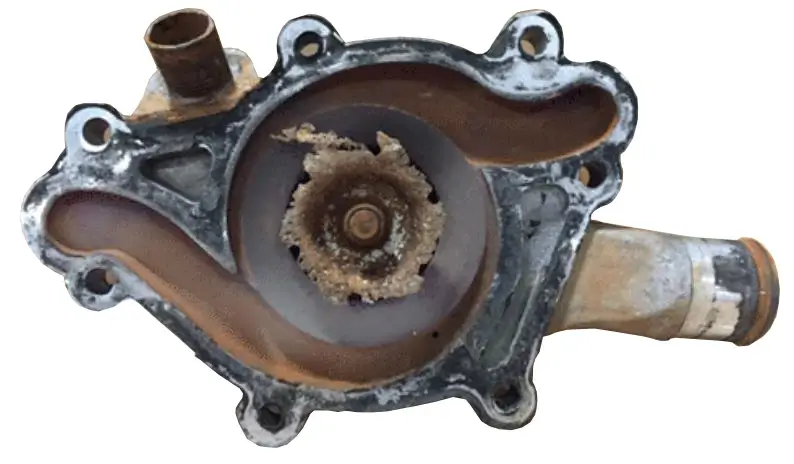
Cavitation and corrosion damage has destroyed the impeller in this water pump.
©, 2023 Rick Muscoplat
Posted on by Rick Muscoplat