
The Real Story Behind Dexron VI ATF
Dexron VI ATF vs Dexron III: What Changed?
Quick Summary
Dexron VI ATF was developed to improve shift durability, friction stability, oxidation resistance, and increase overall transmission life compared to older Dexron formulations. It has better shear stability and friction durability. It is backward-compatible with earlier Dexron applications and remains the foundation of modern automatic transmission fluid design.
Article
Why GM Developed Dexron VI ATF
If you’ve been around automatic transmissions as long as I have, you’ve seen the evolution firsthand. There was a time when Dexron III 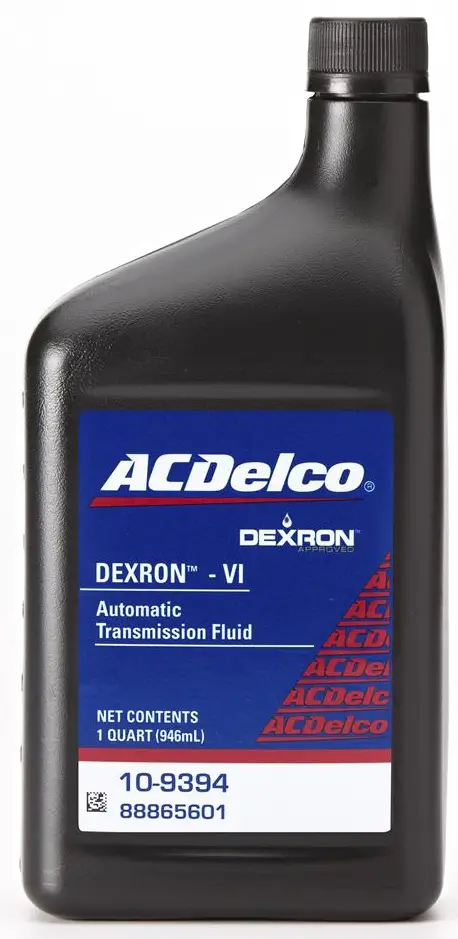 ruled the world. Shops stocked it in bulk. Rebuilders swore by it. And most people assumed ATF was ATF. Then along came Dexron VI ATF, and whether most technicians realized it or not, that was the beginning of modern automatic transmission fluid.
To understand Dexron VI ATF, you first have to understand what was happening in transmissions in the early 2000s.
General Motors was moving into 6-speed automatic transmissions. These units had tighter clutch controls, higher torque capacity, and far more sophisticated shift logic than older 4-speed designs. The old Dexron III fluids had simply reached their limits of friction durability.
Unlike engine oil, where we try to reduce friction as much as possible, ATF has to manage it. In other words, automatic transmissions depend on controlled friction. Clutch packs must engage and release thousands of times. So, the fluid must provide:
• Firm engagement
• No shudder
• No harshness
• Consistent feel over time
Dexron III could do that when new. But as the fluid aged, shear breakdown and oxidation altered the friction curve. That caused torque converter clutch shudder or shift quality complaints. GM wanted a fluid that could maintain consistent friction characteristics for far longer service intervals. The result was Dexron VI ATF.
What Makes Dexron VI ATF Different From Dexron III?
1) It’s made from a synthetic base fluid. Unlike older generations (like Dexron-III), which could be formulated with conventional Group I or Group II mineral oils, the performance specifications for Dexron-VI are so stringent that they essentially mandate the use of synthetic base stocks. To qualify as a licensed Dexron VI product, the manufacturer must use Group III (Hydrocracked) or Group IV (PAO) synthetic base oils.
2) Dexron VI ATF uses a lower initial viscosity than Dexron III. The key isn’t just viscosity; it’s more about shear stability. Dexron VI was engineered to resist viscosity loss over time. Dexron III might start thicker, but it sheared down quickly. Dexron VI starts slightly thinner but stays in grade far longer.
3) Dexron VI ATF dramatically improved friction durability. So the way the clutches grab on day one is very close to how they grab 80,000 or 100,000 miles later.
4) Improved oxidation resistance. Higher operating temperatures in 6-speed transmissions demanded better thermal stability. So, Dexron VI is formulated from improved base stocks and additive chemistry to handle that heat.
5) Dexron VI ATF doubles the expected service life compared to Dexron III in many applications.
6) It smells different than Dexron III. Dexron VI has a distinct, slightly “sweeter” chemical smell compared to the pungent, burnt-toast smell of old Dexron III.
It’s backward compatible — mostly
While DEXRON-VI is officially backwards compatible with DEXRON-III, there is one major exception: Manual Transmissions and Transfer Cases.
Some older GM manual transmissions and transfer cases (especially in trucks) use paper-based friction materials (clutch discs) or specific seals that do not play well with the detergents and lower viscosity of DEXRON-VI.
If your manual gearbox or transfer case calls for DEXRON-III, check your owner’s manual or a forum specifically for that model before “upgrading” to VI. However, bottles labeled “Dex/Merc” are almost always DEXRON-III equivalents.
Mixing Dexron VI with Dexron III is Okay, but Not Ideal
If you have an older car with DEXRON-III and you need to top it off, you can safely add DexronVI. They are miscible (they mix fine). However, you won’t get the full “synthetic” benefits (longer life, better cooling) unless you do a full exchange. The fluid’s overall performance will only be as good as the weakest (oldest) fluid in the pan.
Why Friction Durability Is So Critical
When a clutch engages, you want a specific friction curve. If it’s too aggressive, you get harsh shifts. Too soft and you get clutch slip and generate high heat. If it’s too inconsistent and you get shudder. Dexron VI ATF maintains the friction curve across the entire service interval.
How it compares to other ATF fluids
Ford (MERCON): Similar to Dexron; MERCON LV is their low-viscosity equivalent to Dexron-VI.
Chrysler (ATF+4): A very specific synthetic fluid. Unlike Dexron, it is highly “friction modified” to prevent gear shudder in Dodge/Jeep/Chrysler transmissions.
CVT Fluid: Totally different. Never put Dexron in a Continuously Variable Transmission (CVT), as it will likely destroy the belt/chain system.
©, 2026 Rick Muscoplat
Posted on by Rick Muscoplat