
The Top Brake Mistakes and How to Avoid Them
Brake Mistakes: What You Need to Know
Performing a brake job on your vehicle can be a satisfying and cost-effective DIY project. However, brakes are a critical safety component, and even small mistakes can have serious consequences. In this article, we’ll explore the most common mistakes DIY enthusiasts make when working on their vehicle’s braking system and provide tips on how to avoid them.
#1 Buying cheap brake parts results in low brake pad and rotor life and causes noise issues
One of the most crucial aspects of a brake job is selecting the correct parts. Using low-quality store-branded brake pads, rotors, or calipers can lead to reduced braking efficiency and increased wear. It’s essential to choose parts that match the specifications of your vehicle. OEM (Original Equipment Manufacturer) parts are often recommended, but high-quality aftermarket options can also be suitable. Always check the part numbers and compatibility with your vehicle make and model before purchasing.
Auto parts stores sell store-branded brake parts for only one reason: because they make more money on them. They’re not much cheaper than well-known name brake parts made by reputable companies like Wagner, Bendix, Raybestos, Bosch, Akebono, Advics, Centric, and many others.
BRAKE PAD FACTOID: Over 55% of all brake pads sold in North America are made by offshore companies and resold by importers and auto parts stores under various private label names. None of those importers or retail sellers are actual manufacturers, nor do they possess the quality testing laboratories to ensure the products they sell are top quality. They can order the products in custom-printed boxes labeled “PREMIUM BRAKE PAD,” but with NO Federal Safety standards in place, that premium label doesn’t mean anything. You could be getting garbage brake products and pay the same price or more than a well-known national brand.
Also, brake parts are available in economy, OE, and premium grades. Choose an economy grade only if you plan to sell the vehicle in the coming months. They simply don’t hold up or last over the long run. Stick with OE or premium quality pads and rotors from a name-brand company. Cheap parts cost more over the long turn.
#2 Not cleaning rust off the hub
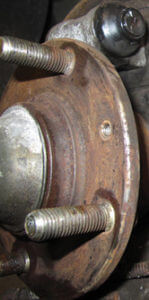
Leaving this amount of rust on the wheel hub can cause a lack of parallelism the resulting in brake pedal pulsation, commonly called rotor warp
This is the #1 mistake made by DIYers and is the single most common cause of pedal pulsation. All it takes is as little as .002″ of rust on the wheel hub to cause enough lateral runout to result in pedal pulsation. If there’s rust on the hub or inside the hat of the old rotor, the rotor can’t sit perfectly parallel with the hub, causing it to rotate in a slight wobble.
Use a wire wheel or polishing pads to remove all rust from the hub and the inside hat of an old rotor.
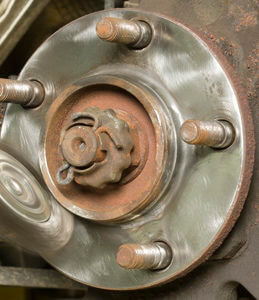
This is what the wheel hub should look like before you install the rotor
#3 Not replacing anti-rattle clips and shims
Even though the clips and shims may look like they’re in good condition, DON’T REUSE them. Over time and with heat, the clips can lose their spring tension, and the multiple layers of the noise reduction shims can degrade. Clips and shims are cheap. If you bought a real set of premium brake pads, they usually come with new clips and shims. USE THEM!

Brake pad shim separation and deterioration. Brake pad shims can’t be reused
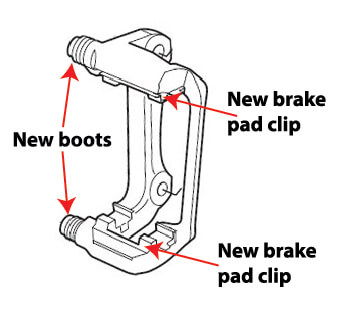
Apply brake grease to cleaned pad clip areas to reduce rust jacking. Then install brake pad clips and new boots
#4 Reusing old cracked and torn caliper slide pin boots
Caliper slide-pin boots keep water out of the slide-pin bores
and prevent rust that can seize the caliper and cause brake pull and premature and uneven brake pad wear. Caliper slide-pin boots are cheap, usually less than $9/set. If you really want to keep your calipers moving smoothly, replace the boots with every brake job.
#5 Not replacing the caliper slide pin sleeves
Carmakers install caliper slide pin sleeves for a reason; to reduce brake noise. The sleeves come with a boot kit and the kit only costs about $8 for two wheels. As mentioned above, the boots keep water out and grease in, so they should be part of every brake job.
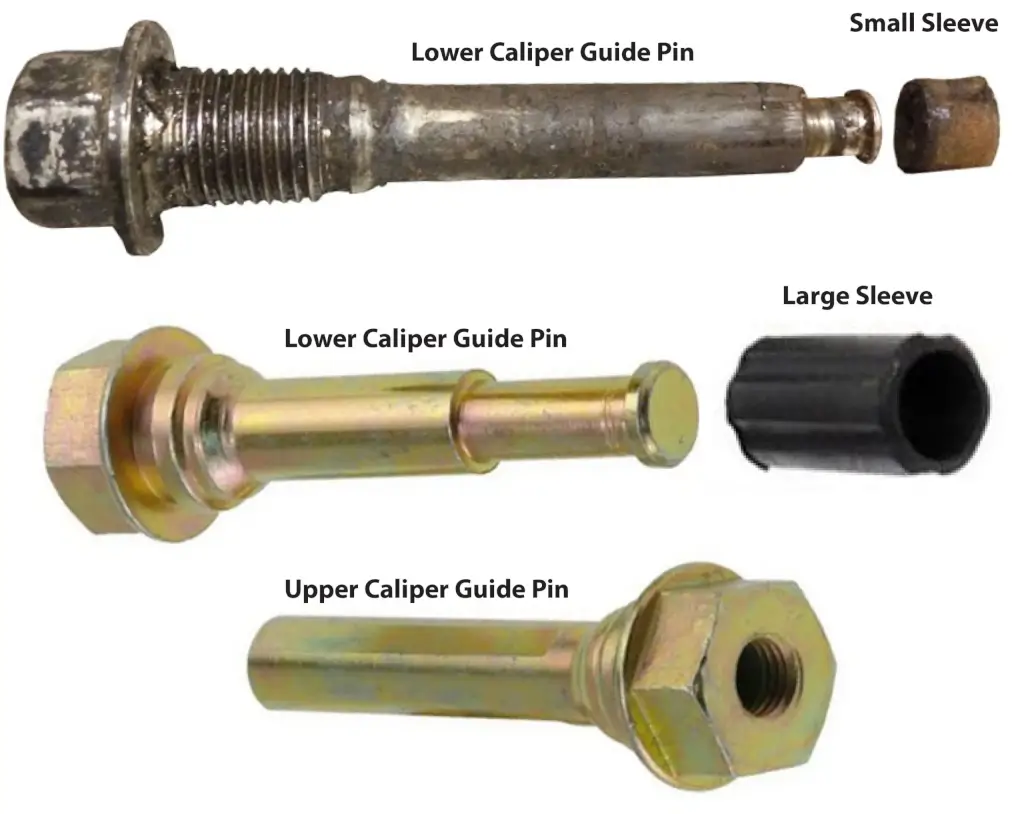
Installing new caliper pinned sleeves we’ll keep your brakes quiet
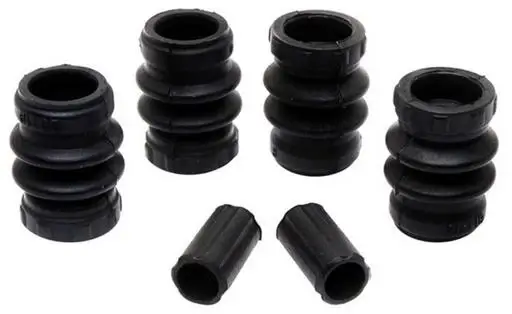
A caliper pin boot kit includes four boots (two for each caliper) and two caliper pin noise reduction sleeves
#6 Not lubricating the caliper slide pins is a common brake job mistake
That old grease has been subjected to high heat. It needs to go. Wash out the old grease using brake cleaner. Wipe out the bores. Then, add new high-temperature brake grease to the slide pins. NEVER use anti-seize for this. It is not approved for brake use.
#7 Reusing old corroded slide pins is another common brake job mistake
How many times do I have to say this? Don’t reuse
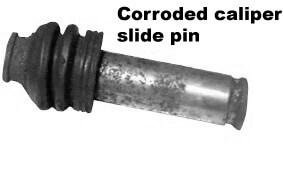
Corroded caliper slide pin
old rusted or degraded hardware. That includes rusted caliper pins. You can buy new ones at any auto parts store. They’ll keep your calipers moving smoothly.
you could be getting garbage brake products and pay the same price or more than a well-known national brand.
#8 Letting the brake caliper dangle which you replace the pads
Grab some wire, even a coat hanger and suspend the brake caliper from the strut or spring to remove stress from the flexible brake hose. If you really want to ruin the brake hose, let the caliper dangle under its own weight.
Not cleaning the rotor with soap and water
This is a fairly new recommendation and you may think it’s stupid.
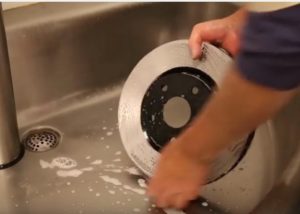
Prepare new brakes rotors by washing with hot soapy water and a brush
But cleaning a new brake rotor with brake cleaner alone leaves metallic residue on the rotor that embeds into the new brake pads and contaminates the new brake job. I’m serious about this. Read this post to see images of how much extra metallic residue comes off the rotor when it’s washed with hot soapy water versus just brake cleaner.
#9 Retracting the caliper piston without flushing the fluid
When you push the caliper piston back into the bore without cracking the bleeder screw, you’re forcing sediment at the bottom of the caliper bore backward into the ABS valves. The proper way to retract the piston is to connect a rubber or vinyl hose to the bleeder screw and route the open end into a catch bottle. Crack the bleeder screw open and then retract the piston. Close the bleeder as soon as the caliper piston bottoms out.
#10 Not greasing the backside of the brake pads
Brake grease is a critical component to reduce noise, vibration and harshness. Most car makers recommend applying molybdenum grease to the back of the backing plates/shims where they contact the caliper fingers and piston. They also recommend applying brake grease in the anti-rattle clips to allow pad ear movement. Skip the grease and you’ll wind up with squeals and rattles.
#11 Not following the torque specs for caliper bolts
Many new car makers are using torque-to-yield caliper to bracket bolts. These are ONE-TIME use bolts. You MUST replace them; they can’t be reused. Always use a torque wrench when reinstalling the caliper and caliper bracket bolts. Overtightening these bolts, especially on newer cars with magnesium/aluminum steering knuckles, can cause stripping and other damage.
#12 Not using thread locker or not using it properly
Most car makers apply thread locker fluid to the large bolts that hold the caliper bracket in place. Since you usually have to remove the bracket to replace the rotor, those bolts must come out. Do not simply reinstall them without cleaning off the old thread locker with a wire brush and then reapplying the correct thread locker (usually removable blue).
#13 Not using a torque wrench to tighten the lug nuts
As I said above, the rotor must sit perfectly parallel with the wheel hub. If you don’t use a torque wrench to tighten the lug nuts, you’ll have uneven clamping pressure on the rotor hat. That will cause lateral runout.
Many brake pad backing plates fail well before the friction material wears out. See this post to learn why that happens and how to avoid it.
You simply don’t know which manufacturer made the brake pads that are packaged under the store’s brand name, nor do you know if they’re actually made from premium materials. See this post on how to buy the best brake pads
The same applies to rotors. There are LOTS of substandard rotors on the market today and the low quality directly affects braking ability and brake job life. See this post on how to choose a brake rotor.
Don’t know whether you should reuse your old rotors? See this post on how to tell
©, 2019 Rick Muscoplat
Posted on by Rick Muscoplat