
The Ultimate Guide to Using RTV Gasket Maker
How to Use RTV Gasket Maker: A Comprehensive Guide
RTV (Room Temperature Vulcanizing) gasket maker is a versatile, indispensable tool in the toolbox of any mechanic or DIY enthusiast. Whether you’re working on your car’s engine, repairing a leaky pipe, or assembling machinery, RTV gasket maker provides a reliable, flexible seal. This article will walk you through everything you need to know about how to use RTV gasket maker effectively, from choosing the right type to applying it correctly.
Understanding RTV Gasket Maker
RTV gasket maker is a silicone-based compound that cures at room temperature to form a rubbery seal. Unlike pre-cut gaskets, which are typically made from materials like cork, rubber, or metal, RTV gasket makers are applied as a liquid and harden into a custom-fit gasket that conforms to the surfaces it’s applied to.
There are various types of RTV gasket makers, each designed for specific applications. The most common types include:
Standard RTV: Used for general sealing tasks, ideal for non-critical applications. There are different colors and types depending on the different types of fluids, the gasket must seal. In addition, there are several flavors of RTV products depending on and how long the product takes to cure before you can add oil, fluid, or coolant or subject it to pressure. In general, choose from 24-hour cure, 1 hour cure, and instant cure.
High-temperature RTV: Designed to withstand high heat, typically used in automotive applications such as sealing exhaust manifolds, valve covers, and oil pans.
Sensor-safe RTV: Formulated to be non-corrosive, making it safe for use in applications where it might come into contact with sensors, such as oxygen sensors in vehicles.
Surface preparation is critical when using RTV gasket maker
RTV gasket maker doesn’t stick to cured RTV, so removing ALL of the old RTV is critical. Failing to clean off the old gasket material is the #1 cause of future leaks, especially when using RTV as a gasket maker. If you leave any old gasket material, the new RTV won’t stick and will leak.
If you need to scrape the surface, use a plastic scraper or stiff nylon brush; never a razor blade. If you still can’t remove the old gasket maker, purchase a can of gasket remover.
Don’t RTV gasket maker on paper or cut gaskets
Unless otherwise noted in the shop manual or instructions packaged with the parts, paper and cut gaskets are usually designed to be installed DRY. In those cases where the instructions recommend a maker, use the recommended gasket treatment.
If the gasket contains a rubber bead, NEVER add any type of gasket maker. Those products will prevent a complete seal, resulting in leaks.
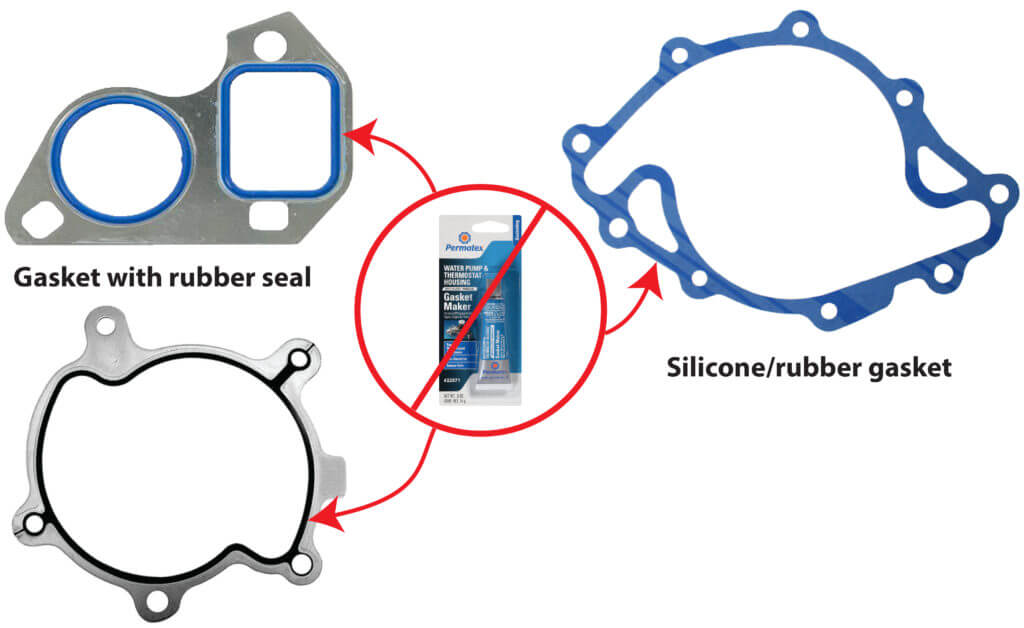
In cases where you need a gasket to stay in place while installing the part, use a high-tack, non-hardening product like Permatex® High Tack™ Spray-A-Gasket™ Sealant or Permatex® High Tack™ Gasket Sealant
Never use RTV gasket maker on rubber or silicone gaskets
These gaskets are designed to be installed dry. Applying RTV can lubricate the gasket and cause it to “squirm” during the application, preventing proper alignment. This is a case where applying RTV can actually cause a leak, rather than prevent it.
More is not better — don’t use too much RTV
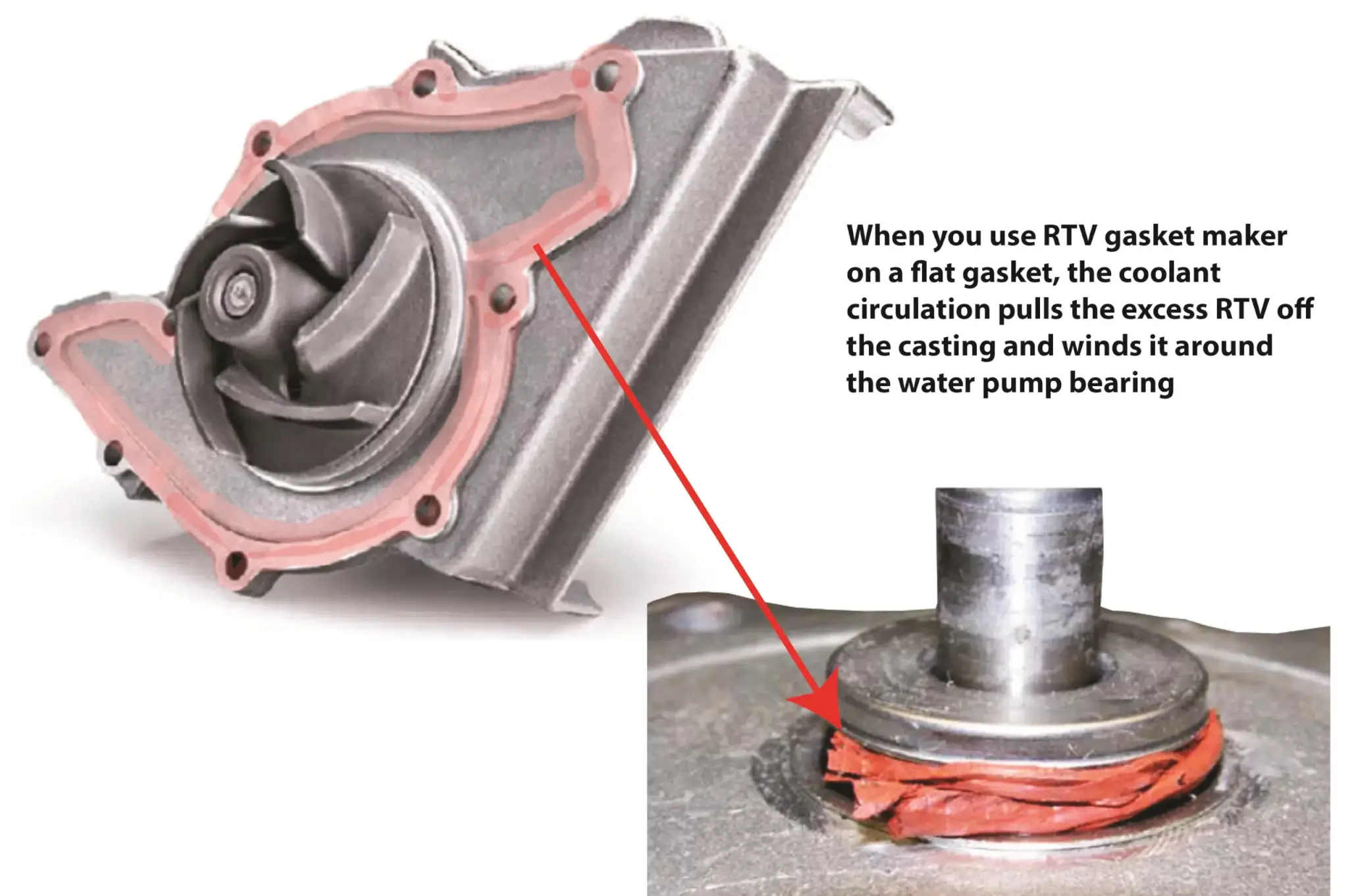
This image shows what can happen if you use too much RTV gasket maker. The excess material on this water pump got pulled off by the strong flow of coolant. It then wrapped around the pump shaft and seal, damaging the pump
Excessive RTV application will simply cause the RTV to ooze outside the flange area. Later, as oil contacts the surfaces, that excess RTV will dislodge and cause oil gallery obstructions or clog filters or screens.
Make sure you pay attention to cure time before exposing the product to oil or fluids
Some gasket maker products are designed to be applied and set in place and then allowed to cure in place for one hour before torquing to spec. Refer to the product’s instructions for recommended set-up times. In addition to set-up time, many RTV materials must cure for 24 hours before being exposed to fluids.
If you need to return the vehicle to service without waiting, use an RTV material specifically designed for immediate use. One product is Permatex Right Stuff, which can be used within 1 minute after application. See their site for more information.
On the flip side, never allow a solvent-based gasket maker to dry completely before installing the component and torquing to spec. Some solvent-based gasket makers will begin to “skin over” if left to dry and the skin won’t seal properly.
RTV gasket maker should never be used on an application that’s exposed to gasoline
RTV gasket materials aren’t appropriate for applications in contact with gas. Use a solvent-based product in those applications.
©, 2020 Rick Muscoplat