
Understanding Car Radiator Designs: Down flow versus cross flow
Car Radiator Designs: The Pros and Cons of Down Flow versus Cross Flow Radiators
There are two primary types of radiator designs: downflow and crossflow. Each design has its unique advantages and disadvantages, making them suitable for different vehicle applications. Understanding the differences between downflow and crossflow radiators can help car owners make informed decisions when it comes to maintaining or upgrading their vehicle’s cooling system. This article explores the pros and cons of both radiator types.
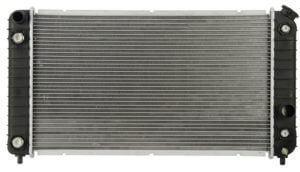
Typical cross-flow radiator
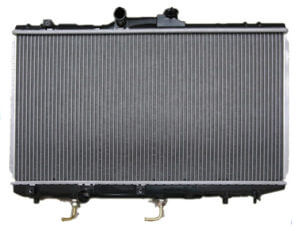
Typical down flow or vertical flow radiator
The Downflow radiator: Advantages and Disadvantages
In a downflow radiator, coolant enters the radiator through the top tank and flows downward through the core to the bottom tank, where it exits. This design is traditionally used in older vehicles and is still common in heavy-duty applications.
Pros of Downflow Radiators
• Simplicity and Cost-Effectiveness— Downflow radiators have a simple design with fewer components, which makes them easier to manufacture and repair. This simplicity often translates to lower costs, making downflow radiators an economical choice for many vehicles.
• Vertical Core Design— The vertical core design allows for a more straightforward construction, making it easier to increase the core’s thickness for better cooling performance. This is particularly useful in heavy-duty applications where more cooling is required.
• The Downflow Design Works Best in Low-Pressure Cooling Systems— Downflow radiators work well in low-pressure systems because the coolant flow is primarily driven by gravity. This makes them suitable for older vehicles where the cooling system pressure is not very high.
• More Effiicient At Heat Dissipation in Tall Applications— In applications where there is ample vertical space, such as trucks or older vehicles, downflow radiators can be more efficient at heat dissipation due to the larger surface area of the core.
Cons of Downflow Radiators
• Limited Compatibility with Modern Aerodynamically Designed Vehicles— Aerodynamic designers can’t provide enough vertical space for proper cooling with a downflow radiator design. In other words, the taller shape doesn’t fit in modern designs with a slopped hood.
• Higher Risk of Air Pockets— The vertical design of can sometimes lead to the formation of air pockets within the system, especially during the filling process. Air pockets can reduce cooling efficiency and potentially cause engine overheating.
The Cross-flow radiator: Advantages and Disadvantages
Pros of Crossflow Radiators
• Improved Airflow Efficiency— The horizontal core design minimizes air resistance, providing better airflow, leading to more efficient cooling.
• Provides Better Cooling at High Speeds— The design of crossflow radiators is conducive to better cooling at high speeds. As the vehicle moves, the air can pass more freely through the radiator, improving the dissipation of heat.
• Reduced Risk of Air Pockets— The horizontal flow of coolant in crossflow radiators reduces the likelihood of air pockets forming, as air tends to rise and can escape more easily during the filling process.
• It’s More Compatible with Aerodynamic Body Designs— Crossflow radiators are more compatible with modern car designs, which often have lower profiles and require compact, efficient cooling solutions.
Cons of Crossflow Radiators
• Higher Cost— Crossflow radiators are generally more complex and may have more components than downflow radiators, which can make them more expensive to manufacture and repair.
• Less Effective Heat Transfer in Low-Speed Applications— In applications where the vehicle frequently operates at low speeds or idles, crossflow radiators may not perform as efficiently due to reduced airflow through the core. This can be a consideration for vehicles used in stop-and-go traffic or off-road conditions.
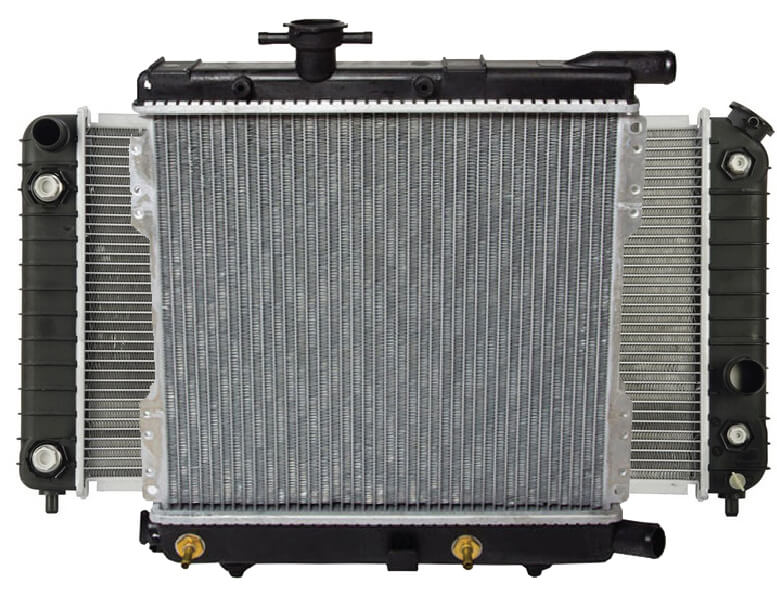
A cross-flow radiator takes up more side-to-side space, while a vertical-flow radiator requires more height.
Because cross-flow radiators rely on a fluid’s ability to seek its own level, they often have a higher temperature differential between the inlet and outlet sides. That higher temperature differential can cause joints on the radiator to break and leak or allow air into the system.
Radiator construction materials
Older radiators were built with a copper inlet and outlet tank and either a copper or aluminum core. However, most modern radiators are built with plastic tanks and an aluminum core. Thin tubes transport the coolant from one tank to the opposite tank. Folded fins fill the space between the tubes and help transfer coolant heat from the tubes to the air passing through the radiator core.
While copper is better at transferring heat than aluminum, the change to plastic and aluminum was based on weight and cost considerations.
Radiator cap placement
The radiator cap can be located on the top of the radiator tank or in the pressurized reservoir. On a downflow radiator design, the radiator cap must be located on the top tank because that’s the area with the highest pressure. The cap can be located on either side tank on a cross-flow design.
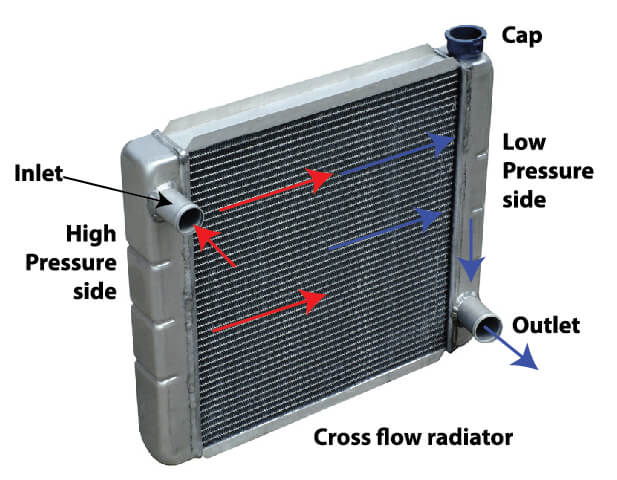
Hot high-pressure coolant enters the inlet tank and flows across the tubes to the outlet tank. Airflow across the tubes cools the coolant and lowers both the temperature and pressure. Since the radiator cap is on the outlet tank, high RPMs won’t cause a pressure release
©, 2017 Rick Muscoplat
Posted on by Rick Muscoplat