
Understanding Radiator Hose Collapse: Causes and Solutions
Preventing Radiator Hose Collapse: The Common Causes
A radiator hose collapse is an issue that can cause significant concern for vehicle owners. The radiator hose is a vital component of a vehicle’s cooling system, responsible for transporting coolant between the radiator and the engine. When this hose collapses, it can lead to overheating, engine damage, and other serious problems. Understanding the causes, symptoms, and solutions for radiator hose collapse is crucial for maintaining the health and performance of your vehicle.
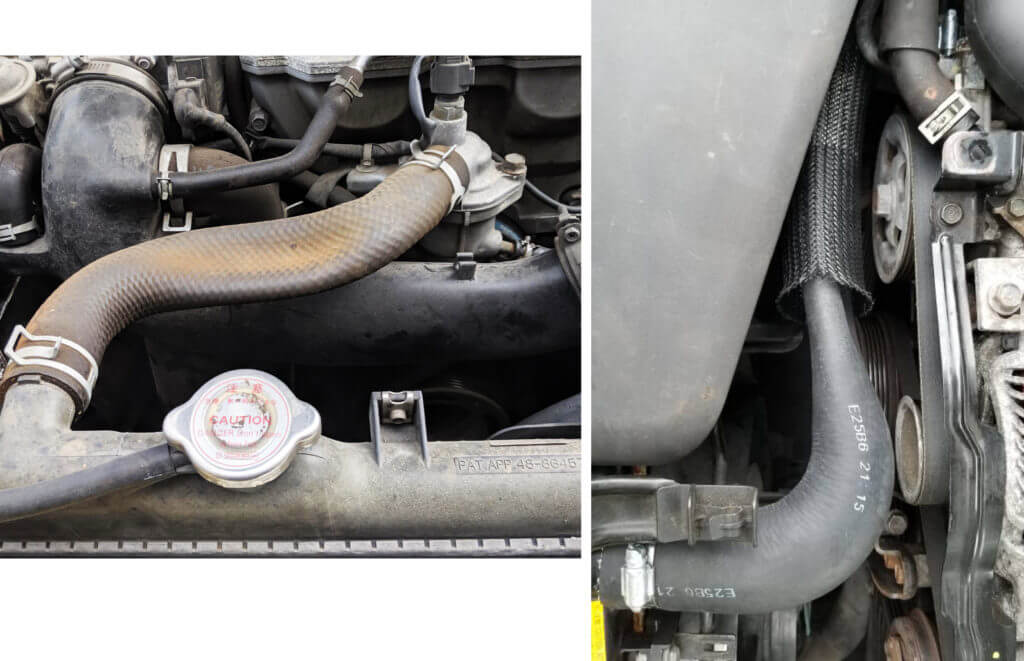
Both of these images show a collapsed upper radiator hose
A collapsed radiator hose is a clear indication of an issue within the engine’s cooling system. Radiator hoses play a crucial role in maintaining the engine’s temperature by facilitating the flow of coolant between the engine and the radiator. When these hoses collapse, it can lead to overheating and potential engine damage. This article explores the various causes of radiator hose collapse, providing insight into prevention and maintenance strategies to ensure the optimal performance of your vehicle’s cooling system.
The 5 Most Common Causes of Radiator Hose Collapse
1) A Vacuum Condition In the Cooling System Causes Radiator Hose Collapse
A primary cause of a collapsed radiator hose is the creation of a vacuum within the cooling system. This can happen due to several reasons:
• Faulty Radiator Cap: The radiator cap plays a crucial role in maintaining the pressure within the cooling system. It has a valve that allows coolant to move into the overflow tank as it expands and then back into the radiator as it contracts. A malfunctioning radiator cap can fail to maintain this balance, causing a vacuum that collapses the hose.
• Cooling System Vacuum: When the engine cools down, the coolant contracts, creating a vacuum in the system. If the radiator cap or the coolant recovery system is malfunctioning, it may not allow air to enter the system to equalize the pressure, leading to hose collapse.
• Missing spring: The lower radiator hose 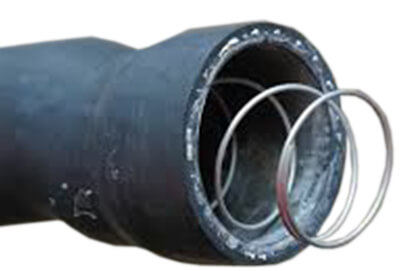 is always under some suction pressure. To prevent hose collapse, some carmakers install a spring in the lower hose to maintain its structure. If the hose is replaced without reinstalling the spring, you may experience a lower radiator hose collapse.
2) Weak or Deteriorated Hose Material
Over time, radiator hoses can weaken due to several factors:
• Aging: Rubber hoses deteriorate with age, losing their flexibility and strength. This makes them more susceptible to collapse under normal operating conditions.
• Heat and Chemical Exposure: Constant exposure to high temperatures and coolant chemicals can degrade the rubber material, causing it to become soft and prone to collapse.
4) Improper Hose Installation
Incorrect installation of radiator hoses can lead to issues:
• Kinking: If a hose is too long or improperly routed, it may kink, creating weak points that are more likely to collapse under pressure changes.
• Incorrect Clamping: Over-tightening or under-tightening hose clamps can cause damage to the hose or fail to secure it properly, leading to collapse.
5) Cooling System Blockages
Blockages within the cooling system can cause abnormal pressure changes:
• Radiator Blockage: A clogged radiator can prevent coolant from flowing properly, leading to a vacuum that collapses the hose.
• Thermostat Issues: A stuck or malfunctioning thermostat can disrupt the normal flow of coolant, causing pressure imbalances that lead to hose collapse.
How a bad radiator cap causes radiator hose collapse
Bad radiator cap—Coolant expands and contracts as it heats and cools. As the engine warms and coolant expands, a pressure relief valve in
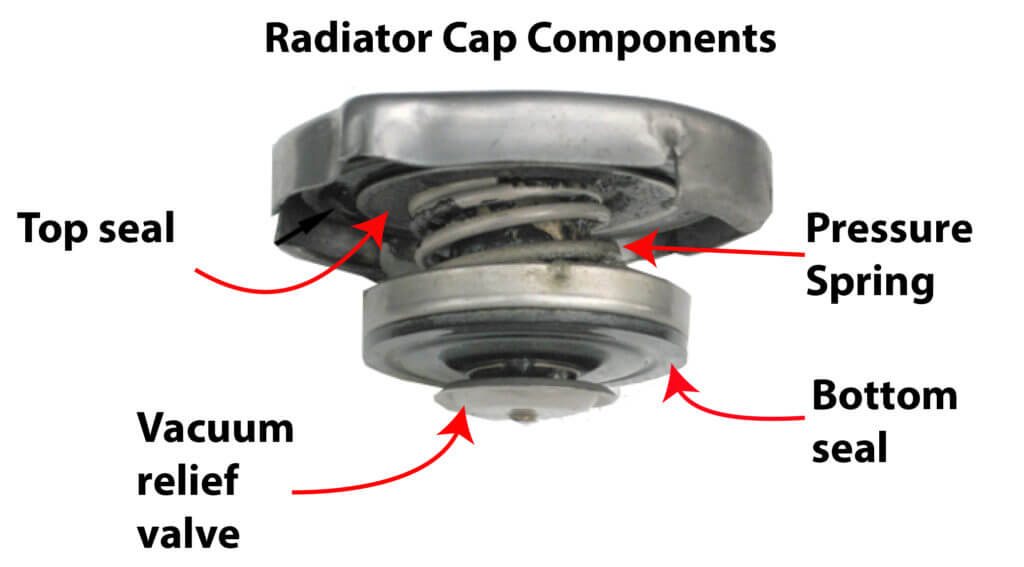
The radiator cap relief valve
the radiator cap opens and allows the hot coolant to flow out of the radiator and into the overflow or coolant recovery tank. When you shut off the engine and the coolant cools and contracts, the contraction in the radiator creates a vacuum condition. When the vacuum reaches a certain preset level, the vacuum relief valve in the cap opens and allows coolant in the recovery tank to flow back into the radiator.
With the engine cool, remove the radiator cap and check for signs of corrosion or crud buildup. This cap is severely corroded and must be replaced. No amount of cleaning will restore it to operating condition.
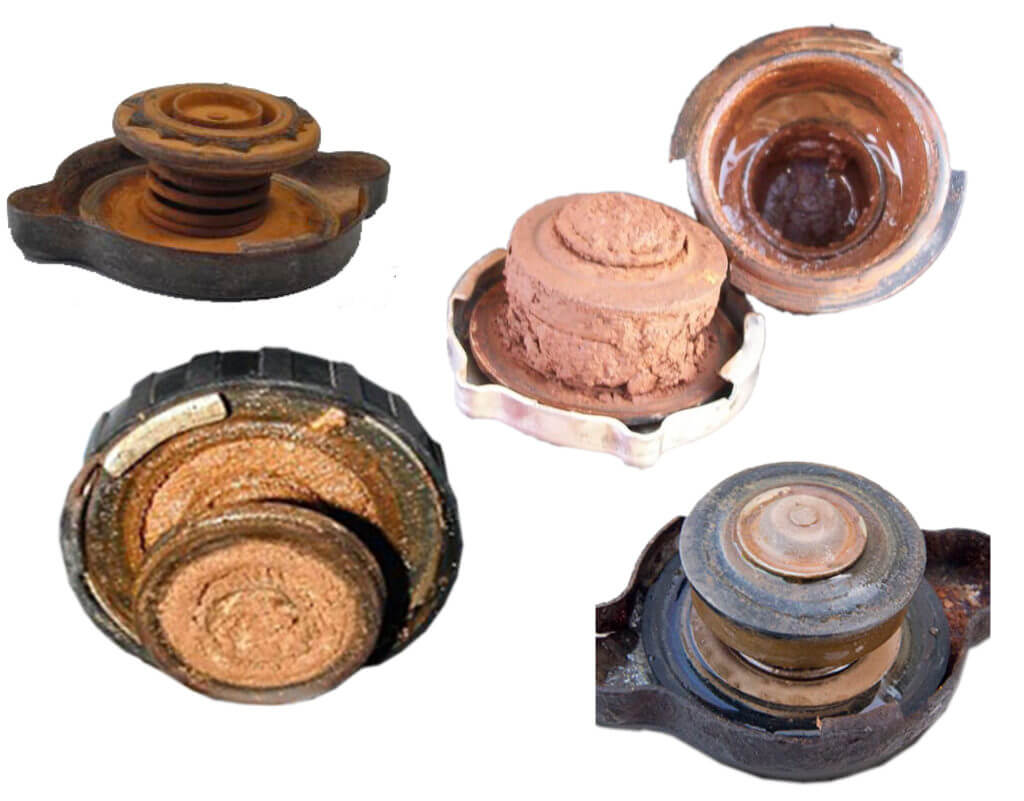
A corroded cooling system can cause the relief valve in the radiator cap to fail
Any shop can test the cap using a pump action cooling system pressure tester
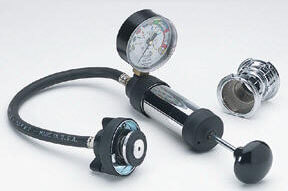
cooling system pressure tester
radiator cap tester. Or, you can rent a tester from an auto parts store. But it’s not worth the cost to rent or have yours tested. Radiator caps are cheap, usually less than $10. There are several sizes and pressure ratings. The pressure rating on the new cap must match the pressure listed on the old cap.
How to buy a new radiator cap
The easiest way to buy a new radiator cap is to simply go to the auto parts store or use an online auto parts seller and give the year, make, model and engine of your vehicle.
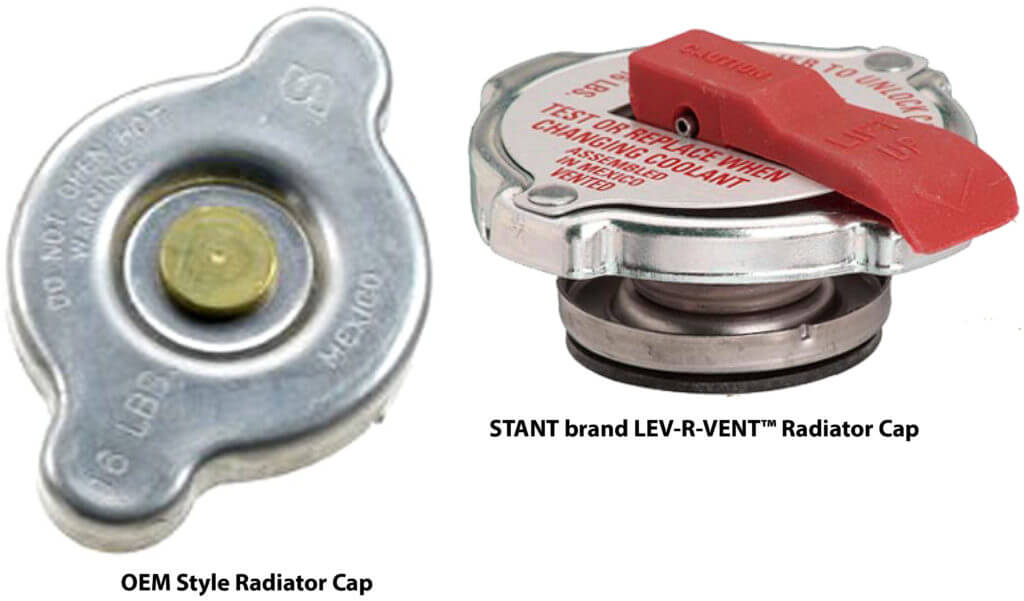
However, aside from the fit and pressure rating, you’ll usually have two choices; with or without a pressure release lever. A pressure release lever allows you to bleed any remaining pressure from the system before you remove the cap. It’s a useful feature if you routinely check your coolant and your engine isn’t always stone cold. The lever caps cost a bit more and they are convenient, but they’re not exactly necessary.
©, 2019 Rick Muscoplat
Posted on by Rick Muscoplat