
Understanding the Causes of High Idle in Your Vehicle
Learn what causes a high idle and how to fix the problem
A high idle speed in an engine is a condition where the engine runs at a higher RPM (revolutions per minute) than normal when the vehicle is in neutral or park and not accelerating. While a slight increase in idle speed during cold starts is typical, a consistently high idle can indicate underlying issues that need attention. This article delves into the causes, symptoms, and effects of high idle speed, helping you understand why it happens and what it means for your vehicle’s health.
An air leak or vacuum leak is the most common cause of a high idle
Your ECM calculates the air/fuel mixture based on the amount and density of the air coming into your engine, along with the engine temperature. In most late-model engines, the ECM gets this data from the Mass Airflow Sensor (MAF). Any air that enters the engine that the MAF hasn’t measured is unmetered air, and it throws off the ECM’s precisely calculated air/fuel ratio.
When unmetered air enters the engine, it’s detected by the upstream oxygen sensor and reported to the ECM as a lean condition. The ECM responds by adding fuel, causing a high idle speed.
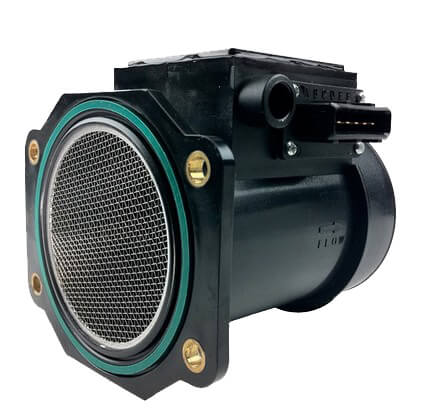
A mass airflow sensor detects the amount and density of air coming into the engine.
The delicate wires in the MAF sensor can get dirty and provide false readings to the computer. Read this post to see how to clean a dirty MAF sensor
Where does the unmetered air come from?
• Intake air duct leaks— If the air duct leading from the air filter box to the intake manifold develops a leak, that’ll allow more air into the engine than the computer expected.
Air duct leaks occur in the plastic ductwork mostly in the pleated areas due to tears in the convoluted tubing.
Always check the intake duct first when diagnosing a high idle problem.
If you find tears in the duct, replace it.
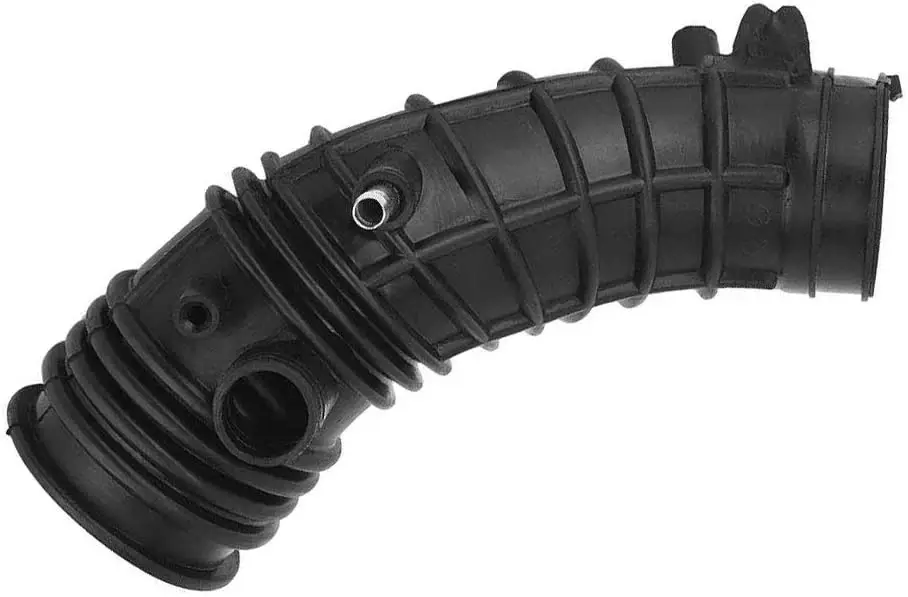
Tears in the air intake duct usually occur deep into the pleated area
• Vacuum leak — A vacuum line that’s cracked or hasn’t been reinstalled can also cause a high idle or surging engine. Vacuum leaks can also develop in the gasket between the upper intake plenum, upper intake manifold, or vacuum brake booster.
Check all vacuum lines for cracks in the hose or in the plastic connectors.
Carbon buildup in the throttle body or idle air control valve can cause a high idle
If your engine is equipped with fuel injection and a mechanical
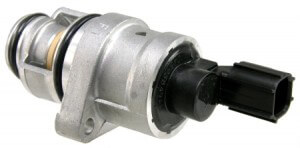
Idle air control valve or idle air bypass valve
throttle body, it will also have an idle air bypass valve. See this post to understand how they work. If carbon builds up in the throttle body, it can cause a hunting surging idle or a constantly high idle.
However, if you have a late model vehicle with an electronic throttle body, carbon buildup occurs directly under the throttle plate that restricts airflow at idle speeds. To compensate for the low idle, the computer commands the electronic throttle body to open the throttle plate a bit to allow more air in. The fix is to clean the electronic throttle body. Read this post to see how that’s done.
©, 2017 Rick Muscoplat
Posted on by Rick Muscoplat