
What Causes a Popping Noise When Turning at Slow Speeds?
Popping Noise When Turning: Causes, Symptoms, and Solutions
A popping noise when turning at slow speeds often indicates an underlying issue with your vehicle’s suspension or steering, or drive system components. One of the most common culprits is a bad CV joint (Constant Velocity joint), but several other issues could be at play as well. In this article, I’ll explore the potential causes, symptoms, and solutions for these popping noises to help you understand what might be going on with your vehicle.
Understanding the Role of CV Joints
CV joints are located at each end of the axle shaft on an FWD or AWD vehicle. The CV joint transfers power from the transmission to the wheel while also allowing the wheel to move up and down and turn left and right. Each joint contains bearings, balls, and grooves. To prevent wear on the metal parts, the entire joint is filled with grease and protected by a rubber accordion-style boot. Over time, the boot can age, crack, and tear. When that happens, the spinning CV joining flings the grease out of the joint and allows water and road grit to enter the joint. Once that occurs, the joint can wear out quickly and make a popping sound when turning, especially at slow speeds.

This image shows an exploded view of the inner and outer CV joint on an axle shaft.
Symptoms of a Bad CV Joint
1) Popping noise when turning— This noise is typically more pronounced when making sharp turns or U-turns at low speeds. Other symptoms may include:
2) Vibration While Driving— If the inner CV joint (closer to the transmission) is damaged, you might feel vibrations through the steering wheel or even throughout the vehicle, especially at higher speeds.
3) Grease Leakage— A torn CV boot can cause grease to leak out, which is often visible around the inside of the wheel or along the drive shaft.
4) Clunking or clicking sounds— In severe cases, you may hear clunking sounds during acceleration or deceleration.
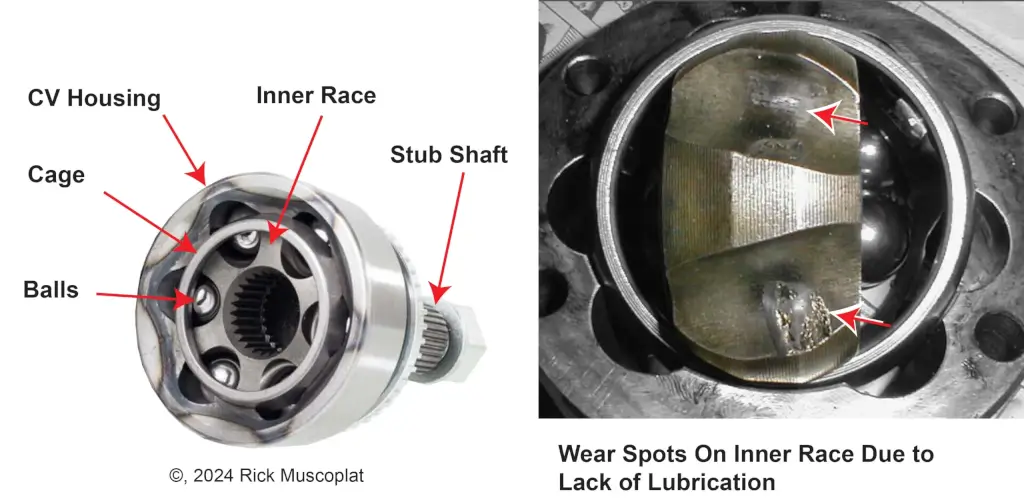
The image on the left shows the components of a CV joint. The image on the right shows wear spots on the inner race of the CV joint. These wear spots can cause a popping sound when turning. slowly
If left untreated, a bad CV joint can lead to complete failure. When the CV joint fails while driving, it can swing in a wild circular motion damaging engine and suspension components.
Other Potential Causes of a Popping Noise When Turning at Slow Speeds
While a bad CV joint is a common cause of popping noises, there are other possible issues to consider:
Worn Suspension Components
Ball Joints— Ball joints connect the control arms to the steering knuckles and allow for smooth movement of the suspension. When they wear out, they can produce popping or clunking noises, particularly when turning or going over bumps.
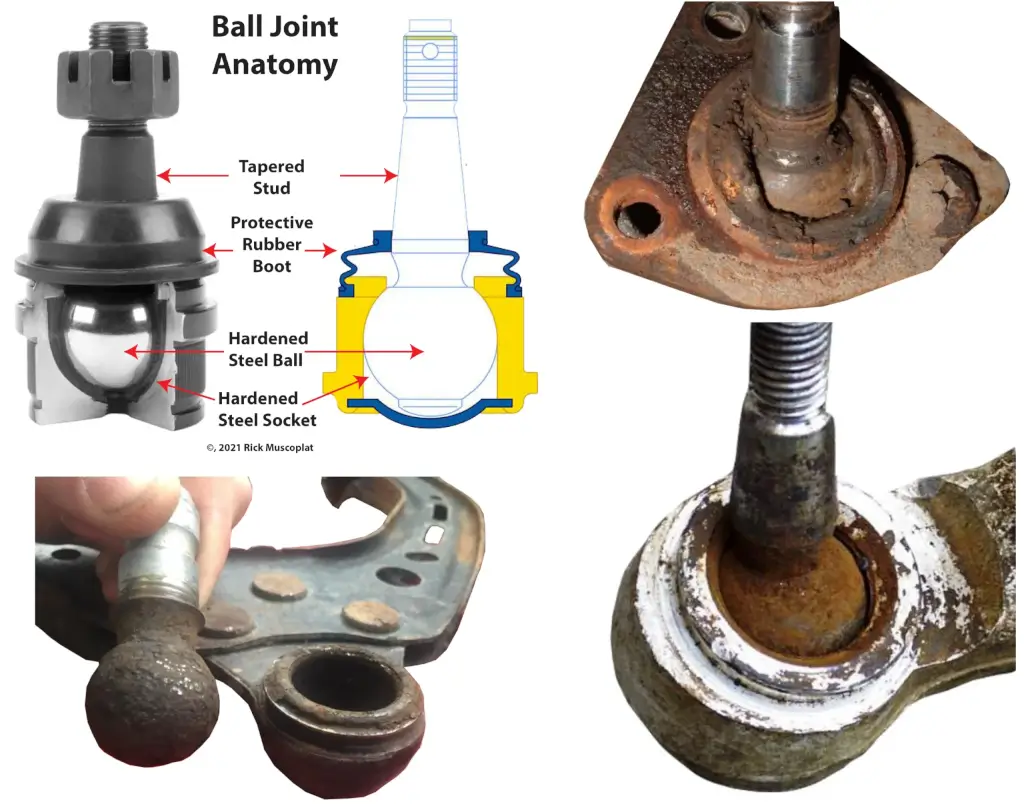
The image in the upper left shows the components of a ball joint. When the ball joint boot is damaged and the grease leaks out, water and road grid enter the ball joint and corrode it. It then makes a creaking, cracking, popping sound when turning.
Control Arm Bushings— These bushings help isolate the control arms from the vehicle frame, reducing noise and vibration. When they become worn or cracked, they can cause popping or creaking sounds.

This image shows the rubber tearing away from the sleeve, and the collar, and complete bushing failure.
Sway Bar Links— These links connect the sway bar to the suspension and help control body roll during turns. Worn or broken sway bar links can also produce popping noises, especially during slow turns.
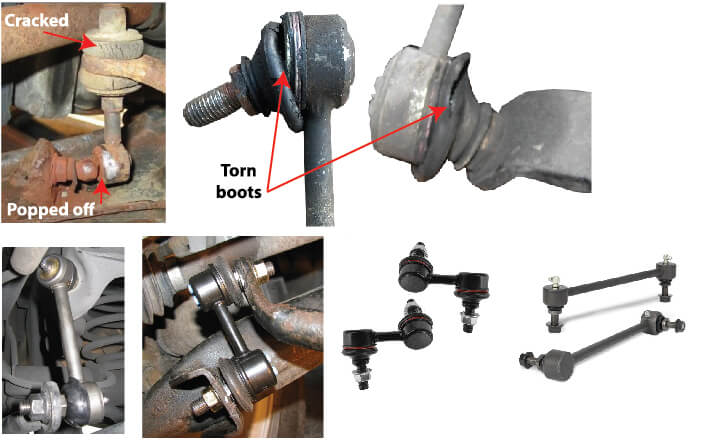
Old and damaged sway bar end links and new units
Steering Rack Issues
The steering rack is a vital component of your vehicle’s steering system. If there is an issue with the rack itself or its associated components, such as the tie rods or rack bushings, it can lead to a popping or knocking noise when turning the steering wheel at slow speeds.
Broken or Damaged Strut Mounts
Strut mounts are the points where the struts connect to the vehicle frame. If these mounts are damaged or the bearings inside them are worn, they can produce a popping or clunking noise when turning.
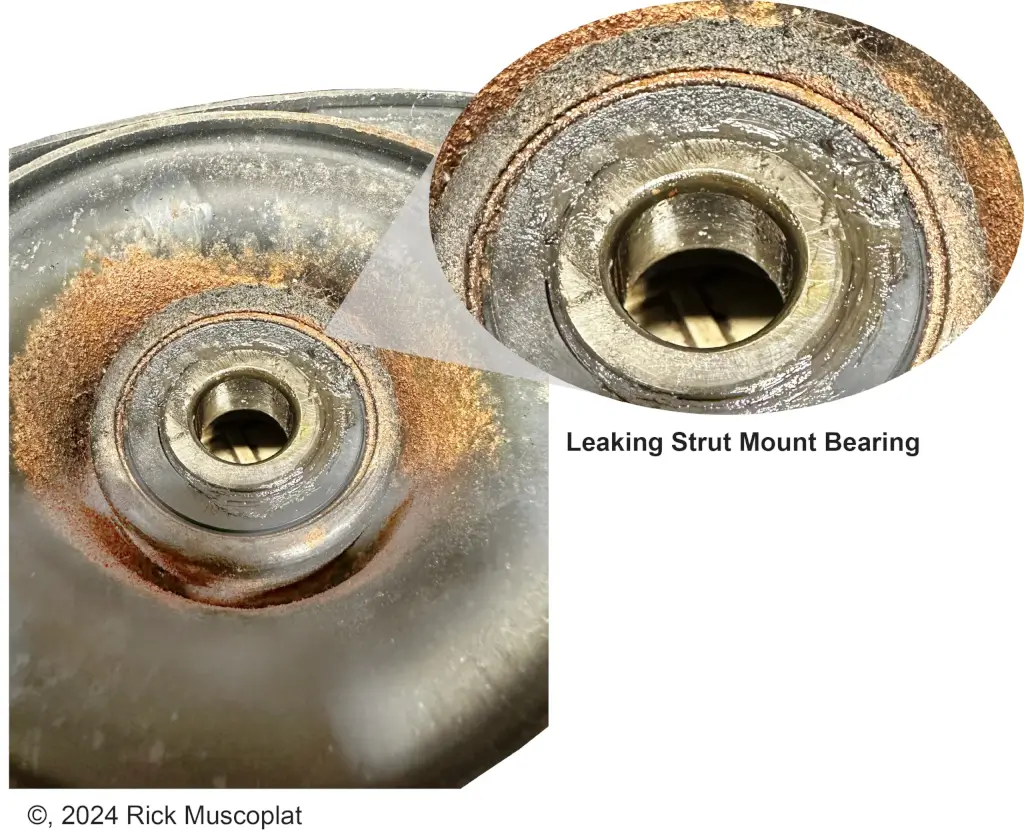
This image shows the early stages of a leaking strut mount bearing
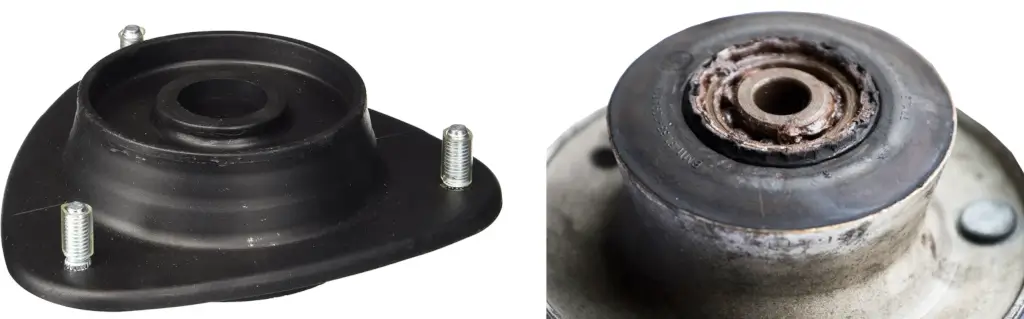
The image on the left is a new strut bound. The image on the right shows a totally destroyed strut mount bearing. This bearing made noise when turning long before it failed
Diagnosing the Problem
To accurately diagnose the cause of the popping noise when turning at slow speeds, you should perform a thorough inspection of the vehicle’s suspension and steering components. Here are some steps to help pinpoint the issue:
• Visual Inspection: Check for any visible signs of damage, such as torn CV boots, leaking grease, or cracked bushings. Look for loose or worn components in the suspension and steering systems.
• Manual Testing: Jack up the vehicle and manually check for play in the CV joints, ball joints, and tie rods. If there is excessive movement in any of these components, they may need to be replaced.
• Listen for Noises: Have someone else turn the steering wheel while you listen near each wheel. This can help you localize the source of the noise.
•Road Test: Take the vehicle for a slow-speed test drive, making tight turns and listening for the noise. This can help you determine if the issue is more pronounced in one direction or another.
©, 2024 Rick Muscoplat
Posted on by Rick Muscoplat