
What Happens When You Reverse Jumper Cables? Expert Advice
How Reverse Jumper Cables Can Damage Your Car’s Electronics
Let me tell you from first-hand experience—if you ever reverse jumper cables, it can cause serious damage in just seconds. I’ve worked with plenty of drivers who accidentally reversed the jumper cable connections, connecting the negative jumper cable to the positive terminal, and trust me, the results can range from blown fuses to a fried computer or alternator. In this article, I’ll break down exactly what happens when you mistakenly connect jumper cables backward and what to do next.
What Happens Immediately When You Reverse Jumper Cables?
Sparks, Smoke, and the Sound of Trouble
The first thing you’ll notice when you accidentally reverse jumper cables is the unmistakable pop of electrical overload. You’ll see sparks fly, smoke rise, and even wires melt in extreme cases. Why? Because when you connect the negative jumper cable to the positive, you’re forcing your electrical system to handle a sudden surge of current it was never designed for. It’s an instant short circuit—and your car’s electrical components take the hit.
How Your Car Battery Reacts to Reverse Jumper Cables
• Battery Overheating – In some cases, the battery heats up so fast it boils the ele

Notice the hole in the battery in the upper left-hand corner. The yellow foam is boiled/foamed battery acid.
ctrolyte.
• Swelling or Leakage – I’ve seen batteries swell like balloons or leak corrosive acid.
• Permanent Damage – A severe short like this can destroy the battery’s internal cells beyond repair.
• Explosion Risk – Yes, I’ve personally witnessed a battery explode once. It’s rare but terrifying.
If you disconnect the reverse jumper cables quickly enough, you might save the battery. But in most cases, if the battery leaks or swells, it’s done for.
Fuses: Your First Line of Defense When You Connect Jumper Cables Wrong
Thankfully, your car’s fuse box is designed to protect it. I always tell people to check these areas after they reverse jumper cables:
• Blown Mega Fuses – These large fuses blow first to protect key circuits.
• Fusible Links – They melt to cut power before bigger damage happens.
• Multiple Blown Fuses – You’ll often find several smaller fuses fried in the process.
• Fuse Box Damage – Prolonged reversed polarity can even melt fuse box components, making repairs more complicated.

Look for MegaFuses in the underhood fuse box or the Auxiliary Fuse Box
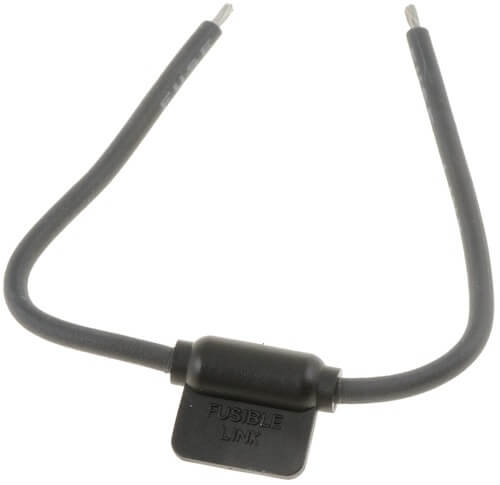
Fusible link
In most vehicles, fusible links are located in critical parts of the electrical system, such as:
• Near the Battery: They are often connected to the positive terminal of the battery, protecting high-current circuits.
• </strongAlternator Circuit: Fusible links protect the alternator from current surges that could damage its diodes or internal components.
• </strongStarter Circuit: Some vehicles use fusible links to safeguard the starter motor wiring.
Main Wiring Harness: Fusible links may be integrated to protect the primary power distribution to the vehicle’s systems
Why the Alternator Suffers When You Connect the Negative Jumper Cable to Positive
The alternator is especially vulnerable when you connect jumper cables incorrectly. I’ve replaced more alternators from reverse jumper cables than I care to count. Here’s why:
• Diodes Burn Out – These are what convert AC to DC power. Reve
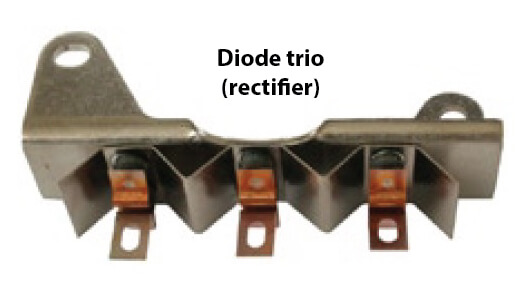
Alternator diode trio rectifier
rsing polarity fries them instantly.
• Battery Drain – If a diode shorts to ground, it’ll kill your battery overnight—even if the alternator still technically works.
• Replacement is Required – Diodes aren’t serviceable. You’ll be replacing the whole alternator.
What Happens to Vehicle Electronics?
Modern vehicles are packed with sensitive electronics, from engine control units (ECUs) to infotainment systems. Reversing the battery polarity can wreak havoc on these systems:
1) ECU Damage— The engine control unit is the brain of your car. It’s extremely sensitive to voltage irregularities. A polarity reversal can fry its circuits, leading to engine performance issues or even rendering the car undrivable.
2) Blown Relays— Relays, which control the flow of electricity to various components, are another weak point. A blown relay can prevent crucial systems like the starter motor or fuel pump from working.
3) Permanent Electronics Failure— Infotainment systems, climate controls, and even sensors could be permanently damaged. Depending on the extent of the damage, repairs could run into thousands of dollars.
For more information on how reversing jumper cables and damage electronics, see this article.
What Should You Do After Realizing the Mistake?
If you realize you’ve accidentally connected positive to negative, here’s how to minimize the damage:
1) Disconnect immediately— Stop the current flow by disconnecting the cables as quickly as possible. The longer the incorrect connection is maintained, the greater the damage.
2) Inspect for Obvious Damage— Look for signs of melted wires, blown fuses, or damage to the battery terminals. Swelling or leaks from the battery are serious warning signs.
3) Check the Fuses— Open the fuse box and inspect each fuse. Replace any blown fuses, but keep in mind that this may not resolve the underlying problem.
4) Check the Battery— Look for signs of battery acid leakage. If you find that, it’s game over. You must replace the battery. Next, check for signs If the battery shows no external signs of damage, test it with a multimeter. If the voltage is abnormally low or the battery won’t hold a charge, it needs to be replaced.
5) Consult a Professional— If you suspect damage to the alternator or electronics, take the vehicle to a qualified mechanic or an auto electrician. Diagnosing and repairing these systems requires specialized tools and expertise.
Preventing This Mistake in the Future
The best solution to this problem is prevention. Here are a few tips to ensure you never accidentally connect positive to negative again:
• Double-Check Connections: Always verify that the red cable is connected to the positive terminal (+) and the black cable to the negative terminal (-) before starting the jump.
• Label Your Cables: If you’re frequently jump-starting vehicles, consider labeling the cables or investing in a set with clear markings.
• Use a Jump Starter with Polarity Protection: Many modern portable jump starters have built-in safety features that prevent damage if you connect the terminals incorrectly.
• Take Your Time: Rushing leads to mistakes. Take a few seconds to double-check your connections before proceeding.
The Cost of Repairs
I’ll be brutally honest: Reversing the battery terminals can damage very expensive electrical components. Here’s a breakdown of potential costs:
• Battery Replacement: $175–$375, depending on the type of battery.
• Fuse Replacement: Typically inexpensive, costing $10–$20 for the parts, but labor charges can add up if the damage is extensive.
• Alternator Replacement: $500–$1,000, including parts and labor.
• Electronics Repair: Costs can vary widely. A fried ECU alone could set you back $1,000–$2,000.
In total, the damage from this mistake could range from a minor inconvenience to a major financial headache.
My Final Thoughts
Accidentally connecting positive to negative battery terminals is a common mistake, but it can have serious consequences. The key is to act quickly to minimize damage and to thoroughly inspect the car’s electrical system afterward. With modern cars relying more heavily on electronics, the stakes are higher than ever.
If you’ve made this mistake, take preventative measures moving forward, and remember that professional help is often the best way to ensure your vehicle is safe and fully operational again.
©, 2024 Rick Muscoplat
Posted on by Rick Muscoplat