
What is Variable Valve Timing and how does it work?
Understanding Variable Valve Timing Systems
In traditional engine designs, engineers faced a constant trade-off between performance, fuel economy, and emissions. One of the biggest challenges was the camshaft—a fixed component that controlled valve lift, duration, and timing.
A camshaft optimized for high power output often led to rough idling and increased emissions at low RPMs. Conversely, a camshaft designed for smooth operation and fuel efficiency would limit high-end performance. This meant every engine was a compromise, performing adequately across all power bands but excelling in none.
Enter Variable Valve Timing (VVT)—a game-changer in modern engine technology. Found in all late-model engines, VVT eliminates this compromise by dynamically adjusting valve timing based on engine speed and load. VVT allows manufacturers to achieve higher horsepower and torque without sacrificing fuel efficiency or emissions compliance—truly letting them have their cake and eat it too.
The Core of VVT Is The Camshaft Phaser
The camshaft phaser is what advances or retards camshaft timing. It operates by filling or draining oil chambers in the camshaft phaser mechanism. The phaser has two main components, as shown here.
The timing chain rotates the phaser based on crankshaft rotation just as in older non-VVT designs. However, by filling or draining the oil chambers, the phaser can advance or retard the camshaft as needed.

The phaser has two main components: the stator and rotor. The stator is connected to the timing chain, and the rotor is connected to the camshaft. When the engine is at rest, a locking pin secures the rotor and stator, making the phaser act like a solid sprocket. Once oil pressure builds, the locking pin disengages, allowing the rotor to move inside the stator and adjust the camshaft timing.
The Oil Control Valve Solenoid is What Makes the Camshaft Phaser Move
The oil control valve(s) (or solenoids) regulate the flow of motor oil into the advance and retard chambers in the phaser. Based on the driver’s acceleration demands and knowing the engine’s oil pressure and temperature, the engine’s computer computes how much cam advance or retard it needs. It then commands the oil control solenoid to open and close a set number of times per second to either fill or drain the oil chambers in the phaser.
Here’s how it works:
One side of the chamber might receive 30 psi of oil pressure while the other side gets 60 psi. The pressure difference adjusts the camshaft’s position. It’s a continuous process, not an all-or-nothing adjustment, and it keeps the camshaft in an optimal position for performance and efficiency based on engine speed and load.
What Happens When Things Go Wrong
Oil pressure is the lifeblood of the VVT system. If there’s insufficient oil pressure to unlock the locking pin, the phaser won’t advance or retard the camshaft and it will behave like a fixed sprocket. This lack of movement triggers trouble codes because the computer isn’t seeing the expected adjustments.
During cold starts, when oil pressure is typically lower, an unlocked locking pin can cause a noticeable rattle as the rotor and stator move without stable oil pressure.
Different VVT Configurations

Typical camshaft phaser
Variable valve timing systems vary widely depending on the engine design:
• Single Phaser: Found in pushrod engines, controlling one camshaft.
• Dual Overhead Cam (DOHC): Typically equipped with two phasers, one for each camshaft.
• Quad Cam Systems: Some advanced engines have phasers on all four camshafts for precise control over intake and exhaust.
How Oil Reaches the Phasers
Engine oil flows through journals, camshaft bearings, and hollow camshafts to reach the VVT oil control solenoids. The solenoid consists of a magnetic coil and valve spool mechanism. Each pulse energizes or de-energizes the coil, either allowing high-pressure oil flow or stopping it. Oil entering the solenoid must first pass through an inlet screen to filter out any particulate matter that might clog or wear the spool mechanism. The oil screen and the concern about valve spool wear highlight why proper oil maintenance is so critical. Worn camshaft bearings or clogged oil passages from neglected oil changes can result in lower oil pressure, cross-flow in the spool mechanism, and poor phaser performance.
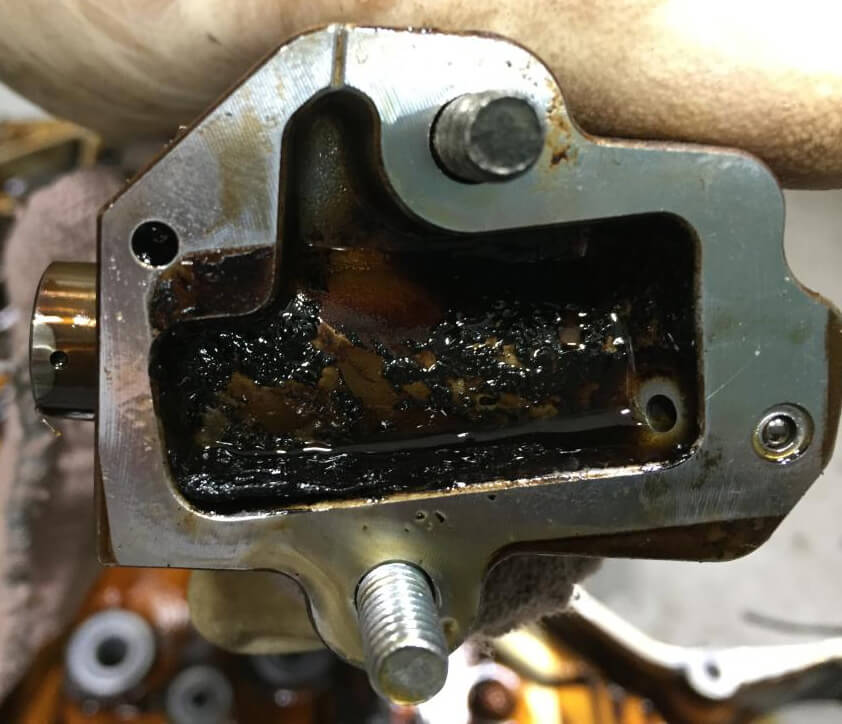
This image shows oil sludge buildup in the VVT oil control solenoid screen. Screen clogging substantially degrades VVT performance and can cause a trouble code
Preventing and Addressing VVT Issues
To keep your VVT system operating smoothly:
1) Change Oil Regularly—Neglected oil changes are the #1 cause of variable valve timing system problems. Worn out motor oil causes sludge buildup, which can block the tiny screens in the solenoids. Check and clean these solenoid screens first if you get a P0014-P0016 trouble code. Neglected oil changes can also cause accelerated wear in the camshaft bearings, allowing cross-flow that reduces VVT efficiency.
• Maintain Proper Oil Levels— Running your engine when it’s low on oil can cause premature bearing and timing chain wear. Ensure your engine has the correct oil level and pressure. Without sufficient oil pressure, the phasers can’t function as intended.
• Use Quality Oil— Stick to the oil grade recommended by the manufacturer. Low-quality or contaminated oil can clog the system and degrade performance.
The Take Aways From This Article
The variable valve timing system in your engine is a remarkable innovation that balances power and efficiency. However, it’s only as good as the engine’s oil system. Regular maintenance, including timely oil changes and using the correct oil grade, is essential to keep the system running smoothly. By taking care of these fundamentals, you can ensure your VVT system continues to perform at its best.
©, 2024 Rick Muscoplat
Posted on by Rick Muscoplat