
What To Pack In Your Car Emergency Kit
Car Emergency Kit for Winter Driving: What to Pack to Stay Safe
Quick Summary
If you want to survive being stranded in freezing weather, you need to pack a car emergency kit specifically designed for winter. Here’s the minimum gear you need:
A full-size shovel—not a flimsy folding one.
Reliable heat sources (a candle heater, hand warmers, and extra gloves).
Essential tools: jumper pack, flashlight, tire inflator, duct tape, and basic wrenches.
Emergency supplies like food, water, a blanket, flares, and lithium batteries.
A first aid kit and stay with your vehicle—it’s your best shelter.
Article
Why You Need a Winter Emergency Kit
You never expect to get stuck, but winter doesn’t care about your plans. A blizzard, mechanical failure, or a snow-covered road can leave you stranded for hours or even overnight. Modern cars are reliable, but cold weather is relentless on batteries, fuel systems, and tires.
A car emergency kit gives you the tools to dig out, stay warm, signal for help, and make minor repairs while waiting for assistance. In a Minnesota winter, I don’t leave home without one.
Start with the Essentials: A Real Shovel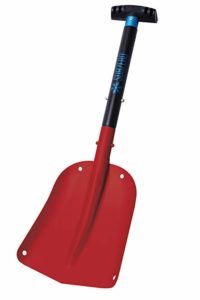
Forget the folding camp shovels—they’re toys. If your car slides into a snowbank, you need a real scoop shovel. Look for a short-handled aluminum or poly scoop that’s light enough to carry but strong enough to move packed snow. It’s the single most important item in your winter emergency kit.
Stay Warm Without Running the Engine
Never rely solely on your vehicle’s heater. A dead battery, clogged tailpipe, or empty fuel tank can leave you freezing in minutes—and idling can let deadly carbon monoxide seep into the cabin. Here’s what I pack to generate and retain heat safely:
Must-Have Warmth Items
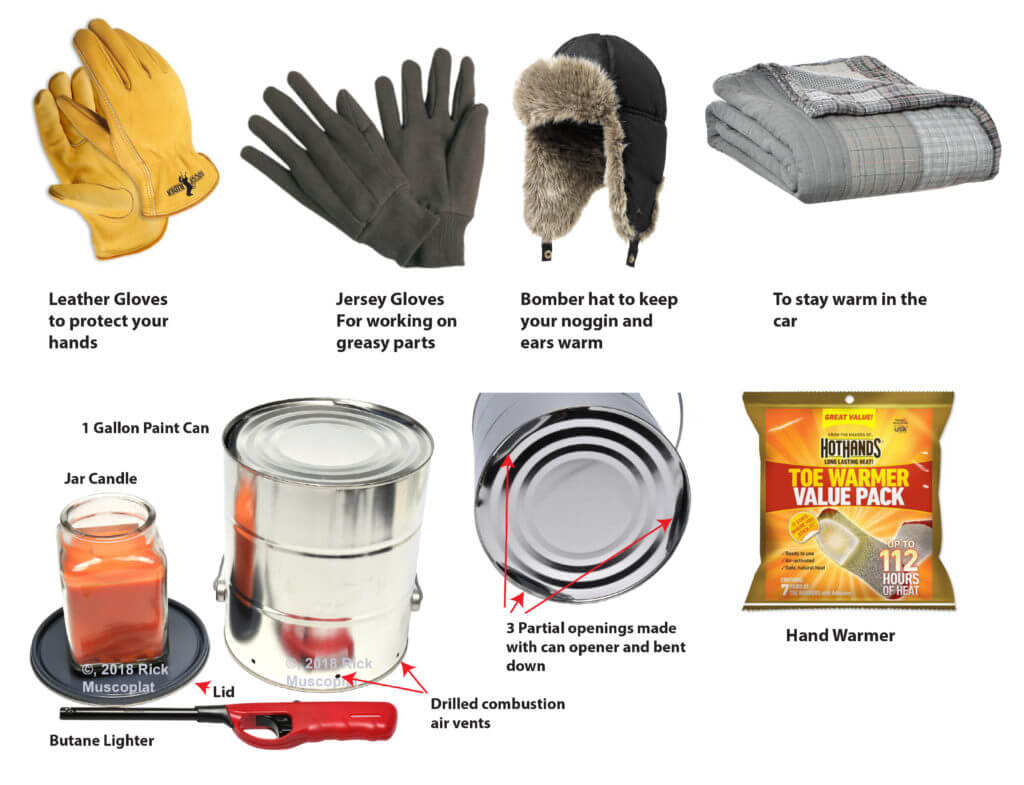
Car emergency kit for winter. To keep you WARM
• Leather gloves for changing a tire— Nothing will get you colder faster than handling frozen metal tools. Put some leather between you and cold metal.
• Jersey gloves for working on filthy, dirty, greasy items. Jersey cotton gloves will keep your hands warm and if they get full of grease, you can toss them. They’re cheap; about $2/pair.
• Bomber hat with ear flaps. Absolutely, you’ll look like a dork, but you’ll be a warm dork. Ever try changing a flat tire when it’s below zero and the wind is howling? Ok, then you know why I’m listing this as a must-have.
• Blanket. Pretty self-explanatory, right?
• Heat stove. Take a 1-gallon paint can and cut three partial slits in its bottom. Fold down the cut areas. Then drill several holes around the top circumference of the can. The slits will be the exhaust, and the holes will be for combustion air. Buy a JAR candle. Yeah, a jar–so molten wax doesn’t pour out if you move it. Stuff the candle, butane lighter, and your gloves into the can, then press the lid.
WARNING: Crack a car window about 1″ when you’re heating with this makeshift stove. Yes, it will let cold air in but it also lets carbon monoxide out.
• Hand warmers. They’re cheap and they work well to keep you warm.
Pack a Robust Emergency Tool Kit
Every car emergency kit should include a small but capable tool set. When you’re stranded, even basic repairs can get you back on the road.
My Recommended Tool List
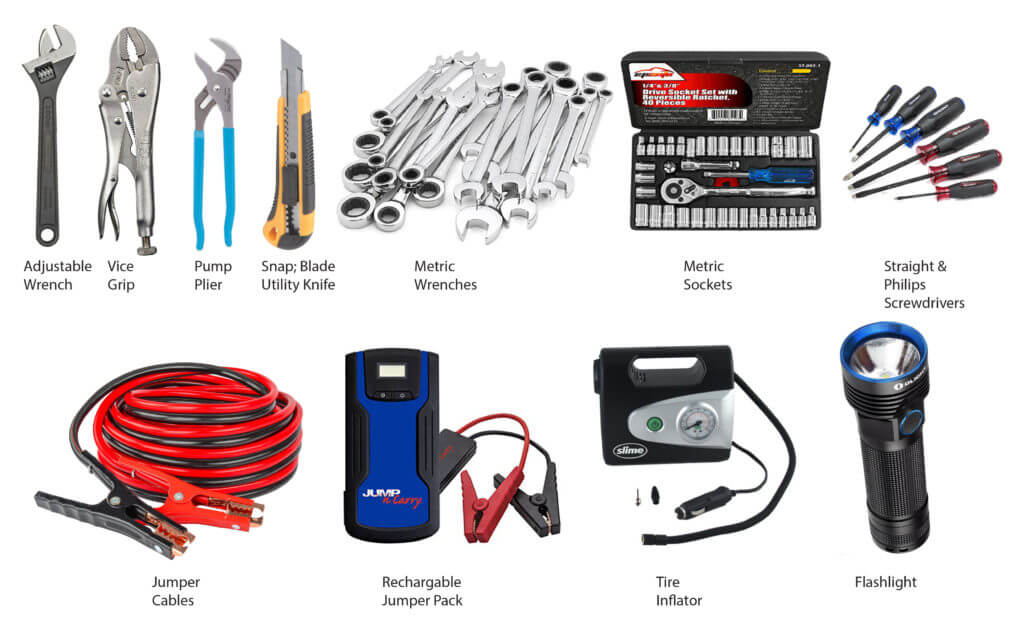
Emergency Tool Kit for Winter Driving
• Adjustable wrench
• Vice Grips
• Pump Pliers
• Snap blade utility knife (so you’ll always have a sharp edge).
• Combination metric wrenches
• Metric socket set
• Screwdriver set
• Jumper cables or a Rechargeable Lithium jumper pack (preferably with a USB outlet and cables to charge your phone).• Tire inflator….you know you haven’t checked the air pressure in your spare tire
• Flashlight
Winter Emergency Kit Supplies to Keep You Alive
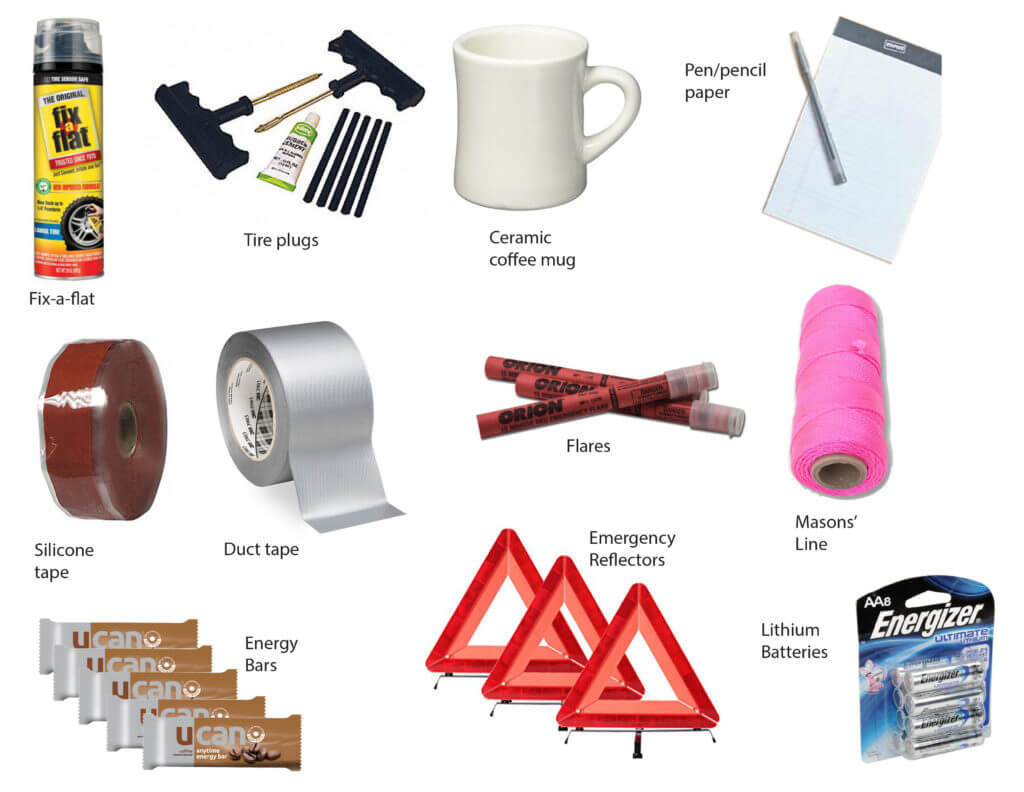
• Fix a flat. Hey, if you can make it work with this stuff, you’ll save a whole lot of hassle by not having to jack up the car and put on the spare. A fix-a-flat will freeze in winter. If your engine is running, warm the can by holding it in front of the heater outlet until you can shake it.
• Tire plugs. They’re not considered a permanent repair. But when you’re freezing your nuts off, you don’t really care. Get it patched and get going.
• Ceramic coffee mug. No, you’re not making late’ on the side of the road. You’re melting snow so you can have something to drink. Fill it with snow and put it on your makeshift heater.
• Pad and pencil/pen. If you decide to leave the vehicle, and most experts say you shouldn’t at least leave a note with your name and phone so your relatives can claim your body. I’m not kidding. Don’t leave the vehicle!
• Silicone tape. It’s self-fusing, so you can wrap it around a leaking radiator hose and patch the leak temporarily.
• Duct tape. Knocked your bumper/headlight/grille off when you hit the snowbank? Use the duct tape and mason’s line to secure those items so you can keep driving once you get out.
• Flares and reflectors. Pretty self-explanatory. Let emergency authorities know where you are and alert other drivers that you’re in the snowbank.
• Lithium batteries. Alkaline batteries freeze in the winter and have a short life even when they’re not frozen. Lithium batteries cost more, but they don’t freeze as easily.
• Food. Yeah, you need to eat. Don’t like energy bars? Fine. Pack Snickers.
Safety Tips for Using Heat in Your Vehicle
When using a makeshift heater, crack a window about one inch. It may seem counterintuitive, but it prevents carbon monoxide buildup inside the car. Never use open flames without ventilation. Even candles consume oxygen.
Keep your heat sources secured and stable. A jar candle in a paint can is much safer than a bare candle.
Final Advice from Experience
I’ve built dozens of car emergency kits for customers, family, and friends, and the same rule applies: prepare for the worst, hope for the best. Don’t assume cell service or fast rescue in bad weather. Pack your kit now—before the snow flies—and keep it in your trunk all winter.
©, 2018 Rick Muscoplat
Posted on by Rick Muscoplat