
What’s a reasonable car diagnostic charge?
Learn how much shops charge for a car diagnostic
Any time you take your car into a shop to solve a problem, the shop informs you upfront that there will be a car diagnostic charge, and it’s usually either a half-hour or a full hour of time. That’s often frustrating for customers because they think of a diagnostic as simply reading the car’s trouble codes, and most auto parts stores do that for free. However, reading a trouble code isn’t a diagnostic. It’s just a starting point. A true diagnosis requires additional testing, and the customer has to pay for it. Here are several reasons why auto repair shops charge a diagnostic fee.
How car diagnostic charges are calculated
Customers have difficulty understanding why a shop charges a half-hour or full hour for a diagnostic that sometimes takes less than the full hour. What they’re missing is that everything that happens on the front end is part of the cost. In other words, the clock starts ticking the minute you drive into the shop. A service writer listens to your description of the problem, enters the vehicle information into the computer, and writes up the work order. The service writer then schedules the vehicle with the proper technician, and a shop employee parks the vehicle until it can be worked on. All those costs are part of the diagnostic charge.
What is a reasonable car diagnostic charge?
As of July 2024, the average shop hourly rate is around $140. So, it’s common for shops to charge between $70 to $140 for a standard car diagnostic fee. If the diagnostic takes a bit longer than an hour, you only get charged for one hour. However, in some cases, like a complicated electrical problem, you may be charged for the actual time it takes to find the problem, which can take many hours.
It takes expertise and specialized equipment to diagnose your car
Diagnosing a vehicle problem accurately requires
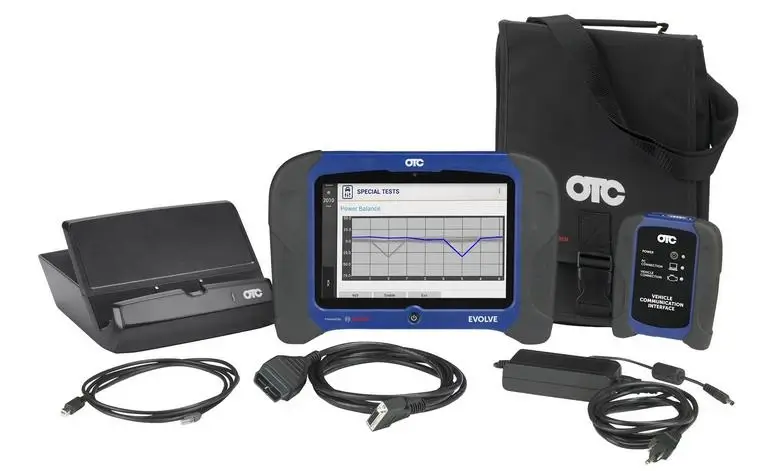
This OTC brand scan tool costs $3,400. The annual software update costs about $800 to $1,000. s
specialized knowledge and advanced equipment. Modern vehicles are complex, with sophisticated computer systems that monitor and control various functions. To identify the root cause of an issue, technicians use many specialized and expensive diagnostic tools. For example, a professional grade scan tool costs around $3,000, and a digital scope costs around $2,000. Not only are the upfront tool costs high, but they require annual software updates that can cost as much as $1,000. Additionally, technicians need ongoing training to stay current with the latest automotive technologies. The diagnostic fee helps cover the costs of these tools and the training necessary to use them effectively.
Proper diagnostics take time
Accurate diagnostics can be time-consuming. A technician starts by verifying the customer’s complaint, which often requires a test drive to try to duplicate the condition. If there’s a trouble code stored in the vehicle’s computer, a good technician will check for any manufacturer technical service bulletins before jumping into testing the suspected components. Spending time diagnosing a problem that the carmaker has already diagnosed and identified in a service bulletin ultimately saves more time and results in a better repair.
After checking for bulletins, the technician checks for conditions that may have contributed to the problem. For example, before testing an alternator for charging issues, the technician would first check the condition of the battery, visually check the condition of the battery and alternator terminals, and then perform a voltage drop test on connections. If those components pass, the technician has narrowed the field of possibilities rather than jumping to the conclusion that the alternator is bad.
Technicians don’t work for free, and shops have overhead
Once the technician finishes the diagnostic, they recommend repairs. It’s not uncommon for customers to decline the repair or take their vehicle to another shop to obtain a second opinion/quote. However, somebody has to pay for the technician’s time, and that’s the customer. If shops didn’t charge a car diagnostic charge, DIYer customers could take their car to a shop, get the diagnosis, decline the repair, and replace the parts themselves. That’s obviously good for the DIYer, but it’s a losing proposition for a shop
Running an auto repair shop involves significant overhead costs, including rent, utilities, salaries, and equipment maintenance. Car diagnostic charges cover these operational expenses, ensuring that the business remains viable. This allows the shop to continue providing quality services to its customers. Without these fees, repair shops might struggle to cover their costs, potentially compromising the quality of their work or the viability of their business.
©, 2014 Rick Muscoplat
Posted on by Rick Muscoplat