
Why LED Bulbs Don’t Work in Halogen Headlights
Why Retrofitting LED Bulbs Into Halogen Headlights Is a Bad Idea (And Why I Never Recommend It)
Quick Summary
Here’s the truth: installing LED bulbs in a halogen headlight housing almost always makes your lighting worse—not better.
• It is optically impossible for an LED bulb to reproduce the correct beam pattern when installed in a halogen headlight—this is physics, not opinion
• Instead of producing the proper beam pattern, they create glare that blinds oncoming drivers
• Because the beam pattern is glare, they actually throw LESS usable light down the road
• The mismatch between LED chips and halogen filament destroys focus and distance visibility
• Most retrofit LED headlight bulbs are not DOT legal for on-road use
If your goal is better night visibility, retrofitting LED bulbs into a halogen system is one of the worst upgrades you can make.
The Truth About LED Headlight Conversion
Let me say this straight: every time I see someone install an LED bulb in a halogen headlight, I already know what I’m going to find—a scattered, unfocused beam that looks bright up close but performs poorly where it actually matters. That’s the trap.
People see “brighter” and assume it means better. But when it comes to headlights, beam pattern matters far more than raw brightness.
Why LED Bulbs Can’t Produce the Proper Beam Pattern
This is where most people get it wrong—and it comes down to the physics of optics.
Halogen vs LED Light Source Design
A halogen bulb filament is:
• Cylindrical
• Emits light in a full 360° pattern
An LED bulb is:
• Flat (2D light source)
• Emits light in roughly 270° pattern
That difference alone guarantees a mismatch.
When you install an LED bulb in a halogen headlight, the reflector or projector can’t properly capture and redirect the light.
Result?
• Dead zones
• Misfocused light
• Distorted beam pattern
And I see it every time I test these setups against a wall.
Why LED Headlight Bulbs Create Glare
Glare is one of the biggest problems with LED headlight conversion kits.
Here’s how they create glare:
1. Installing an LED bulb in a halogen headlight changes the Focal Point — Halogen headlights are engineered so the filament sits at a precise focal point.
LED chips:
• Sit in a different position inside the headlight in relation to the reflector
Are larger or smaller than a halogen filament, so the light source doesn’t have that focal point
So instead of producing a controlled beam, the reflector scatters the light, producing glare
2. Loss of Cutoff Control (Especially in Projectors)
Even in projector headlights, people assume LEDs will work better. They don’t.
A projector system depends on:
• Precise focus from the reflector to a point behind the lens
• Correct light source geometry
When that’s wrong:
• The cutoff becomes fuzzy
• Light leaks above the cutoff
• Oncoming drivers get blinded
3. LEDs Produce Excessive Foreground Lighting — This is something most drivers don’t recognize:
• LED retrofits often make the area right in front of the car look very bright, at the cost of lighting up the road further. That creates the illusion of better lighting while actually reducing your ability to see hazards at speed.
Why LED Bulbs Throw LESS Light on the Road
This is the part that surprises people the most.
• Even though LED bulbs produce higher lumens, when placed in a headlight designed for halogen bulbs, they can’t focus that light in the proper places on the road.
Here’s why:
• The Reflector Can’t Focus the Light Properly
A halogen reflector is designed to:
• Capture 360° light
• Redirect it into a controlled forward beam
With LED bulbs:
• Light is emitted in the wrong directions
• Portions of the reflector are never used
• Some light is wasted entirely
• Resulting Beam Pattern Problems
What I typically see:
• Bright spots (hot spots)
• Dark patches
• Shorter beam distance
• Poor side illumination
In real-world driving, that means:
• You see LESS of the road ahead
• Your reaction time drops
• Night driving becomes less safe
Why Retrofit LED Headlight Bulbs Are Not DOT Legal
This isn’t a gray area. Under federal regulations (FMVSS 108):
• Headlights are certified as a complete system
• You cannot swap in a different light source and remain compliant
That’s why most LED conversion kits say:
• “For off-road use only.”
And if your lights cause glare and contribute to an accident, liability can fall on you.
Why LED Retrofits Often Fail or Don’t Fit Properly
This is something I see in the shop all the time.
Fitment Problems
LED headlights operate at 5 volts, so they require a voltage conversion from 12 V to 5 V. That conversion requires a step-down transformer. The step-down process generates heat, which is why all retrofit bulbs have a heat sink sticking out the back. Heat sinks prevent the reinstallation of dust caps
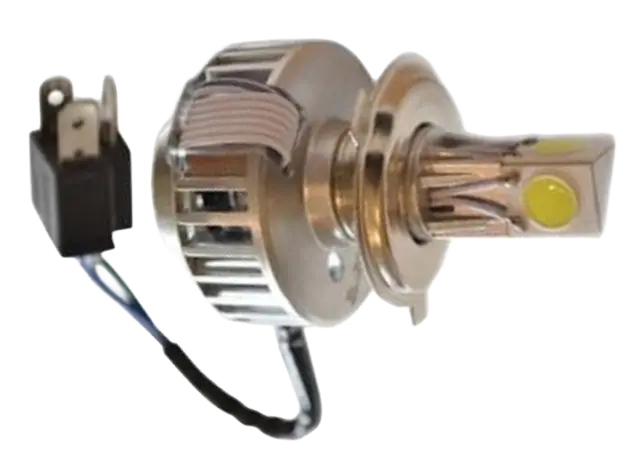
The large heat sink on a retrofit LED bulb can cause fitment problems in tight spaces
• Bulbs don’t seat correctly
• Wiring becomes cramped
Reliability Issues
• LED drivers (step-down transformers) overheat
• The bulbs’ internal cooling fans fail
• Lifespan claims are often unrealistic
So now you’ve got:
• Worse lighting
• More glare
• Higher cost
• Shorter lifespan
That’s a bad trade anyway you look at it.
The Right Way to Upgrade Your Headlights
If you want better lighting, here’s what I actually recommend:
1. Use High-Quality Halogen Bulbs — Modern premium halogens can significantly improve performance without ruining the beam pattern.
2. Restore Headlight Lenses — Cloudy lenses reduce output more than people realize.
3. Upgrade to OEM LED or HID Systems (Properly)
That means:
• Correct housings
• Correct optics
• Proper aiming
Anything less is a compromise.
My Bottom Line (What I Tell Every Customer)
After years of testing and diagnosing lighting issues, I can tell you this:
Retrofitting LED bulbs into halogen headlights doesn’t improve visibility—it degrades it.
You get:
• More glare
• Less distance
• Worse beam control
And that’s exactly the opposite of what you want at night.
How Halogen Optical Systems Work (and Why LED Bulbs Break Them)
Reflector Headlights — In a reflector housing, the filament sits precisely at the parabolic focal point. Because halogen filaments emit light in 360°, the reflector can gather and redistribute the light into a controlled beam.
When you drop an LED bulb in halogen headlight reflectors:
• The LED chips sit closer or farther from the focal point
• They emit only ~270°, not 360°
• They create two dead zones where the reflector can’t capture light
• This guarantees a distorted beam pattern.
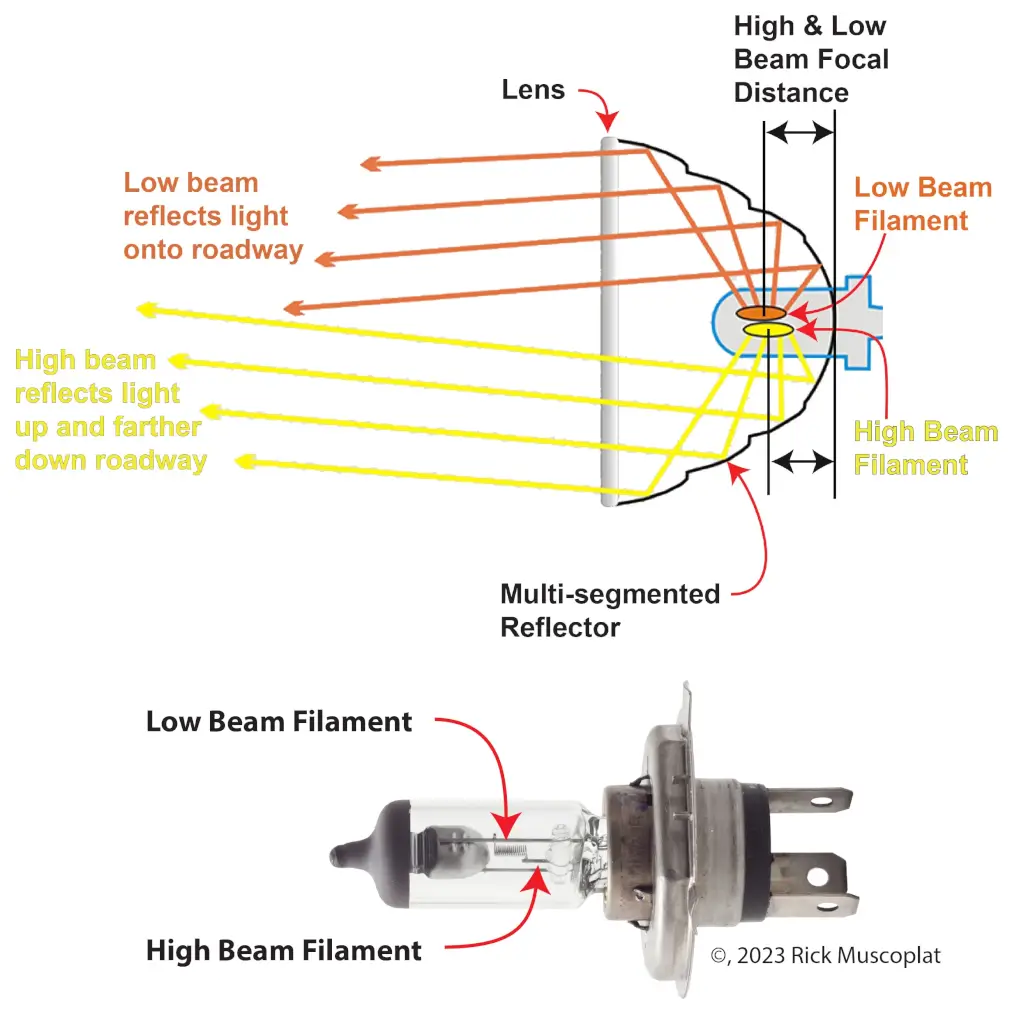
This is an example of a dual filament halogen headlight bulb fitted into a reflector-style headlight assembly.
Projector Headlights — A projector headlight uses an elliptical reflector to focus light from the bulb to a precise focal point just in front of a cutoff shield, which blocks upward-scattered light and creates a sharp horizontal cutoff. A convex lens then magnifies and projects this shaped beam onto the road, producing a bright, focused, and highly controlled light pattern. This system delivers better beam precision than reflector headlights, but only when the correct bulb type—halogen, HID, or OEM LED—is used in the housing it was designed for.
People think projector headlights work just fine with retrofit LED bulbs. They’re wrong. Every projector-style headlight still relies on a correctly positioned light source.
Because the LED chips sit in a different physical location and emit light differently than a filament, the reflector can’t focus the beam at the correct point above the cutoff shield. Instead of forming a sharp, controlled beam, the projector gets an unfocused “blob” of light—too much in the foreground, too little down the road, and excessive scatter and glare above the cutoff. The lens cannot fix this because a projector lens only refines correctly focused light; it can’t correct light that is mis-aimed at the reflector.
The result is a dimmer, shorter, and sloppier beam pattern that reduces your visibility and creates glare for other drivers.
• The reflector sends improperly shaped beams into the cutoff shield
• The lens can’t refocus bad light into good light
• The cutoff becomes fuzzy, ragged, and full of hotspots
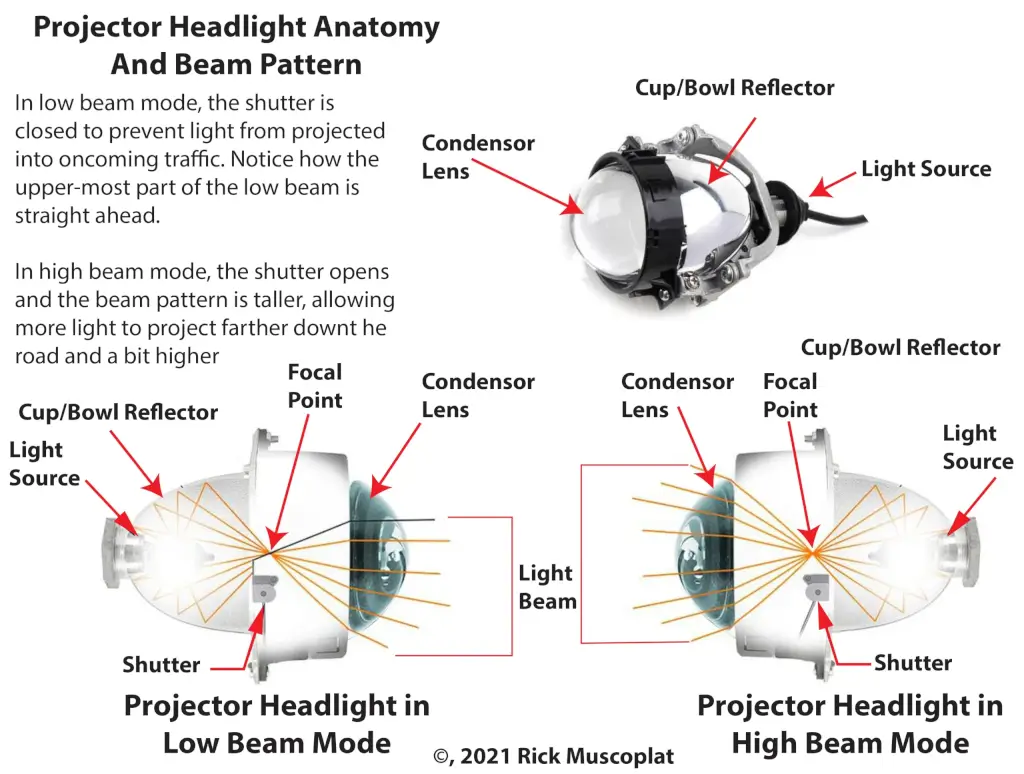
How a projector headlight works
Why LED Chips Can’t Replicate a Halogen Filament
A halogen filament is:
• Cylindrical
• 3-dimensional
• Radiates in every direction
An LED chip is:
• Flat
• 2-dimensional
• Emits directionally
The shape and emission pattern alone guarantee optical mismatch. That’s why when you place an LED bulb in a halogen headlight system, you get:
• Poor long-range illumination
• Intense foreground lighting
• Scattered upward light that causes glare
SAE testing confirms that retrofitting LED bulbs into headlight housings throws less usable roadway light, even when the LED claims high lumen output.
Retrofit LED Bulbs Are Illegal in Halogen Headlights
This isn’t a gray area. Under FMVSS 108:
• A headlight assembly certified for halogen bulbs can only be used with halogen bulbs.
• No retrofit LED bulbs into headlight assemblies carry DOT certification.
That’s why LED sellers hide behind:
“FOR OFF-ROAD USE ONLY.”
If you run an LED bulb in a halogen headlight system on the street and cause glare that leads to a crash, you are legally liable.
LED Retrofits Often Don’t Fit and Rarely Last
Many drivers don’t realize:
• LED bulbs have bulky heat sinks
• They often prevent reinstalling the headlight dust cap
• Overheating kills the LED drivers
Lifespan ratings are often fantasy numbers not based on real-world thermal conditions
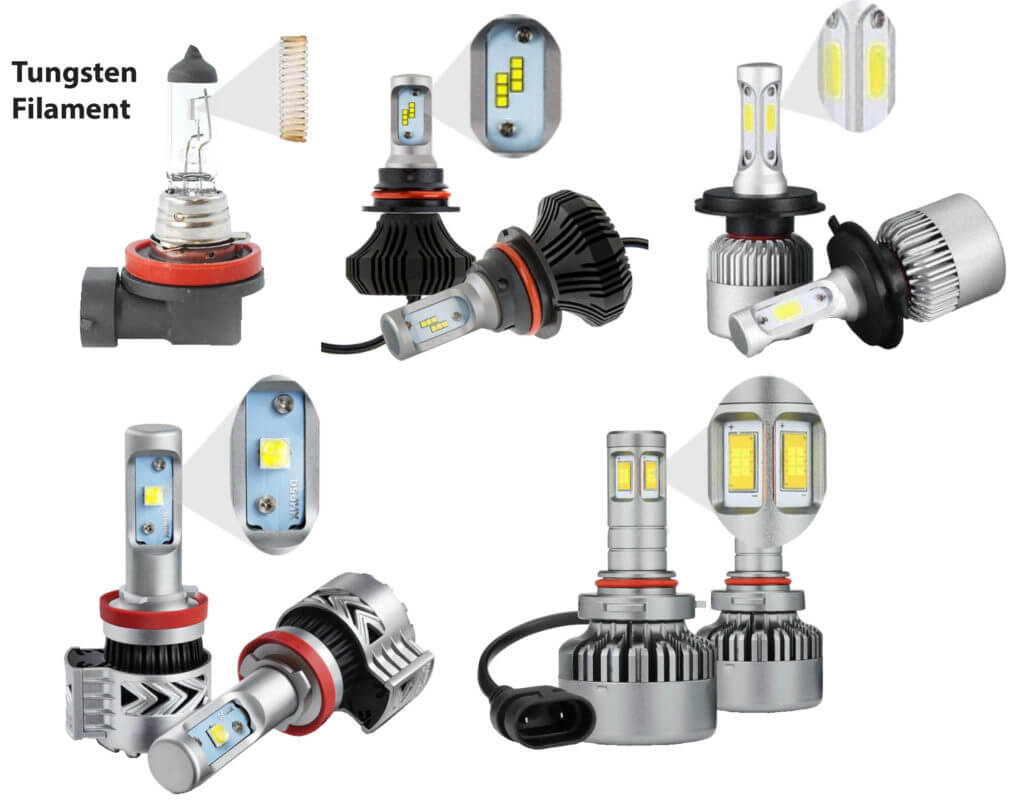
Most retrofit LED headlight bulbs don’t match the size, shape and focal length as the halogen bulb. As a result, they can’t even come close to matching a halogen bulb’s beam pattern.
Neither a reflector headlight nor a projector headlight can compensate for light scatter from an LED bulb with 2-dimensional light sources.
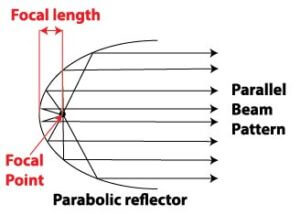
This image shows a halogen bulb in a halogen headlight assembly. Notice how the parabolic reflector focuses the light into a direction straight-ahead pattern.
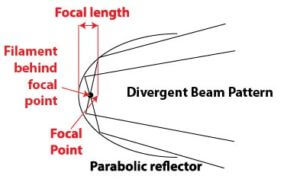
Same reflector but different light source location. Notice how the reflector can’t reflect the light the same way.
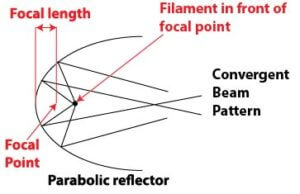
In this image, you see what happens if the light source is moved away from the reflector. The result is more light shining into oncoming traffic and the trees, and down towards the road—but not forward.
The reflector in a project headlight focuses light to a point midway between the reflector and the lens. The lens then refocuses/projects the light down the road for maximum illumination. Once again, the reflector used in a projector headlight is designed to fit whatever bulb was installed at the factory. Change the bulb, and you change everything.
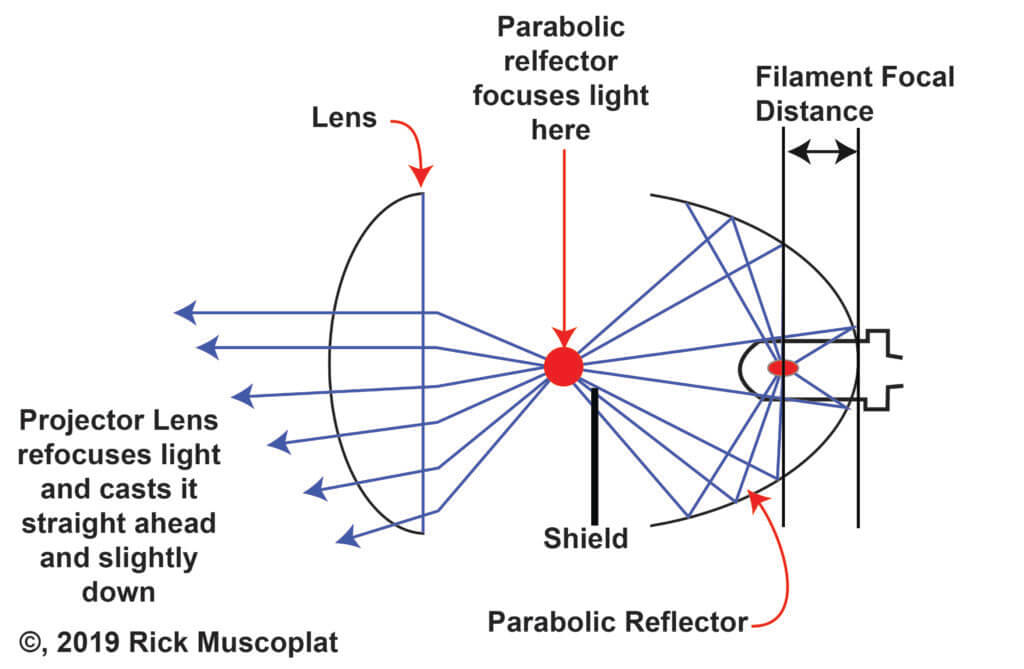
Projector headlight with halogen bulb. The reflector focuses the light midway and the lens refocuses it.
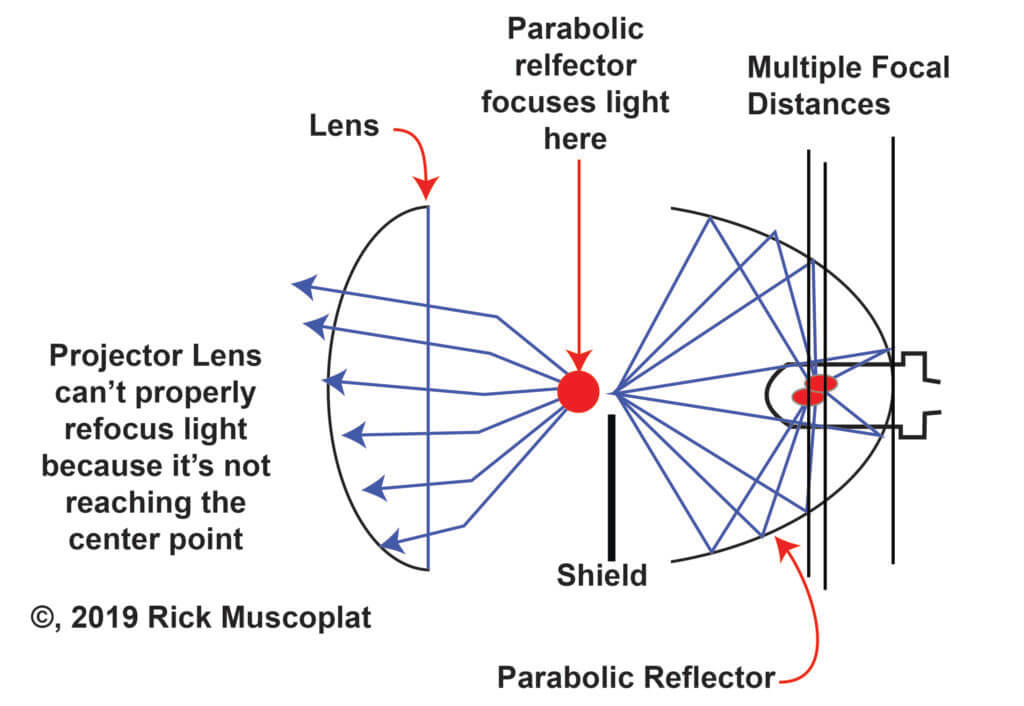
Change the bulb, and the beam no longer focuses midway between the reflector and the lens. So less light gets refocused on the road, and since the focus is off, more light ends up as glare.
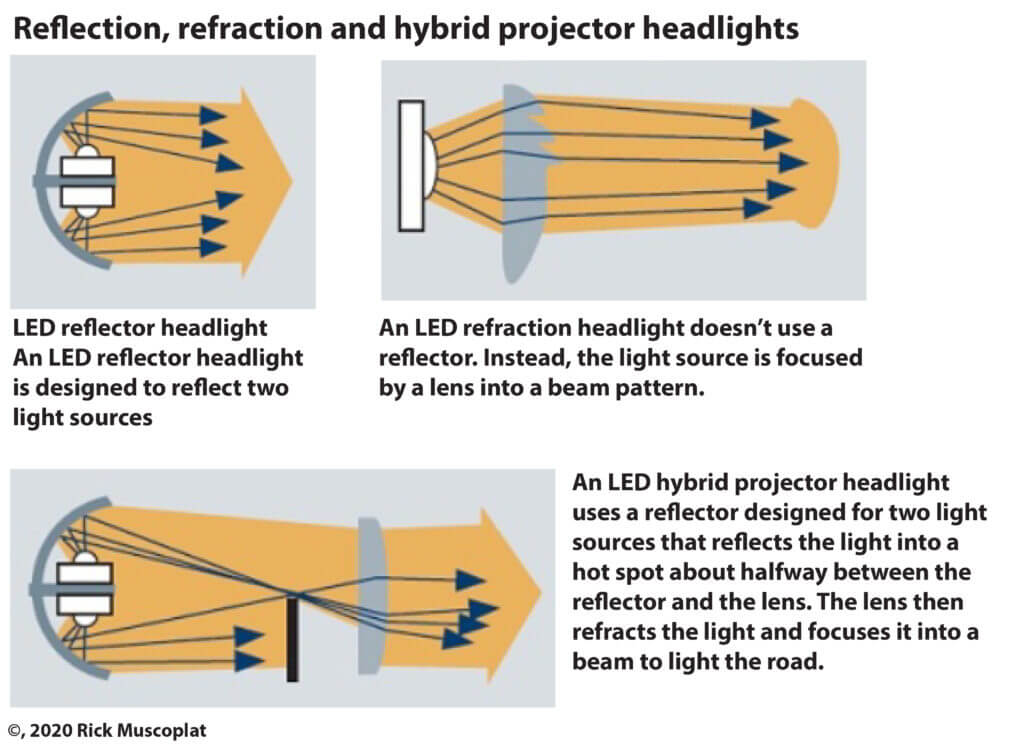
Scroll down to see how a reflector/bulb mismatch causes a projector headlight to cast less light on the road.
LED headlight bulbs are notoriously unreliable
LED bulbs have large cooling fins that extend outside the headlight assembly to cool the electronics. They’re far more expensive to buy, and they tend to fail faster than standard halogen bulbs. The estimated life (in hours) never quite matches the actual life once in the vehicle. Put it all together; less light on the road, more glare for oncoming traffic, higher cost, and shorter life and it just doesn’t make sense to convert to LED headlight bulbs.
© 2012 Rick Muscoplat
Posted on by Rick Muscoplat