
Why Toyota’s AC Stops Working With a Toyota B1479 Code
Why a Toyota B1479 Code Disables the AC Compressor
Quick Summary
When I see a Toyota B1479 code, I already know I’m dealing with an AC system that won’t engage—usually because it isn’t receiving the proper refrigerant flow signal. In most cases, the problem comes down to a faulty AC flow sensor, wiring issue, or signal problem, and the ECM shuts down the compressor to protect the system. The fix is straightforward if you follow a proper diagnostic process: verify the signal, test the sensor, and only then replace parts. Don’t guess—this is a data-driven repair.
What the Toyota B1479 Code Really Means
The Toyota B1479 code points to a problem with the AC refrigerant flow sensor circuit. This sensor is mounted on the compressor and plays a bigger role than most people realize.
Here’s what’s happening behind the scenes:
• The AC flow sensor monitors refrigerant movement through the compressor
• It sends a voltage signal back to the AC amplifier
• The AC amplifier communicates with the ECM
• The ECM decides whether it’s safe to engage the compressor
If that signal is missing, out of range, or erratic, the system shuts the compressor off. That’s why you get a Toyota B1479 code and no AC condition.
Why the Toyota B1479 Code Prevents the AC From Working
This is a protection strategy—plain and simple. If the ECM doesn’t trust the refrigerant flow data, it won’t allow the compressor to run. Running a compressor with improper refrigerant flow can destroy it in short order.
So instead of risking damage, the system says:
“No valid signal? No AC.”
From a design standpoint, it’s smart. From a comfort standpoint, it’s frustrating.
Most Common Causes of a Toyota B1479 Code
1. Failed AC Flow Sensor (Most Common) — This is the number one cause.
• Internal sensor failure
• Out-of-range voltage signal
• Intermittent readings
2. Wiring or Connector Issues — Don’t overlook this—especially in older vehicles.
• Corroded connectors
• Broken wires near the compressor
• Poor ground or reference voltage
3. AC Amplifier Communication Issue — Less common, but it happens.
• No signal from the amplifier to the ECM
• Internal amplifier fault
4. Refrigerant System Problems (Indirect Cause) — Low refrigerant or restriction can skew readings.
How I Diagnose a Toyota B1479 Code (Step-by-Step)
This is where most DIYers and even some techs go wrong—they skip steps.
Here’s the process I use:
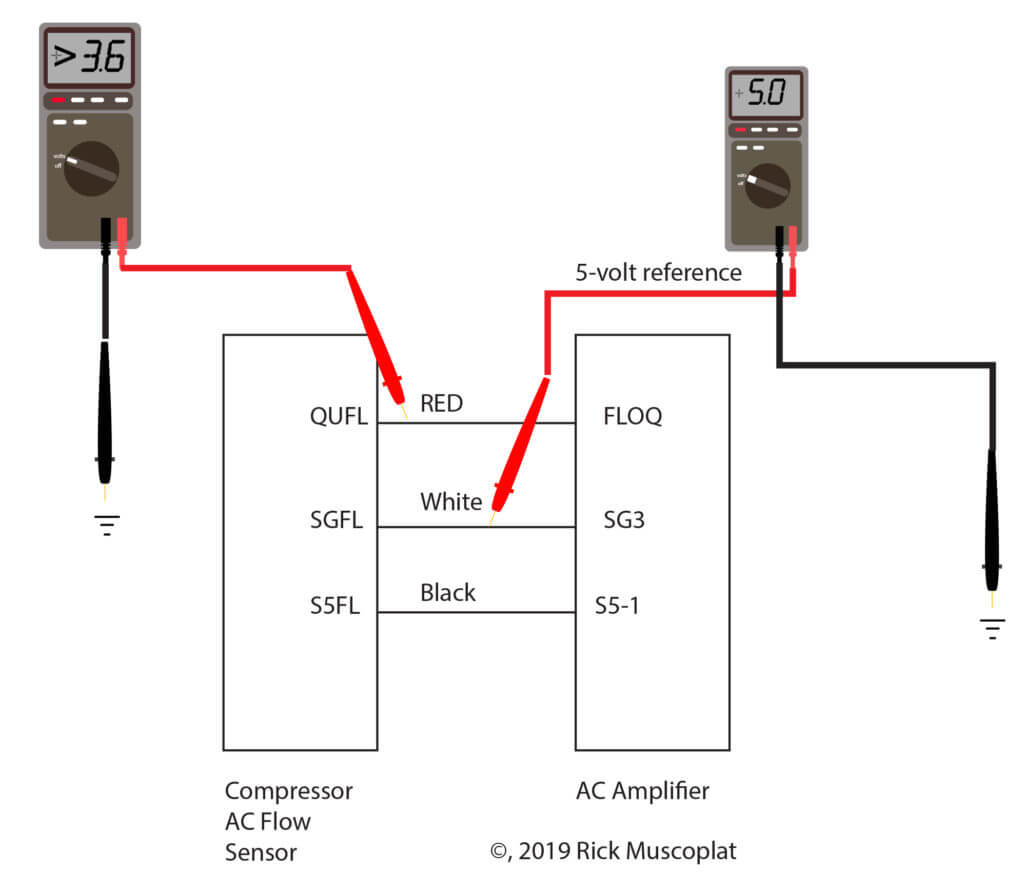
Using a multimeter:
1) Locate the white wire
Verify a 5V reference signal
No 5V? You’ve got a wiring or control issue.
2) Check the Flow Sensor Output Voltage
Check the red wire signal:
• AC OFF: 3.8 to 4.2 volts
• AC ON (blower high): 0.7 to 3.8 volts
If the readings fall outside that range, the sensor is bad.
3) Inspect Wiring and Connectors
Before replacing anything, I always:
• Wiggle test the harness
• Check for corrosion
• Inspect for damaged insulation
4) Verify ECM Response
Use your scan tool to confirm:
• The ECM sees the AC request
• The compressor command is being blocked
If there is no signal on the red wire but you see a 5-volt reference on the white wire, the sensor is bad
How to Fix the Toyota B1479 Code
Once you’ve confirmed the root cause, the repair is usually straightforward.
Most Common Fixes
• Replace the AC flow sensor
• Repair damaged wiring or connectors
• Address communication issues between modules
Important Note About Sensor Replacement
Here’s something many people don’t realize:
Replacing the AC flow sensor is not a simple bolt-on job.
You must:
• Recover the refrigerant 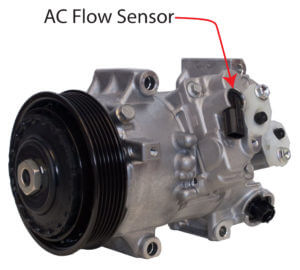 and oil. Measure the amount of oil you recover.
• Remove the sensor
• Measure and replace any lost oil
• Evacuate the system
• Recharge with the correct refrigerant and oilamount
Skip any of those steps, and you’ll create bigger problems than the original Toyota B1479 code.
How the AC flow sensor works
The Toyota AC flow sensor in the compressor receives a 5-volt reference voltage from the AC amplifier located to the right of the accelerator pedal. It varies the output voltage back to the AC amplifier based on refrigerant flow.
Use your scan tool to see if the ECM is receiving an AC ON request from the AC amplifier. If you don’t see that request, perform these tests.
Mistakes I See All the Time
If I had a dollar for every misdiagnosed AC issue, I’d be retired.
Here are the biggest mistakes:
• Replacing the compressor instead of diagnosing the sensor
• Ignoring voltage testing
• Not checking the 5V reference
• Skipping proper evacuation and recharge procedures
The Toyota B1479 code is rarely a compressor failure—it’s almost always a signal problem.
Can You Drive With a Toyota B1479 Code?
Yes, you can drive the vehicle—but you’ll have no AC.
There’s no immediate mechanical danger, but:
• Cabin comfort suffers
• Defrost performance can be reduced
• The underlying issue won’t fix itself
Final Thoughts: How I Approach This Code
When I see a Toyota B1479 code, I don’t guess—I go straight to signal verification.
This is a classic example of modern automotive diagnostics:
• The system is protecting itself
• The problem is almost always electrical or sensor-related
• The fix is simple—if you follow the data
If you approach it methodically, you’ll fix it once and move on. That’s the difference between a parts changer and a diagnostician.
©, 2019 Rick Muscoplat
Posted on by Rick Muscoplat