
Why You Can’t Flush Modern AC Condensers
Here’s Why Flushing an AC Condenser Never Works on Modern Vehicles
Drivers often complain when the shop tells them they need a new condenser after a compressor failure. They want to know why the shop can’t just flush the old condenser. Here’s the simple truth: when you replace AC compressor components in a modern vehicle, you cannot flush the AC condenser tubes and expect the system to be clean. Here’s why; modern vehicles are built with microchannel condensers that can’t be flushed.
The Real Reason You Can’t Flush Modener AC Condensers Anymore
Microchannel Condensers Changed the Game
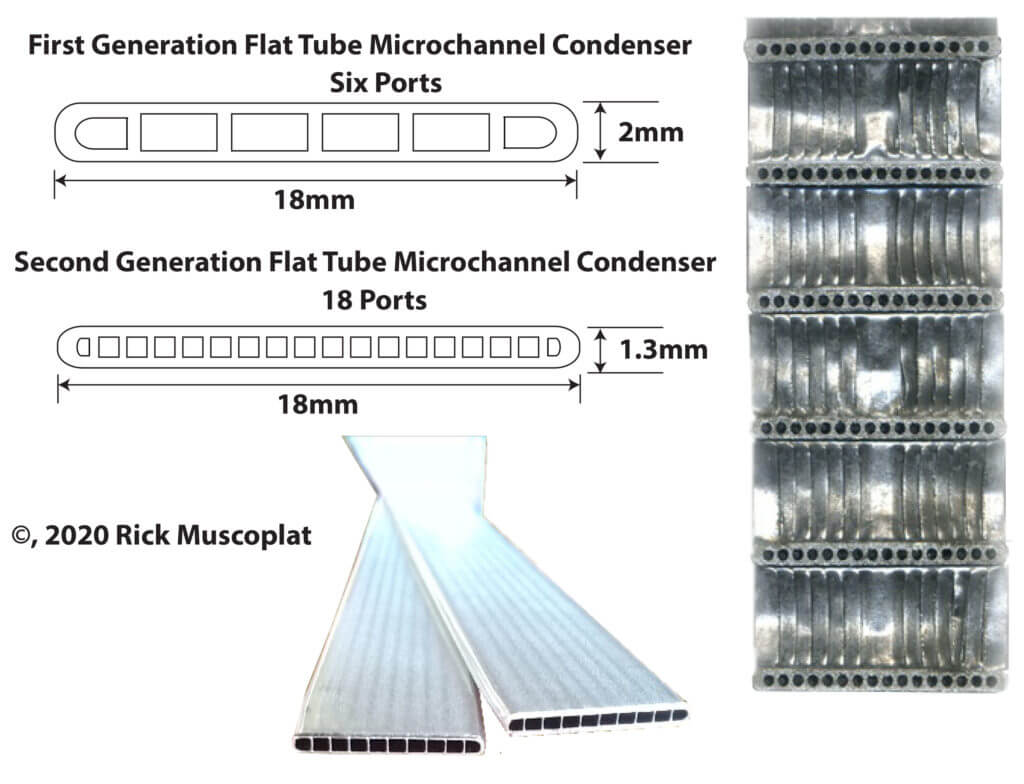
Older vehicles used tube-and-fin parallel-flow condensers or serpentine condensers that could be flushed with specialized solvents. I used to do it all the time. However, when carmakers transitioned from R-12 to R-134a, they also shifted away from parallel flow and serpentine condensers to flat-tube microchannel condensers. These are highly efficient at transferring heat, but they have extremely narrow internal passages. When you replace an AC compressor after a failure, debris and sludge clog those microchannels. Once they’re clogged, they remain clogged, as there’s no effective way to flush out the microchannels. That’s why every time I replace an AC compressor on a late model vehicle, I replace the condenser too.
What is a microchannel auto AC condenser?
The primary purpose of a condenser is to maximize the amount of refrigerant in contact with the condenser’s airflow, thereby removing heat from the refrigerant. Flat tube microchannel condensers perform significantly better than older tube-and-fin and serpentine-style condensers. The flat tubes are extruded with very small passages that excel at heat removal. That’s the good part. The downside is that the microchannels are so small that they clog with system debris and sludge, and can’t be flushed out because the passages are too narrow.
 Your Compressor Warranty Is Void If You Don’t Replace the Condenser and Receiver/Drier
Compressor manufacturers know that their products will be subjected to higher pressures if there’s debris or clogs in the old AC condenser. Any debris that’s stuck in the old condenser can loosen and wind up destroying the new compressor. So they require proof that the shop or DIY also installs a new condenser and receiver/dryer when replacing a compressor. In other words, they’ve seen the data: flushing doesn’t work on microchannel condensers. If you skip this step and the new compressor fails, your warranty claim will be denied. That’s why I don’t risk it by reusing old parts.
Tube and Fin and Serpentine AC Condensers Can Be Flushed if the Buildup Isn’t Severe
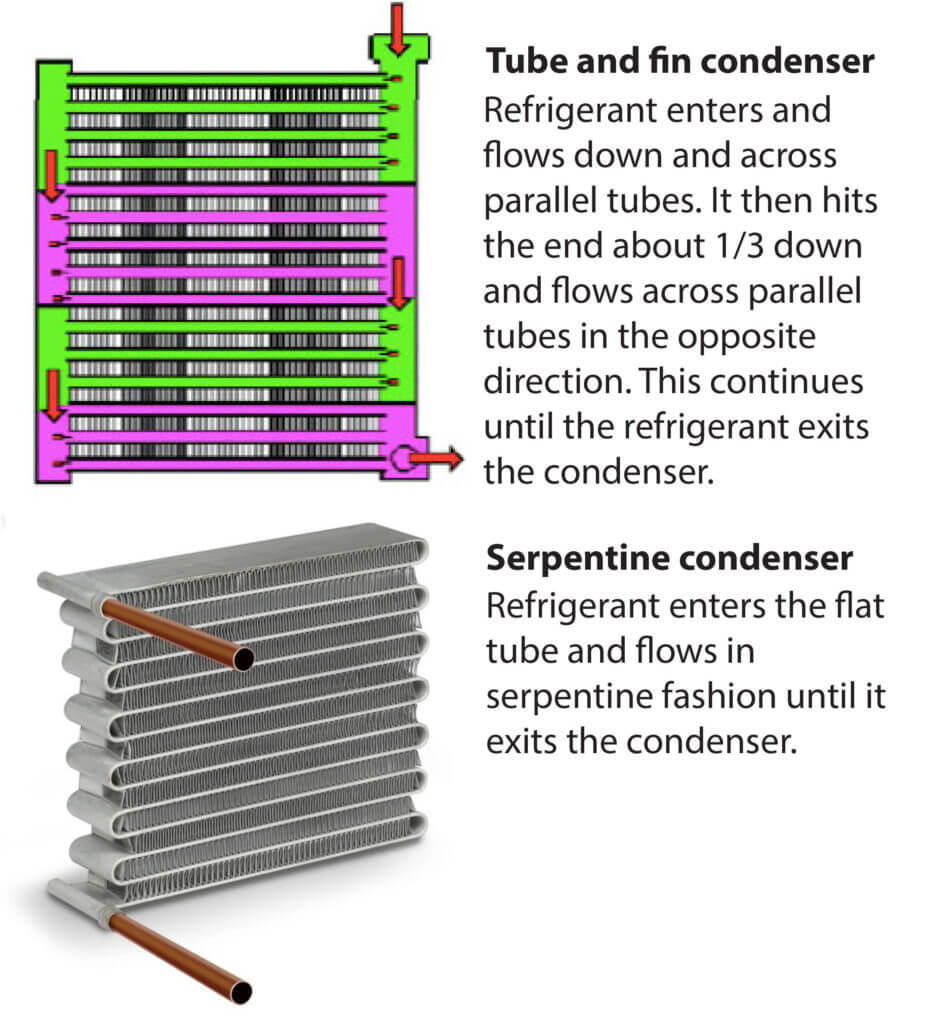
Tube-and-Fin Parallel Flow Condenser Design: Simple but Effective
The tube-and-fin condenser shown to the right is one of the oldest designs used in automotive AC systems. Here’s how it works:
The condenser is designed with two vertical tubes attached to many horizontal crossflow tubes.
Refrigerant flows into the condenser through one of the large, round, vertical tubes on one side of the condenser. Then, the refrigerant travels across the condenser through the horizontal tubes, exiting out through the round vertical tube on the opposite side.
External Cooling Fins: Thin metal fins are attached around the tubes to increase the surface area for heat dissipation. Airflow across these fins removes heat from the refrigerant.
Series Flow/Serpentine Design— A serpentine condenser is shown to the right.
How I flush a parallel flow condenser or a serpentine condenser
When I flush a tube-and-fin condenser, I make sure I add enough flush solvent to fill the entire condenser, so the solvent contacts all the debris in all the tubes. If I don’t do that, the flush solvent will pass through the least obstructed tubes, completely bypassing the debris in the clogged crossflow tubes.
But Here’s the Catch— Even in a parallel flow or serpentine condenser, larger metal shavings and sticky sludge can still cling to the tube walls, especially in corners and turns. So, flushing doesn’t always remove corrosion or hardened deposits. If the compressor failure was severe, some debris may never be completely removed, leaving a risk for your new compressor.
What causes an AC condenser to clog?
• Debris from aging rubber hoses, seals, and plastic parts.
• Metallic wear particles from the AC compressor
• Sludge and acids from moisture contamination.
Because the microchannels are so small, they become the “filter” for any debris in the system.
Replacing the condenser and receiver/dryer gives you a fresh start with a new compressor
Most compressor manufacturers require not only a condenser replacement but a receiver dryer replacement to maintain the factory warranty. They simply don’t want any debris breaking loose and damaging the compressor.
©, 2020 Rick Muscoplat
Posted on by Rick Muscoplat