
Why You Should Replace Brake Calipers in Pairs
The Importance of Replacing Brake Calipers in Pairs
When it comes to whether you should replace brake calipers in pairs, the answer isn’t always straightforward. Let’s break down the factors that influence this decision to help you make the best choice for your vehicle.
Replacing Brake Calipers: Replace Just The Bad Caliper or Replace Brake Calipers in Pairs?
The Pros of Replacing Brake Calipers In Pairs
• You’ll Get Balanced Braking— Replacing your brake caliper in pairs ensures even braking performance and, more importantly, even brake release. If both calipers on an axle are new, the caliper pistons will roll back at nearly the same rate, resulting in even break release.
• Even Wear and Tear— New calipers on all wheels help ensure that brake components wear evenly.
Peace of Mind: Knowing all calipers are new can provide confidence in the reliability of your braking system.
Cons of Replacing Brake Caliper in Pairs
• Cost— Replacing all four calipers at once can be expensive.
• Time-Consuming— It requires more labor and time compared to replacing just one or two calipers.
What are the downsides of replacing just one brake caliper?
Brake calipers operate at very high temperatures, and over time, that heat ages the square-cut O-ring seal, causing it to harden, slowing down the “roll back” after releasing the brake pedal. If one caliper on an axle is new and the other is old, the older caliper piston will roll back slower, keeping the brake pads on that side in contact with the rotor for longer. That can cause more brake wear on those brake pads.
Generally speaking, replacing just one brake caliper doesn’t affect the applied speed of the new and used caliper because they both experience the same brake fluid pressure pushing the piston out. The negative affects of using an old caliper are more related to the release portion of the caliper operation. .
When it’s ok to replace just one caliper
If the good caliper on the axle is fairly new, and you’ve tested it to ensure that the piston is rolling back promptly, you don’t have to replace it.
Understanding how a brake caliper rolls back the piston
There are only two moving parts in a brake caliper that apply the brake pads to the rotor: the caliper piston and the square-cut O-ring seal:
1) When the brakes are applied, brake fluid pressurizes the caliper piston bore
2) That pressure pushes the piston out.
3) As the piston moves, the square-cut O-ring seal twists and rolls forward slightly.
4) When the brakes are released, the brake fluid pressure falls, allowing the square-cut O-ring seal to relax and roll back into its home position, pulling the caliper piston back into the bore.
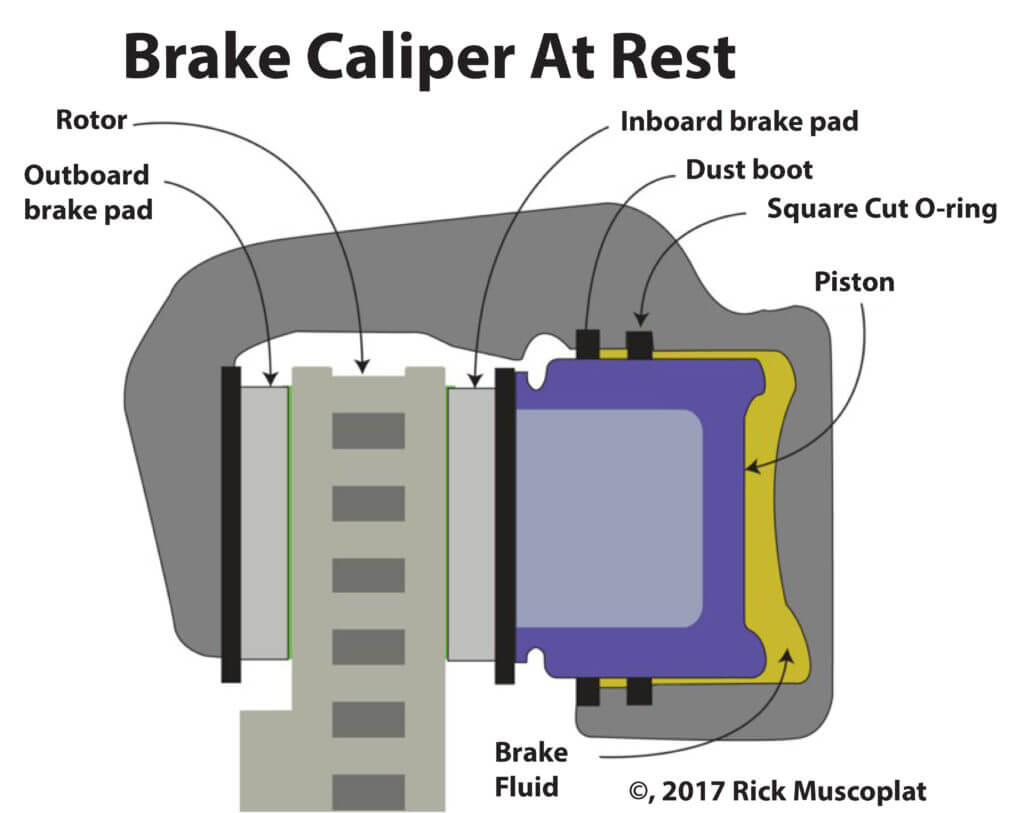
Brake caliper at rest. Notice the position of the square-cut O-ring seal
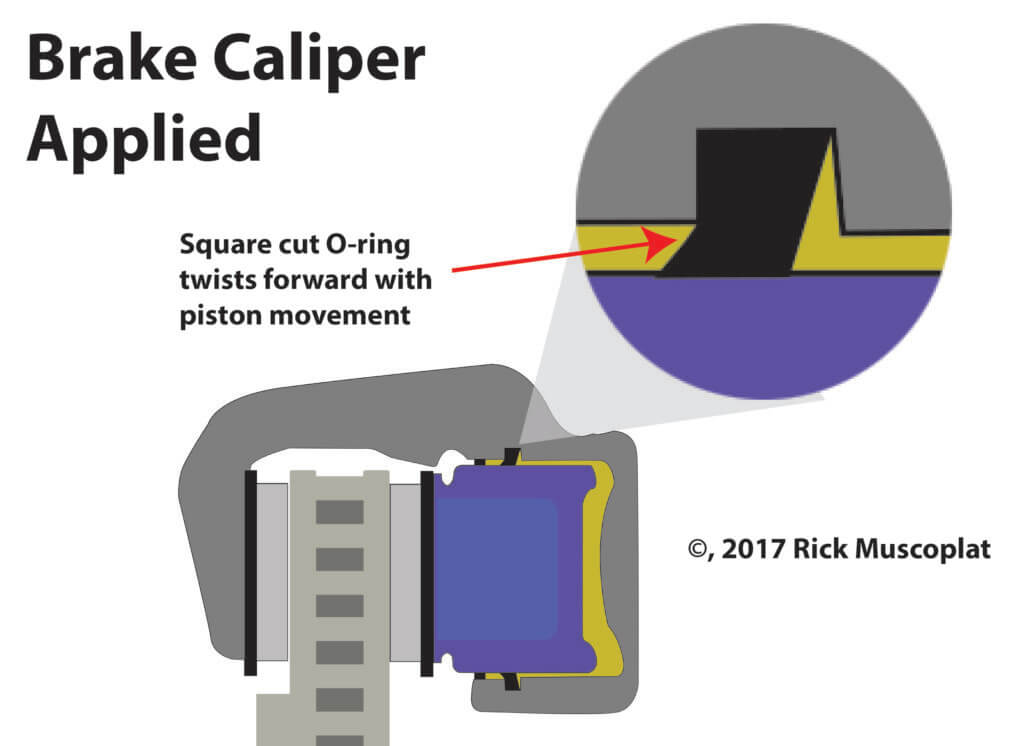
Brake caliper applied. The piston is forced out by brake fluid pressure. Square cut O-ring seal twists forward. Upon release, the O-ring seal untwists and returns to its original shape, pulling the piston back into the bore
Replacing brake caliper in pairs ensures even application and release
© 2017 Rick Muscoplat
Posted on by Rick Muscoplat