
Why Your Steering Wheel Shakes (And How to Fix It)
Why Your Steering Wheel Shakes: Top Reasons and Solutions
Quick Summary
A steering wheel shake is a sign that something is loose, worn, out of balance, or uneven. The key to fixing the problem is paying attention to when it happens. A steering wheel that shakes at high speeds almost always points to tire or wheel issues, while one that shakes when braking is usually caused by brake rotor problems. Suspension, steering, and drivetrain wear can also transmit vibration straight to your hands. Once you match the symptom to the driving condition, the fix becomes far more straightforward—and far less expensive.
Article
Why Your Steering Wheel Shakes (And How to Fix It)
Over the years, I’ve diagnosed hundreds of vibration complaints, and one thing is always true: if the steering wheel shakes, there’s a mechanical cause. The challenge isn’t guessing—it’s narrowing the cause down to the right system before you start replacing parts.
I always begin by asking the same question: under what conditions does the steering wheel shake? The answer tells you more than any scan tool ever will.
Start by Identifying When the Steering Wheel Shakes
Before touching a wrench, pay attention to patterns. When a steering wheel shakes at high speeds, the vibration behaves very differently from when it shakes during braking. Speed, throttle position, and road conditions all matter.
If the vibration starts around highway speed, worsens slightly, then fades at even higher speeds, that pattern is classic wheel or tire imbalance. If it only shows up when slowing down, especially at higher speeds, brake components are at the top of the suspect list. A shake that changes when turning or accelerating usually points toward suspension, steering, or drivetrain components.
That initial observation alone can save hours of unnecessary inspection.
Steering Wheel Shakes at High Speeds: Tire and Wheel Problems
When a steering wheel shakes at high speeds, I almost always look to the tires and wheels first. Unbalanced tires are by far the most common cause. The vibration usually becomes noticeable around 50–55 mph, peaks between 60–65 mph, and often smooths out slightly above that.
Tire balance problems aren’t always the tire shop’s fault. Uneven tire wear caused by worn shocks, struts, or poor alignment changes the tire’s mass distribution. As the tire spins, that uneven weight creates an oscillation you feel directly through the steering wheel.
Missing wheel weights are another frequent culprit. Cold weather, snow, mud, or debris can loosen adhesive or clip-on weights. If the steering wheel shakes at high speeds shortly after winter driving or off-road conditions, missing weights should be high on your checklist.
Bent wheels and broken tire belts produce a different feel. Instead of a smooth vibration, you’ll often notice a side-to-side wobble at lower speeds that transitions into a shake as speed increases. Underinflated tires can also cause noticeable steering wheel movement, especially below 30 mph, as the sidewalls flex excessively.
What causes an unbalanced tire?
• Improper balance by the tire shop
Excessive tire wear (cupping) due to worn shocks.
• Excessive tire wear due to misalignment
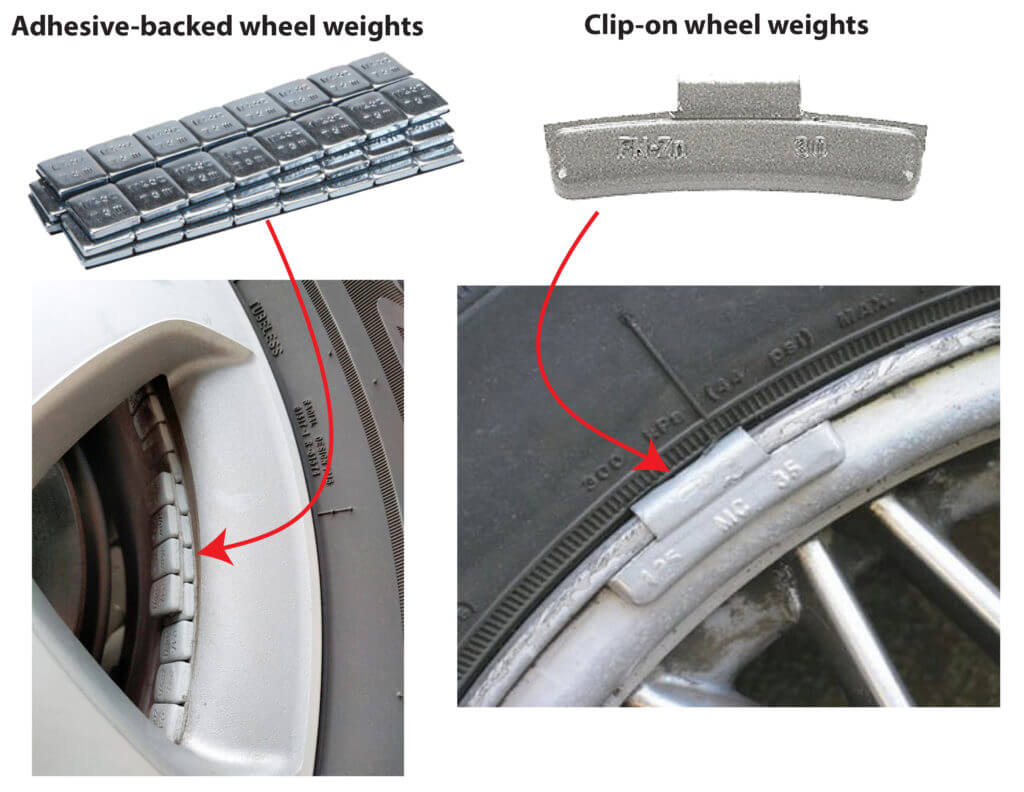
• Snow or mud buildup in the wheel can cause steering wheel shake— If you’ve ever seen the movie My Cousin Vinnie, you know what I’m talking about. If you’ve just driven through heavy snow or mud and now have a steering wheel shake, check for snow or mud pack inside the wheel.
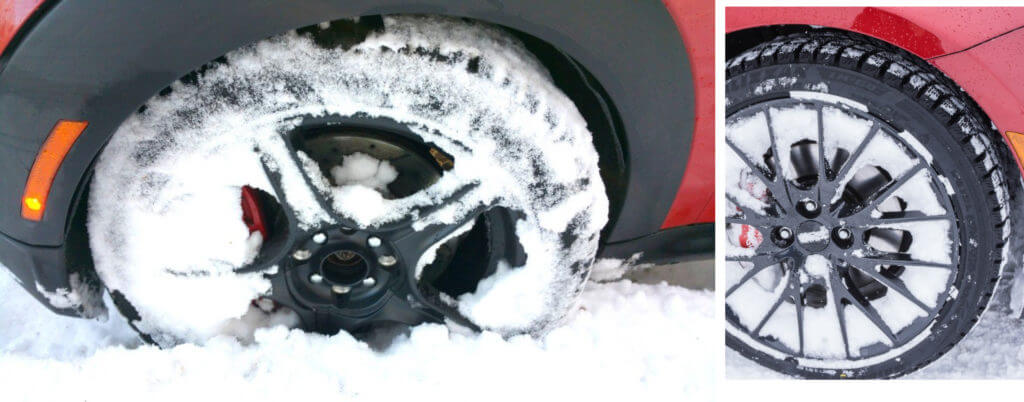
• A Bent wheel causes steering wheel shake— Did the steering wheel shake start shortly after hitting a street or parking lot curb, stop, or debris on the road? If so, you may have bent the wheel. A bent wheel type of shake is usually more noticeable at slow “parking lot” speeds. You’ll notice the steering wheel oscillate left and right at these slow speeds, and you may even notice a slight side-to-side “waddle” feeling in the seat of your pants.
• A Broken belt in the tire can cause steering wheel shake — 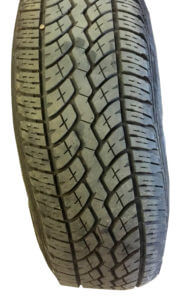
Tire with a broken belt. Just like a bent wheel, a broken belt causes a side-to-side steering wheel shake at low speeds. It can also cause side-to-side vehicle movement that you can feel in the seat of your pants.
• Underinflated tire(s) can cause shake— Severe underinflation causes the tire tread and sidewall areas to squirm as the tire rotates. This is most noticeable at slower speeds and causes a side-to-side steering wheel shake at speeds less than 30-MPH.
Suspension and Steering Wear That Makes the Steering Wheel Shake
• Worn suspension components can cause steering wheel shake— The wheels on your vehicle mount to a spindle that’s supported by a control arm/lateral link. These supporting members are designed to move up and down and incorporate a rubber bushing to isolate the vehicle from road vibration. Worn rubber bushings introduce a small amount of slop that causes a slight wander. In extreme cases, suspension and steering component wear can cause steering wheel shake.
Rubber bushings in control arms and lateral links are designed to absorb vibration. As they age and crack, they introduce looseness into the system. That slop may feel minor at first, but even a small amount of uncontrolled movement can make a steering wheel shake noticeably at speed.
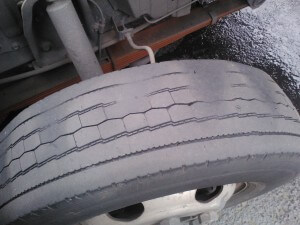
This tire is underinflated (wears on the edges but not in the middle) and cupped due to worn shocks/struts
• Worn wheel bearings cause steering wheel vibration— Wheel bearings keep the wheel in a vertical plane with the vehicle. However, a worn wheel bearing introduces slop that can cause the top of the wheel to move toward the engine or away from the curb. In severe cases, the in/out movement can cause side-to-side steering wheel shake. To test for worn wheel bearings, raise the vehicle and try to move the wheel. Grab the wheel at 6:00 and 12:00 o’clock and try to wiggle the wheel in and out. You should not see any movement. Then grab the wheel at 3:00 and 9:00 o’clock and wiggle the wheel left and right. Again, you shouldn’t see any movement.
You can also test for worn wheel bearings during a drive. Find a flat road surface and accelerate to speed. Then make a quick lane change in one direction. Then drive straight and make a lane change in the other direction. If the noise level changes with a lane change, it is most likely caused by a worn wheel bearing. The worn bearing is most likely on the side corresponding to the lane change direction. If you moved to the left lane when you heard the noise change, the problem is most likely the left wheel bearing, since the lane change increased the load on it.
Tie rods and ball joints typically show up as steering play, but when seve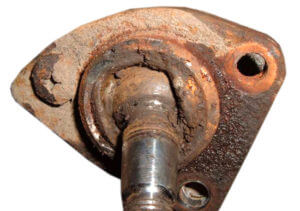 rely worn, they can also cause vibration and wandering that feels like a steering wheel shake.
When shocks and struts wear, they fail to dampen the oscillations, and the tire continues to bounce. Your tires spend more time in the air, and they wear away a small patch of rubber every time they drop back onto the road (think of the burning rubber smoke you see when an airplane tire hits the runway). This is called cupping and results in uneven tire weight around the circumference, causing even more bounce and steering wheel shake.
• Excessive wear due to an alignment issue can cause steering wheel shake
A vehicle that’s out of alignment causes tires to wear in an uneven pattern. When rubber is worn off one side of the tire, it can’t spin without causing up/down movement and that causes the steering wheel shake. Check tires for even tread wear.
Steering Wheel Shakes When Braking: Brake Rotor Issues
When a steering wheel shakes when braking, the cause is almost always brake-related. Despite popular belief, rotors don’t usually “warp.” What’s actually happening is uneven rotor thickness caused by lateral runout and improper friction material transfer.
Improper lug nut torque, rust buildup on the hub face, poor brake pad break-in procedures, or a sticking brake caliper can all lead to uneven braking forces. When the pads grab harder on one side of the rotor than the other, that force feeds straight back through the steering system.
The result is a rhythmic shake you feel in the steering wheel every time you slow down from higher speeds.
Rotor lateral runout is caused by
• improper lug nut torque
• rust buildup on the wheel hub
• improper brake pad break-in procedure
• seized brake caliper that prevents brake pad retraction from rotor, causing uneven frictional material buildup on opposite rotor faces.
See this post for more information about brake pedal pulsation that can be felt in the steering wheel.
Drivetrain Issues That Can Make the Steering Wheel Shake
Not all steering wheel vibrations originate at the wheels. Worn CV joints or U-joints can transmit vibration through the drivetrain to the steering wheel, especially during acceleration, tight turns, or low-speed maneuvers.
A failing CV joint often announces itself with clicking or clunking noises during slow, tight turns. As wear progresses, vibration becomes more constant and more noticeable in the steering wheel.
See this post for more information about shocks and struts
See these posts for more information about wheel bearings.
Steering wheel shakes caused by worn U-joint and CV joints
U-joints and constant velocity (CV) joints allow a shaft to move up and down and left and right while rotating. If these joints wear, they can cause vibration that can be felt in the steering wheel, especially in tight turns. Worn joints tend to cause steering wheel shake and vibration at low speeds, during heavy acceleration or even when coasting. Test for worn joints by making tight turns as slow speeds in a secluded area of a parking lot. Listen for clicking or clunking noises while doing this maneuver.
It only takes a small amount of play or looseness in any one steering and suspension component to make the whole system noticeably slack. As well as affecting the vehicle’s control and stability, this can also cause steering wheel vibration. It’s, important to inspect the system for loose or worn components. Start by checking visible parts like the upper or lower ball joints, tie rod ends, and bushings. If you see any signs of damage or excessive play, it is probably faulty and should be replaced. Similarly, loose shock mounts, damaged or detached springs and leaking shocks or struts can cause vibration in the steering wheel. These should be checked and replaced as necessary.
See this post for more information on CV joints
Why Small Amounts of Wear Cause Big Steering Wheel Shake
One of the most overlooked truths in vehicle diagnostics is that it doesn’t take much looseness to create noticeable vibration. A little play in one joint combined with a slight tire imbalance and marginal shock control can stack together and amplify the problem.
That’s why a thorough inspection matters. Loose shock mounts, damaged springs, worn bushings, or leaking struts can cause the steering wheel to shake, even if no single part appears catastrophically failed.
Fixing the Problem the Right Way
The fastest way to stop a steering wheel shake isn’t replacing parts—it’s identifying the system responsible. Whether your steering wheel shakes at high speeds, when braking, or during turns, the symptom points directly to the cause if you know how to read it.
Once the root problem is fixed, the vibration disappears—and it stays gone.
©, 2020 Rick Muscoplat
Posted on by Rick Muscoplat