
Bad heater control valve symptoms: Diagnose a bad valve
Learn the symptoms of a bad heater control valve and how to diagnose the problem
The heater control valve is a critical component of your car’s heating system. It regulates the flow of coolant from the engine to the heater core, which is responsible for generating heat that warms the car’s interior. If this valve isn’t working correctly, it can lead to several issues that affect your comfort and the overall functioning of your vehicle. Here are the symptoms of a bad heater control valve, along with tips on how to diagnose the problem.
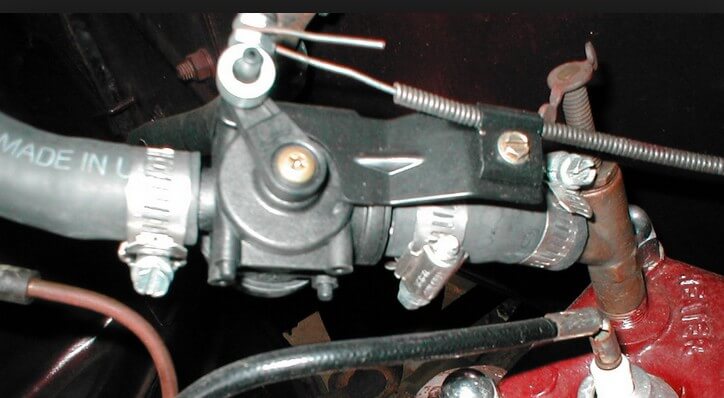
Cable-operated heater control valve
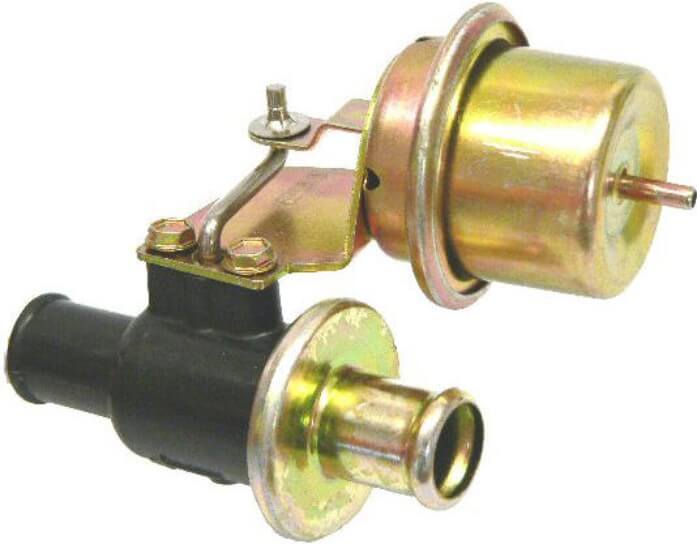
Vacuum operated heater control valve
A heater control valve can fail in several ways.
Heat is always on
If your car is equipped with a vacuum-operated heater control valve and the heat is always on, a broken vacuum line is the most common cause.
That’s because a vacuum-operated valve defaults to the fully open heat-on position when the vacuum isn’t applied. The loss of vacuum can be caused by a break in a vacuum line or a faulty vacuum switch. To repair a faulty switch, you sometimes have to replace the heater control. Depending on the amount of vacuum, the vacuum motor will close off the engine coolant flow fully or partially. However, even if the heater control supplies vacuum, the mechanical portion of the valve can fail, preventing the heater control valve from closing. Rust or sludge in the cooling system can block the valve and prevent it from closing fully.
In a cable-operated heater control valve, the cable can corrode, break, or detach from the control levers, leaving the valve in the fully open position and resulting in a “heat is always on” condition.
You get no heat in the car
In a vehicle equipped with a heater control valve, this is most often caused by a stuck closed heater control valve. Start by checking the temperature of the heater hose connected to the heater control valve. If one side is hot and the other is cold, the valve is closed and not allowing coolant flow. Move the cable or linkage from the actuator to try to open the valve. Then, check for the outgoing hose to heat up. If it doesn’t the valve is stuck shut and must be replaced.
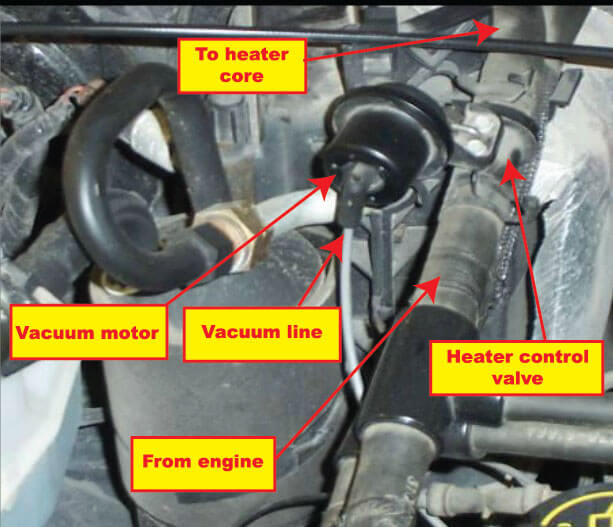
Check the heater hose on both sides of the heater control valve
Troubleshooting vacuum motor problems
If there’s a full vacuum going to the vacuum motor, the vacuum diaphragm may leak, or the mechanical valve is rusted or clogged and must be replaced. However, if the vacuum motor isn’t getting full vacuum, consult a shop manual and conduct the troubleshooting procedure to determine why the vacuum isn’t reaching the vacuum motor. The problem may be as simple as a cracked vacuum hose, broken vacuum switch, or faulty electronics.

The heater control valve may have more than one hose. Check the shop manual to determine which is the feed hose
© 2014 Rick Muscoplat
Posted on by Rick Muscoplat