
Why There’s No Heat in Your Car and How to Fix It
No Heat in Car — Most Common Causes and Fixes
Quick Summary
If you’ve got no heat in your car, start by checking the coolant level, thermostat operation, and heater core function. Most heating issues come down to low coolant, a clogged heater core, a bad blend door actuator, or a stuck-open thermostat. In this guide, I’ll walk you through how to fix your car’s heat quickly and correctly, drawing on my years of experience as an ASE Master Technician.
Driving in cold weather without a functioning heater can be quite uncomfortable and even hazardous. If you find yourself shivering in your car, it’s important to diagnose and fix the issue as soon as possible. Here are some key areas to check if your car has no heat.
Article:
Low Coolant Is the #1 Cause of No Heat in Car
If your car has no heat, the first thing I check is the coolant level. The heater relies on hot coolant flowing through the heater core to produce warm air. When coolant is low, there’s not enough flow through the heater core, so the air from the vents stays cold.
Pop the hood and look at the coolant reservoir. The level should be between the “MIN” and “MAX” marks. Never open the radiator cap on a hot engine—coolant under pressure can cause severe burns. If the coolant is low, top it off with the correct antifreeze-to-water mix and recheck for leaks. If the coolant keeps dropping, you’ve got a leak somewhere—often at a hose, water pump, or even the heater core itself.
2) Blend Door or Actuator Failure Can Stop Heat Flow
The blend door controls how much air passes through the heater core before entering the cabin. A faulty actuator or stuck door can causeeither no heat in the car or unwanted cold air.
On many vehicles, the actuator is either vacuum- or electronically operated. If you move the temperature control and the actuator doesn’t move, remove it and try turning the blend door by hand. If the door moves freely, the actuator is defective and needs to be replaced. If the door binds or doesn’t move, the heater box itself could be at fault.
A failed actuator can cause opposite symptoms depending on where it stopped—fully open (always hot) or fully closed (always cold). That’s why testing the actuator while switching temperature settings is so critical when you fix the heat in your car.
Use a shop manual to locate the blend door actuator. Watch the actuator as you move the temperature controls to see if it’s moving the blend door. If the actuator doesn’t move, remove it from the heater box and try moving the blend door by hand.
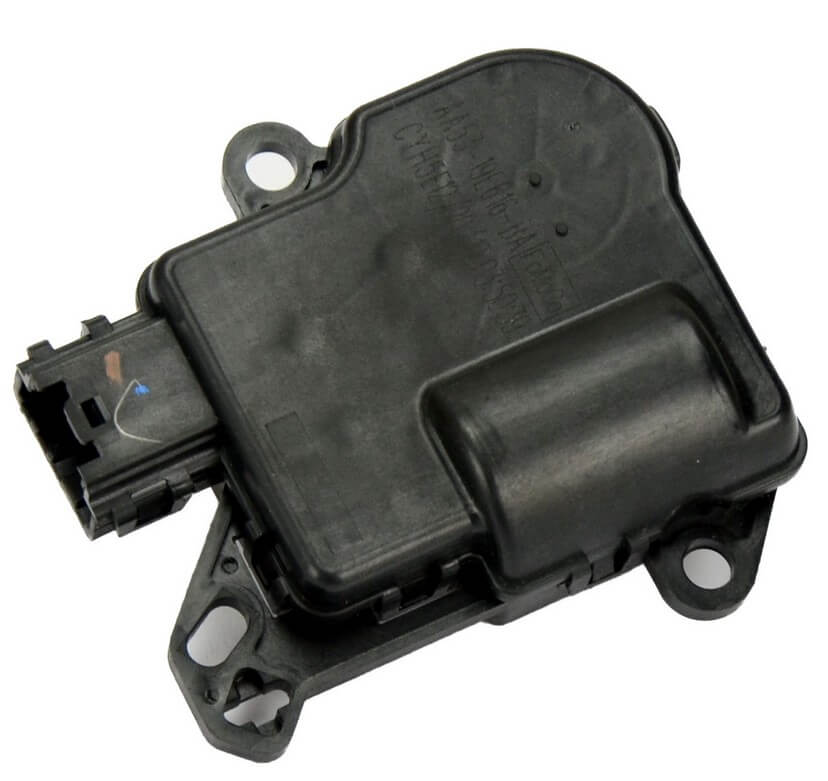
An electronic blend door actuator opens and closes a blend door to regulate the air temperature in your car.
Test the vacuum motor
If the vacuum motor is receiving vacuum but not operating the blend door, the problem may be a cracked diaphragm or a binding blend door. Remove the vacuum motor and move the blend door linkage by hand. If the blend door moves freely, replace the vacuum motor
Test an electronic blend door actuator
Locate the blend door actuator and observe the motor as you adjust the heat setting (key in RUN position).
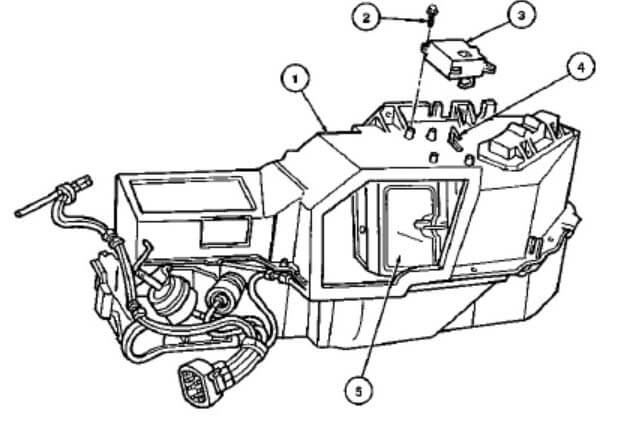
Refer to a shop manual to locate the blend door actuator
The motor should rotate and open and close the blend door. If the motor doesn’t move, unscrew it from the heater box and try moving the blend door by hand. If the door moves easily, then the problem is in the blend door actuator or the heater control head. Consult a shop manual for the electrical tests to determine whether the motor or the control is at fault.

Check blend door actuator movement
If the door binds and cannot close properly, or the actuator fails, the door may remain open. Depending on the design of the heater box, that could cause a heat-always-on condition. If the motor fails when the door is closed, that could cause a no heat in the car condition.
During air conditioning season, a bum blend door actuator can fail in a full or partially open position. In that case it heats the newly cooled air from the air conditioning evaporator coil, cancelling out the cooling effect of the air conditioning.
3. Check the Heater Control Valve for Restricted Coolant Flow
Some vehicles use a heater control valve rather than a blend door to regulate coolant flow to the heater core. If this valve sticks closed, hot coolant can’t circulate, leaving the car without heat.
With the engine warm, feel both heater hoses. If one is hot and the other is cool, the valve isn’t allowing coolant through. If it’s cable-operated, you can try moving the lever manually. Vacuum or electrically controlled valves require following the diagnostic steps in your shop manual. Sometimes, simply freeing up the valve linkage is all it takes to fix the heat in your car.
4. A Stuck-Open Thermostat Prevents Proper Engine Warm-Up
When I diagnose no-heat complaints in cars, I often find a stuck-open thermostat. The thermostat regulates coolant temperature. If it sticks open, coolant constantly circulates through the radiator, keeping the engine too cool for the heater core to produce hot air.
Here’s what to look for:
• The air warms up slightly at stoplights but cools when you drive.
• The temperature gauge stays below normal operating range.
• The engine takes a long time to warm up.
Replacing the thermostat is a cheap and easy way to fix the heat in your car and restore normal operating temperature.
5. Plugged or Leaking Heater Core Causes Weak or No Heat
The heater core acts like a miniature radiator, transferring engine heat into the cabin air. Over time, rust, sediment, or stop-leak compounds can plug it up, restricting coolant flow. If your car has no heat and one heater hose is hot while the other is cold, you’re likely dealing with a clogged heater core.
You might also smell a sweet, syrupy odor inside the cabin or notice
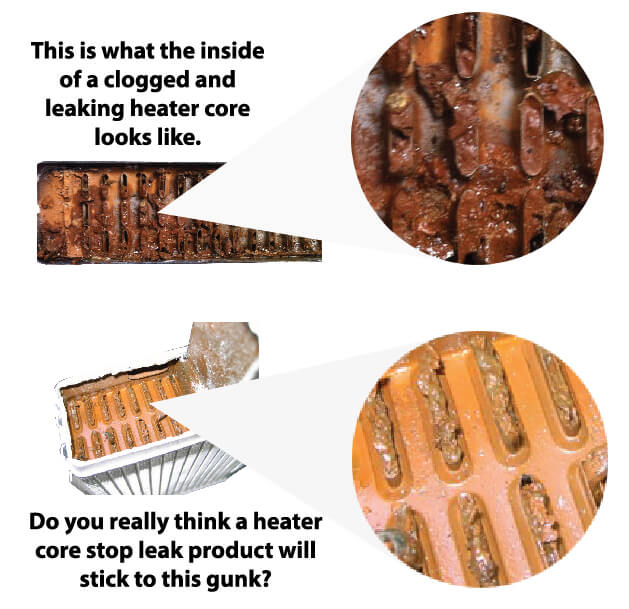
A clogged heater core won’t allow coolant flow and you’ll get no heat in the cabin
foggy windows—both are signs of a leaking heater core. Unfortunately, replacing a heater core can be labor-intensive, since it’s buried behind the dashboard, but flushing it or replacing it is often the only way to fix the heat in your car.
Heater core tip: Hot coolant (around 200°F) enters the heater core from the engine. Cabin air blows across the heater core, removing heat from the coolant. However, the coolant leaving the heater core is still hot. So you should expect both hoses to feel hot to the touch. If only one hose is hot, your heater core is likely plugged with rust or leak sealer.
6. A weak or Failing Water Pump Can Reduce Heat Output
The water pump circulates coolant through the engine and heater core. A damaged impeller or slipping drive belt can reduce flow, causing a no heat in car symptoms even if the engine temperature seems normal.
Sometimes, in cold weather, the engine won’t overheat because

This water pump is so worn that the impeller actually disintegrated
frigid air keeps it cool—but you’ll notice little to no heat from the vents. If you suspect this, inspect the water pump for leaks, noise, or play in the shaft. Replacing a worn pump can restore circulation and fix the heat in your car.
A no-heat condition caused by a faulty water pump is pretty rare without other indications, but it’s not impossible.
Bonus Tip: Don’t Forget the Cabin Air Filter
A severely clogged cabin air filter can restrict airflow over the heater core, giving the impression of no heat in the car even when the system is functioning correctly. If airflow feels weak, check and replace the cabin filter—it’s an easy and inexpensive fix.
Final Thoughts
Diagnosing no heat in your car starts with basic checks: coolant level, thermostat, and heater core flow. If you’re methodical, you can fix heat in your car yourself without expensive shop labor. Just remember—never ignore coolant leaks or unusual smells. They often point straight to the root cause.
©, 2014 Rick Muscoplat
Posted on by Rick Muscoplat