
Car Won’t Start With a Jump: What to do
What to Do If Your Car Won’t Start With a Jump
Quick Summary
You’ve tried jump-starting your car, and it won’t start. Here’s a quick summary of the most common causes and what to do next.
• You haven’t charged it long enough with your jumper cables
• Your battery has an internal short or is so damaged that it won’t accept a charge.
• The battery terminals and posts are corroded. That’s causing a voltage drop to the starter. Clean the terminals and posts.
• You have other electrical accessories on while jumping, and that’s sapping the available energy. Turn off all electrical accessories, including headlights.
• You’re using cheap jumper cables and the gauge is too small for the job.
Article
When a car won’t jump start, most people assume something complicated has gone wrong. But in my experience, the causes are usually simple: bad jumper cables, a severely discharged battery, poor connections, or accessories pulling power away from the starting circuit. Let me walk you through a deeper discussion of why your car won’t start with a jump.
1. Cheap Jumper Cables Are the #1 Reason a Car Won’t Jump Start
I’ve seen more failed jump-starts caused by bargain-bin cables than anything else. If your car won’t jump start, start by blaming the jumper cables.
Small Wires = Not Enough Current
Electricity behaves a lot like water. If you try pushing a massive flow of water through a tiny pipe, you get almost nothing out the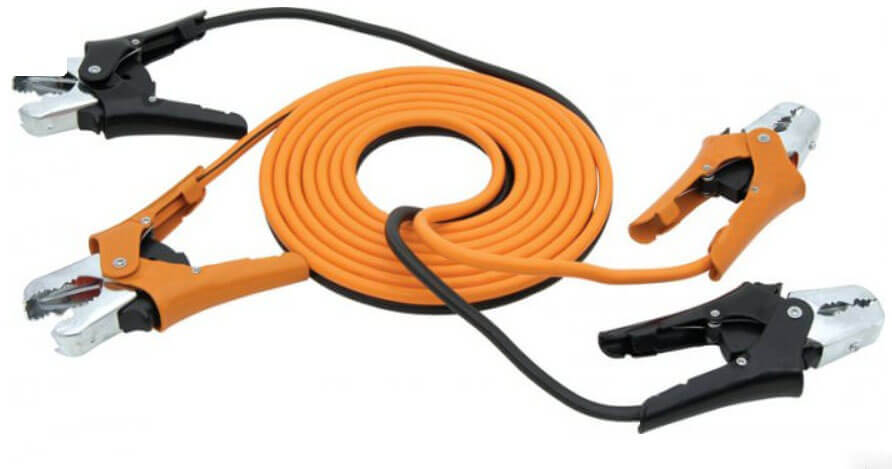 other end. Jumper cables work the same way. Thin, cheap 10- or 8-gauge wires can’t carry the 150–200+ amps needed to crank an engine—especially a cold one.
That’s why one of the first steps in what to do if your car won’t start with a jump is upgrading to thicker cables. See this post on jumper cable basics and how wire gauge and cable length determine how much power they can carry.
2. Your Battery May Be Too Dead—or Shorted Internally
Most DIYers misunderstand what happens during a jump-start. The donor vehicle isn’t sending power directly to your starter. It’s trying to recharge your dead battery first.
Your Dead Battery Is a Giant Power Sponge — When your battery is deeply discharged, it acts like a black hole, sucking up every available amp. If your car won’t jump start, it may simply need time.
Here’s what I do:
• Connect the cables.
• Start the donor vehicle.
• Let the dead battery charge for at least 10 minutes.
• Then try to start the vehicle.
If it still won’t crank
A battery that won’t accept a charge—or drops instantly under load—likely has an internal short. In that situation, your car won’t jump start, no matter what you do. Replacing the battery is the only fix.
3. Accessories Left On Will Prevent a Successful Jump
Another extremely common cause of a car not jumping-starting is electrical overload. A donor vehicle idling only produces about one-third of its rated alternator output.
Turn off all accessories in BOTH vehicles:
• Headlights
• Heater/AC blower
• Heated seats
• Rear defogger
• Radio
• Phone chargers
Every amp counts. If you want to know what to do if your car won’t start with a jump, shutting these systems down is one of the easiest fixes.
4. Bad Cable Connections Will Stop the Jump Immediately
I’ve watched people clamp the negative cable to a painted bracket or—even worse—a plastic engine cover, then wonder why their car won’t jump-start.
Good contact = high current flow
• Use a flashlight and find a solid, clean, unpainted metal surface. Then:
• Wiggle the clamp to bite into the metal
• Make sure the teeth are fully seated
• Avoid rusty or oily areas
A jump-start requires over 150 amps. You won’t get that through a poor connection.
5. Dirty Battery Terminals Can Block All Power Flow
If you want to know what to do if your car won’t start with a jump, this one is critical. Corroded terminals create high resistance, which blocks charging current and prevents the starter from getting power.
What I do on every no-start call:
• Remove both battery cables
• Clean the posts and terminals with a wire brush
• Reconnect tightly and retest the jump
• Often, that alone solves the problem.
What to Do Next if Your Car Still Won’t Start With a Jump
If you’ve tried everything above and the car won’t jump start, here’s what I recommend checking next:
• Test the alternator – A failed alternator can drain a battery overnight.
• Check for parasitic drains – Something may be killing the battery when parked.
• Fully charge the battery with a charger – A jump cannot recover a severely depleted battery.
• If the battery fails a load test after charging, replace it.
How to clean battery terminals
Test your alternator
Find what’s draining your battery
Charge your battery
©, 2014 Rick Muscoplat
Posted on by Rick Muscoplat