
Check Oil Level Hot or Cold — The Cold Hard Facts
The Right Way to Check Oil Level For Consistent Readings
Here’s the deal: I always check my oil level when it’s cold. I know that’s a point of contention for some people who argue that you should check oil hot, citing how oil expands when it’s heated. But in my experience, the oil expansion argument is a red herring, and I’m here to explain why. In this guide, I’ll show you why I’m confident in saying you should check oil level hot or cold—but cold is my preference.
Why Do Most Carmakers Say to Check Oil When Cold?
The truth is, when the engine is running, oil is constantly circulating. Once you turn off the engine, that oil starts draining back into the oil pan. How long it takes to settle depends on factors like engine temperature, oil viscosity, and outdoor temperature. There’s no universal guideline like, “Wait exactly five minutes after shutting off your engine.” However, one thing remains constant: if you check you oil level first thing in the morning after the engine has been sitting for at least five hours, you’ll get the most accurate and consistent reading, no matter the engine type or oil viscosity. That’s why I prefer checking oil when its cold.
What about the oil expansion issue?
Motor oil, like most other fluids, expands when hot. Tests show that conventional oil expands more than synthetic oils, but in reality, the expansion rate only ranges between 5%-7%. However, the testing was done on the base oil, not the finished oil, where the additive package makes up 25% of the volume. So, in reality, the expansion rate for off-the-shelf motor oil is often lower than the average 5%-7%.
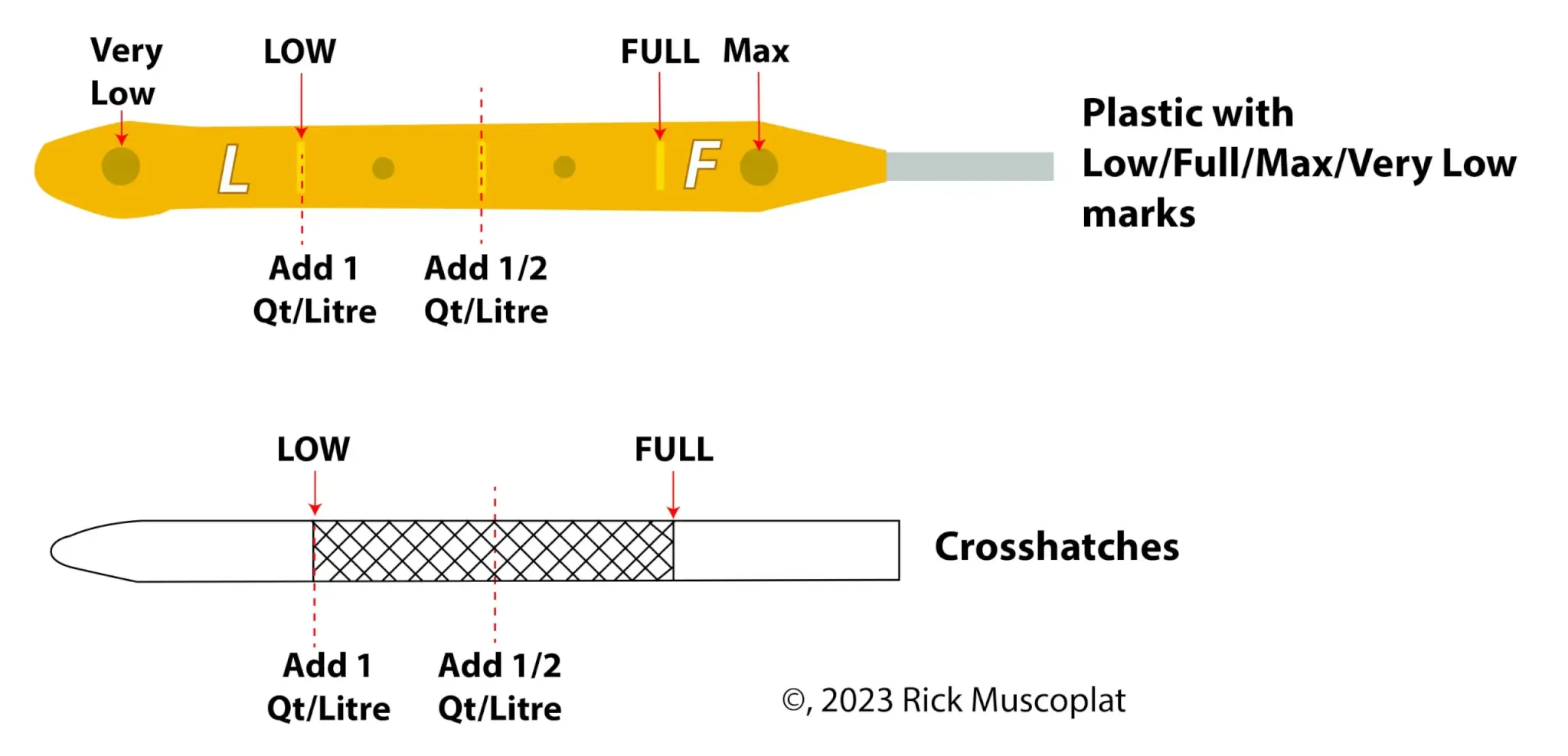
Let’s put it into perspective: A typical oil change might require 4.5 quarts, and the filter holds around 0.5 quarts. So, there are roughly 4 quarts in the oil pan. If the oil expands by 5%-7%, that’s an increase of only 6.4 to 8.9 ounces—well below the level markings on most dipsticks, which have a full-to-low difference of about a quart (32 ounces). This makes the oil expansion argument largely irrelevant when it comes to checking oil level hot or cold.
Consistency is More Important
Whether you check the oil level hot or cold, consistency is the key. I’ve learned that if I always check it cold first thing in the morning, I get an accurate reading every time. If you’re checking oil hot, wait a consistent amount of time—say, five minutes after shutting off the engine, every time to get an accurate reading. The key is not to vary how long you wait before checking, as that will change the oil level reading depending on how much oil has drained back into the pan.
Here’s the basic process, regardless of hot or cold checks:
Park on a Level Surface: This ensures the oil settles evenly in the pan.
Turn Off the Engine: Let it sit for 5-10 minutes if you’re checking oil hot.
Locate the Dipstick: Pull it out and wipe it clean.
Reinsert the Dipstick: Push it back in fully, then pull it out again.
Check the Markings: Look for the low and full markers to see if your oil is in the right range.
Top Off If Needed: Add oil if it’s low, but be careful not to overfill.
Above All, Follow the Manufacturer’s Recommendations
Certain modern cars, especially those with turbocharged engines or dry sump systems, may have specific instructions about whether you should check oil level hot or cold. Some vehicles, like many BMWs and Mercedes-Benz models, suggest checking oil level hot for the most accurate reading. Always check your owner’s manual to be sure.
Common Oil Level Checking Mistakes to Avoid
When you check your oil, avoid these common mistakes:
• Checking too soon after turning off the engine: This could give you a falsely low reading.
• Not wiping the dipstick properly: Residual oil can lead to an inaccurate reading.
• Overfilling the engine: Adding too much oil can lead to excess pressure and foaming.
Ultimately, consistency and attention to detail are key. Whether you prefer to check oil hot or cold, doing it regularly and correctly will help keep your engine running smoothly and efficiently for years to come.
For more information on how to accurately read a dipstick, see this article.
©, 2025 Rick Muscoplat
Posted on by Rick Muscoplat