
Check tire pressure: When and how to maintain your tire pressure
Learn how to check tire pressure and how often to do it
Maintaining proper tire pressure is crucial for vehicle safety, fuel efficiency, and overall performance. Underinflated or overinflated tires can lead to increased tire wear, reduced handling capabilities, and even blowouts. This article will explore why checking tire pressure is important, how to check it correctly, and best practices for maintaining optimal tire pressure.
How to check tire pressure
Wait until the tires are cold, like first thing in the morning or when the car hasn’t been driving for at least 3 hours. Never check or adjust tire pressure after your tires have been driven for more than 10 minutes. The reading you get when hot won’t be accurate.
• Remove the plastic tire valve cap
• Center the gauge over the valve stem and press it straight onto the tire valve in a quick, even motion. Quickly remove it.
• Read the pressure and inflate as needed.
How to add air pressure
Using the compressed air hose at the convenience store or gas station, center the nozzle over the valve and push it tightly onto the valve. Hold it in place as you add air. As a general rule of thumb, hold it in place for one second for every 1-psi. of pressure you want to add.
Or, buy a tire inflator and keep it in your car
Owning your own digital tire inflator is easiest best way to check and 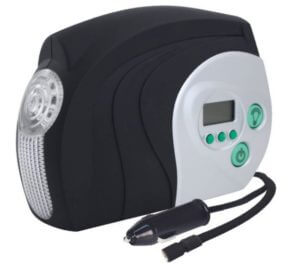 inflate your tires. Simply plug the unit into your vehicle’s power port and turn it on. Then enter the recommended tire pressure from the placcard on the driver’s door. Remove the plastic valve cap from the tire valve and insert the nozzle. The tire inflator will stop when the tire’s air pressure reaches the set pressure.
Why Checking Tire Pressure is Important
• Safety— Proper tire pressure is essential for vehicle stability and handling. Underinflated tires can cause longer stopping distances and affect steering control, especially in adverse weather conditions.
Tires lose air due to permeation even when you don’t have a leak. So it’s critical to check tire pressure and add more air when they’re low. Keeping your tires inflated to the correct air pressure ensures maximum tire life and maximum traction.
• Fuel Efficiency— Tires that are not inflated to the recommended levels can decrease fuel efficiency. Underinflated tires create more rolling resistance, causing the engine to work harder and consume more fuel.
• Tire Longevity— Maintaining the correct tire pressure extends the lifespan of your tires. Proper inflation prevents uneven wear patterns and reduces the likelihood of blowouts.
• Environmental Impact— Properly inflated tires contribute to better fuel economy, which in turn reduces greenhouse gas emissions. Keeping your tires at the right pressure is an easy way to lessen your environmental footprint.
How often to check pressure
It’s recommended to check your tire pressure at least once a month and before long trips. Tires lose 1 to 3 psi. per month, even if you don’t have a leak. If you ignore tire pressure for more than a month, you could easily be driving on tires that are dangerously low on pressure. That causes excessive tire wear, lower gas mileage, longer stopping distances, and less stability.
When temperatures change significantly, temperature fluctuations can affect the pressure.
Check pressure before going on long trips
Driving for long distances on underinflated tires causes the sidewalls to flex excessively and build up heat that causes the rubber to crack and fail. So it’s critically important to check tire pressure and inflate to the recommended pressure before going on a long trip
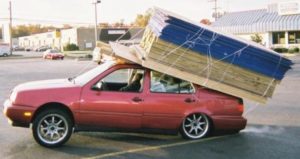 Check tire pressure before hauling a heavy load
Carrying a heavy load in your car or truck puts maximum stress on your tires. The recommended tire pressure is listed on a placard on the driver’s door or pillar. But when you load your vehicle to its maximum capacity, you should increase the tire pressure at each tire to the maximum pressure shown on the tire’s sidewall. That’ll support the extra load and prevent the tire from rolling on its shoulders. When you’ve finished hauling, reduce the pressure to the recommended psi listed on the placard.
Check pressure and add air when the outside temperature drops
Because cold air contracts, you must add air when air temperatures drop. Tires lose 1-psi. for every 10° drop in air temperature. As Fall and Winter approach, air more air to your tires to keep them properly inflated.
Check when the tires are cold
As you drive on your tires, the flexing and friction heats up the air in the tire, causing the air to expand and increase air pressure. If you check the air pressure in your tires when the tire is hot, the tire will be severely underinflated when it’s cold. All recommended tires pressures are based on checking the tire when it’s cold. If you don’t have a tire air compressor at home and must drive to a convenience store or gas station to fill your tires, don’t drive more than one mile or the tire’s higher temperature will prevent you from getting an accurate pressure reading.
If you live more than a mile from an air-filling store, check the air pressure at each tire while the tires are cold and before you drive. Compare the reading to the recommended pressure and note exactly how much air each tire needs to bring it to the recommended pressure. Then, drive to the store and check the air pressure each time when the tire is hot. Based on your readings when the tire was cold, add that amount of air to the tire.
Buy your own tire pressure gauge
The tire pressure gauges at convenience stores and gas stations are incredibly inaccurate because the gauges are mishandled by the public. A mechanical tire pressure gauge loses accurate when it’s dropped or mishandled. So it’s best to invest in your own tire gauge and keep it in your glove box.
What’s the most accurate tire pressure gauge
Stick gauges are the cheapest, but they’re inaccurate. Dial gauges are 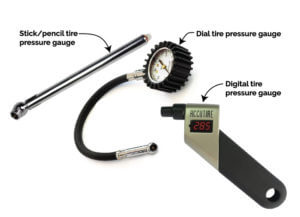 more accurate than stick gauges, but can be damaged by dropping. Digital tire pressure gauges have dropped in price and now very affordable and provide the most accurate reading.
©, 2016 Rick Muscoplat
Posted on by Rick Muscoplat